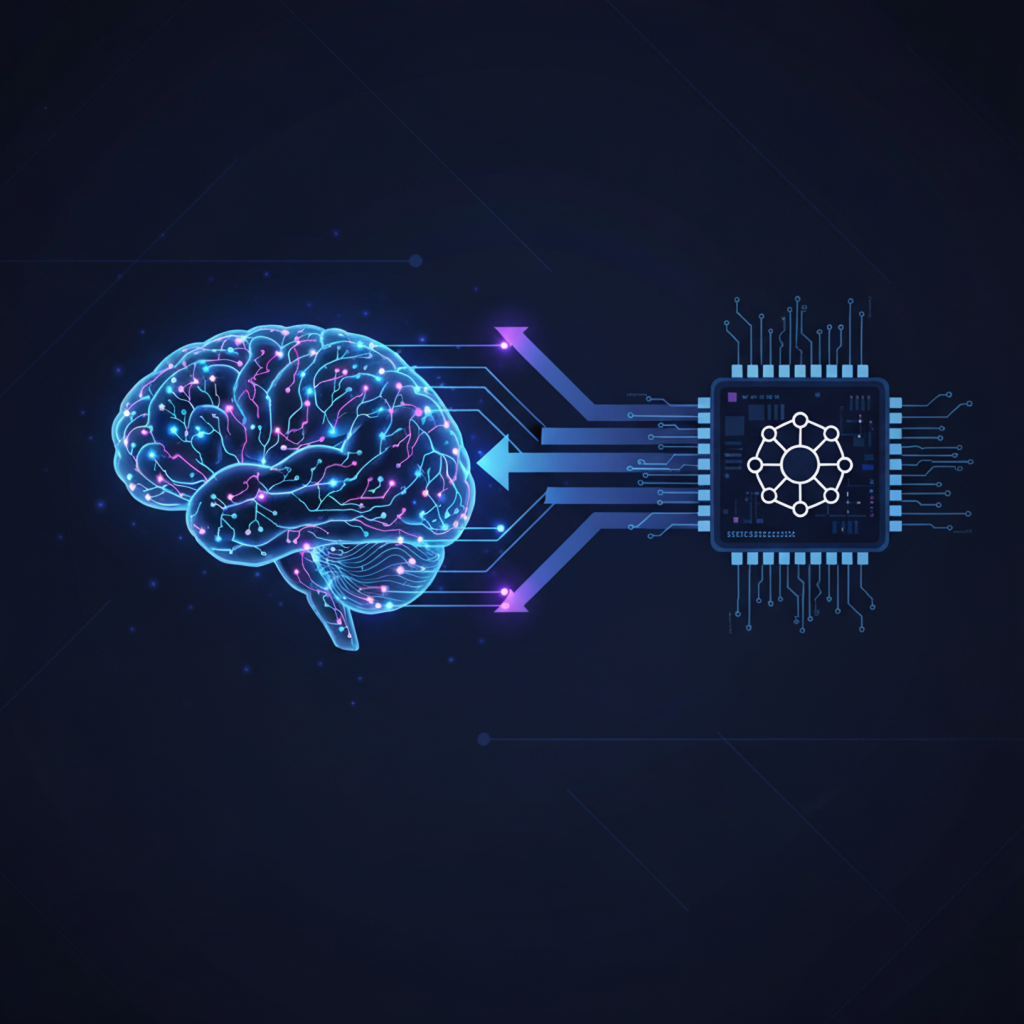
Neuromorphic computing, long envisioned as the next frontier of artificial intelligence hardware, is transitioning from laboratory prototypes into commercially protected IP portfolios. Unlike traditional von Neumann architectures, neuromorphic systems process information in a brain-inspired, event-driven manner — through spiking neural networks (SNNs), in-memory computing, and memristor crossbars. This paradigm drastically reduces data movement and power consumption, making it especially critical for edge AI.
A notable example of this evolution is Intel’s Hala Point, the world’s largest neuromorphic system, which utilizes Loihi 2 processors to simulate 1.15 billion neurons and 128 billion synapses. This system exemplifies how advanced neuromorphic architectures are pushing the boundaries of AI efficiency and scalability.
Market analysts project that neuromorphic hardware could surpass $8–10 billion by 2030, with strategic applications spanning wearables, industrial IoT, robotics, and cybersecurity. For R&D leadership and IP strategists, patent filings in this space offer a window into where technical bottlenecks are being solved and which players are shaping the ecosystem.
Technology Challenges Driving Patent Activity
Patent filings highlight the real challenges neuromorphic R&D is attempting to overcome:
- Tooling & Interoperability – Fragmented SDKs and incompatible IRs stall adoption. Efforts like the Neuromorphic Intermediate Representation (NIR) aim to unify the ecosystem.
- Device Physics & Reliability – Memristors promise compute-in-memory acceleration but face drift, endurance, and variability issues.
- Scaling & Integration – Proof-of-concept demos must evolve into scalable NoC architectures with GPU-like programmability.
- Energy Autonomy – Continuous sensing in IoT and wearables requires ultra-low-power, energy-harvesting systems.
- Governance & Security – Adaptive, self-learning systems must meet safety, lifecycle, and cybersecurity standards.
Check out Neuromorphic computing patents filed in 2025:
Patent-Driven Technology Insights
| Patent / Publication | Assignee / Organization | Problem Addressed | Proposed Solution | Strategic R&D / IP Impact |
| US11157800B2 | BrainChip Inc | CPU bottlenecks, excessive data movement | Event-driven SNN accelerator on PCIe-class card | One of the first commercial SNN hardware platforms (Akida family); validated neuromorphic acceleration for edge AI |
| CN115271058A | Beihang University | Beijing Smartchip Microelectronics | Neuron/synapse data movement inefficiency | Compute-in-memory design co-locating neuron & synapse tasks; supports STDP-like behavior | Reduced interconnect energy; strengthens China’s position in foundational neuromorphic IP |
| KR20240133348A | KR102780708B1 | KAIST | Continuous power draw in edge AI workloads | Hybrid CNN+SNN accelerator with RISC control and energy-aware allocator | Establishes hybrid neuromorphic architecture as a viable edge AI solution; early commercial positioning |
| EP4528592A1 | KAIST | Intermittent power autonomy | Same hybrid CNN+SNN system | Expands global IP protection into Europe, reinforcing KAIST’s global patent family |
| IN202411099785A | Chandigarh University | Hybrid analog-digital edge operation | Mixed-signal synapses with asynchronous event routing | Suggests expansion of KAIST’s filings into India; strengthens international coverage |
Use Cases Enabled by Patents
The patented technologies collectively enable several near-term applications:
- Always-on perception (wake-word detection, anomaly sensing) at microwatt-to-milliwatt levels.
- Industrial monitoring with event-driven vibration and acoustic analysis.
- Energy-harvesting IoT and wearables with minimal battery reliance.
- Robotics & UAVs requiring real-time neuromorphic vision and localization.
- On-device cybersecurity through private, low-latency inference without cloud dependency.
Get the list of Neuromorphic Computing patents. Discover the problems they solve and the solutions they offer. Fill out the form to access it now!
Strategic Outlook for R&D Leaders
Patent trajectories suggest three converging directions for neuromorphic computing:
- Hybridization dominates: CNN+SNN neuromorphic chips balance precision with energy savings.
- Memristor maturation: Improved ReRAM/PCM device reliability will unlock compute-in-memory acceleration.
- Ecosystem standards: NIR-like frameworks will unify hardware-software toolchains across vendors.
- Regulatory shaping: Governance frameworks in healthcare, automotive, and infrastructure will influence adoption timelines.
For R&D leaders and IP strategists, the immediate priority is mapping FTO risks around edge AI neuromorphic workloads. With BrainChip, KAIST, and Beihang consolidating IP, companies entering this space must decide between building proprietary architectures, licensing existing IP, or joining standardization efforts.
Neuromorphic computing is no longer an academic vision but a protected and contested IP landscape. Patent activity highlights the transition from device-level proofs to system-level commercial deployments. For R&D and IP leadership, neuromorphic patents serve as both a roadmap of future technology and a battlefield for freedom-to-operate.
The next decade will see neuromorphic hardware move from research labs into strategic industry assets, enabling continuous edge intelligence. Organizations must align their R&D strategy, IP positioning, and regulatory engagement to secure competitive advantage.
Interested in a deeper Neuromorphic computing patent analysis? Request a tailored report or claim-to-product mapping to explore competitor strategies.