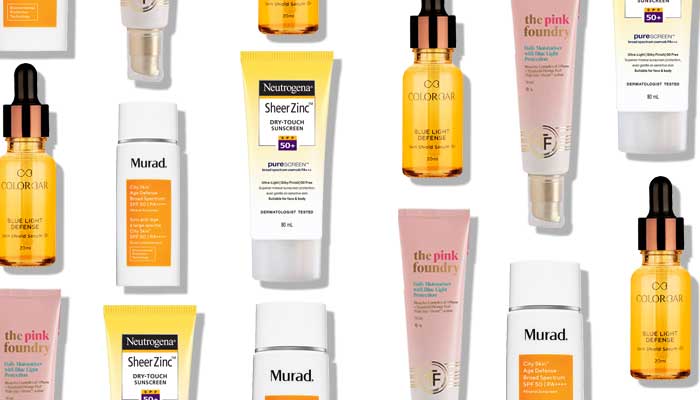
Blue-light sunscreen is often marketed as a simple extension of UV protection, but at the IP and materials-science level, it represents an entirely different class of photoprotection technology. Unlike UV filters, which rely on well-established organic and mineral actives, blue-light blocking requires narrow-band absorption, high visible-light opacity and photostable pigment systems: all areas still under active patenting and scientific debate. This has created a fast-moving innovation race where the competitive edge is defined not by SPF numbers, but by proprietary antioxidant complexes, encapsulated mineral dispersions and chromophore-engineered actives capable of managing oxidative stress triggered by high-energy visible (HEV) light.
Brands and ingredient suppliers are filing patents around iron-oxide blends, melanin-mimetic polymers, lutein complexes and tinted particulate systems, each claiming superior blue-light defense and consumer acceptability. Yet these technologies sit in a regulatory grey zone: HEV protection is not formally regulated, performance testing lacks global harmonization, and validation methods vary widely across manufacturers.
As the category grows and formulators work to differentiate beyond standard UV claims, the core questions become increasingly IP-centric: Which patented technologies genuinely deliver HEV protection? Which gaps remain unsolved? And how will the next generation of encapsulation, pigment engineering and antioxidant stabilization shape the competitive landscape?
This article examines the patents driving that evolution and the scientific constraints that will determine who leads the next stage of blue-light sunscreen innovation.
Check out Blue Light Sunscreen patents filed in 2025:
Market & Technology Context for Blue-Light Sunscreens
A. Current Application Areas & Market Dynamics
| Application Area | Core Users / Setting | Key Product Formats | 2025 Market Share / Uptake | Consumer Triggers & Pain Points | Representative Brands / Technologies |
| Daily “indoor” moisturiser with HEV claim | Office & remote workers, Gen-Z students | Clear gels, serum-sticks, cushion compacts | ≈35 % of blue-light skincare segment | Triggers: Zoom-face concerns, make-up compatibility. Pain points: greasy finish, white cast | L’Oréal UV-Defender, Kao Allie (Source) |
| Anti-pollution + blue-light hybrids | Urban commuters in China, India, Germany | Mists, essence toners, day creams | Fastest-growing SKU type in APAC | Triggers: smog + screen stress. Pain points: efficacy proof, price | Estée Lauder DayWear, BASF “Sun-Proof-You” blends |
| Make-up with incidental blue-light protection | Beauty enthusiasts, TikTok buyers | Primers, foundations, loose powders with iron oxides | 18 % of colour-cosmetic launches in EU (2024) | Triggers: multi-tasking routines. Pain points: shade range, wear time | Lancôme Teint Idole SPF, Croda “Daisy-blue” pigment dispersions |
| Ingestible / systemic photo-defence | Health-conscious millennials, wellness influencers | Capsules, gummies with lycopene & polyphenols | <5 % of segment but 62 % YoY growth | Triggers: inside-out beauty, smart wearable data. Pain points: regulation, taste | Neugeona “Blue-shield” soft-gel, DSM “Nutri-shield” carotenoid complex (Source) |
| UV-patch & smart-device combos | Outdoor athletes, parents | Wearable patches linked to phone app | Niche—pilot stage | Triggers: real-time UV alerts. Pain points: adhesion, battery | L’Oréal MyUVPatch, new start-ups in US & EU (Source) |
B. Future Opportunity Hotspots (2025-2030)
| Opportunity Space | Technical Route / Enabler | Target Segment & Size Forecast | Commercialisation Horizon | Key Success Factors & Watch-outs | Early Signals & Patents |
| Selective 400-450 nm chromophores (“true blue filters”) | Bio-based indole derivatives, nano-encapsulated melanin | Premium anti-aging, professional derm clinics; potential USD 0.4 B by 2030 | 2-3 yrs | Must beat iron-oxide tint; needs China FDA listing; SPF/BPF dual testing | pigment blend (AU2023323667A1), transparent film former (US2024058237A1) |
| Adaptive humidity-responsive films | Hydrophobic-hydrophilic block copolymers + glycerin micro-sponges | Humid Asian markets, sport & mask wearers; CAGR 9 % expected | 1-2 yrs | Stability at 40 °C, cost <5 % uplift; claims must be visible to consumer | smart emulsion (WO2024180132A1), thermo-chromic indicator (EP4454716A2) |
| Transparent “no-white-cast” nano delivery | Solid-lipid nanoparticles, cellulose capsules for mineral filters | Gen-Z men, deeper skin tones; could open 30 % larger user base | 1-2 yrs | Regulatory nano-definition varies; need high SPF & blue-light test | Multiple ingredient suppliers piloting; China piloting BPF label (Source) |
| Personalisation via phone data & AI | App pulls screen-time, geo-UV index → recommends dosing | Remote workers, subscription buyers; 25 % repeat-purchase uplift forecast | Live now (early apps) → scale in 3 yrs | Data privacy, dermatologist endorsement, small-batch logistics | Start-ups in US/EU; Vogue forecast on ingestible + apps |
| Sustainable bio-fermented filters + recyclable packaging | Microbial production of UV/HEV filters, mono-material pumps | Eco-conscious consumers, EU & Scandinavian markets; 10-15 % price premium tolerated | 2-4 yrs | Cost parity vs petro-routes, life-cycle data, cosmetic regulation | Clariant “Sun-Proof-You” roadmap (Source) |
| Standardised Blue-light Protection Factor (BPF) labelling | In-vivo 415 nm PPD-like assay; China likely first mover | Global brands exporting to Asia; could reset category benchmarks | 1-2 yrs (regulatory), 3 yrs broad adoption | Harmonise with SPF, educate consumers, avoid false security | FASEB position paper (Source) |
Patents Shaping Blue-Light Sunscreen Innovation
Blue-light sunscreen innovation is consolidating around a set of patents focused on chromophore engineering, mineral-pigment blends, antioxidant complexes and encapsulation systems designed to absorb, scatter or neutralize high-energy visible light (HEV). The table below highlights the recent patents and their technical contributions.
| Publication Number | Patent Holder | Publication Year | Core Problem Solved | Key Technical Solution | Related Market Products |
| US20240058237A1 | Doc Martin’s of Maui | 2024 | Broad UV + visible-light protection that still looks acceptable on fair skin | 12.5 % TiO₂, 11 % ZnO, 2.5 % BaSO₄, 2.5 % mica, 2.75 % iron oxide; VL-PF ≈ 3.7, blocks ≈ 73 % 400–500 nm light | Anthelios SPF 50 (La Roche-Posay); Supergoop! Glowscreen SPF 40 |
| WO2024035556A1 | Doc Martin’s of Maui | 2024 | Strong blue-violet protection with less skin discoloration | 2.5 % BaSO₄ + 2.5 % mica synergy, 12.5–15 % nano-TiO₂, 10.8–11 % ZnO; SPF ≈ 11, PPD-PF ≈ 7, ΔE < 3 | Avène Fluid Ultra-Light SPF 50+ with TriAsorB |
| KR20250058749A | Doc Martin’s of Maui | 2025 | Simultaneous UV/HEV blocking for fair skin with reduced iron oxide load | Ternary particulate: nano TiO₂/ZnO (12–25 %), iron oxide (0.5–5 %), BaSO₄ + mica (2.5 % each); SPF 14.6–16.8, PPD-PF 11.5–15.6 | ZO Skin Health Triple-Spectrum Protection™ line |
| JP2025526593A | Doc Martin’s of Maui | 2025 | 100 % mineral broad-spectrum (UV + visible) without organic filters | 5–15 % nano TiO₂/ZnO, 0.5–3 % iron oxide, 2.5 % BaSO₄, 2.5 % mica; VL-PF gain ≥ 0.5 units | Clariant SunProof You Range with B-Cicardin™ |
| CN120051268A | Doc Martin’s of Maui | 2024 | High visible-light erythema protection with low skin visibility | TiO₂ 12.5–23.5 %, ZnO 7.5–11 %, BaSO₄ 2.5 %, mica 2.5 %, iron oxide ≤ 2.75 %; SPF ≥ 14, pigment-darkening PF ≥ 10 | Premium mineral “blue-light defense” SKUs under development |
| FR3140540B1 | L’Oréal | 2023 | Stable, cosmetically elegant hybrid (mineral + organic) SPF ≥ 30 | 8 % ZnO + organic cocktail (EHMC 5 %, EHS 5 %, OCR 2 %, HMS 10 %) stabilised with 0.5 % aluminum starch octenylsuccinate | L’Oréal daily moisturisers with blue-light claims |
| FR3111809B1 | L’Oréal | 2022 | High-SPF anti-wrinkle/anti-stain product without greasy feel | 5–20 % UV-filter blend + 0.8–5 % actives (hyaluronate, salicylic acid, resorcinol, ferulate, niacinamide) and 3–3.5 % rheology polymers; SPF ≈ 62 | L’Oréal Revitalift / Age-Perfect SPF 50+ blue-light variants |
| JP2023159394A | Shanghai Pechoin Biotech | 2023 | Full-spectrum protection for phototypes IV–V (dark skin) | 5–24 % UV filters, 2–30 % pigment blend (nano:micron TiO₂/ZnO 5–10:1), 0.1–20 % coolant, 0.05–48 % radical scavengers; SPF ≥ 40, IR-radical drop up to 91 % | Pechoin dark-skin sun-care SKUs across Asia |
| CN115252510B | Huazhong Univ. Sci. & Tech. | 2023 | Natural-origin blue-light attenuation with high SPF/PA | 0.1–5 % polyglutamic acid, 2–5.5 % Sophora japonica extract, 20–40 % nano-TiO₂/ZnO, 0.5–5 % ascorbic derivative, 0.1–0.3 % sodium copper chlorophyllin; SPF ≥ 40, PFA ≥ 15, 18–33 % ROS cut under blue light | Licensed natural “HEV-shield” formulations |
| CN116650348A | Huazhong Univ. Sci. & Tech. | 2024 | Photostable avobenzone with boosted SPF & PA | Liposomal co-load: liquiritigenin 2–6 % + avobenzone 30–55 %; 800–1200 nm liposomes via high-pressure homogenisation; SPF ↑ ~12 → >23, UVA-PF ↑ ~9 → >20 after 6 h irradiation | Next-gen avobenzone products touting “blue-light-stable” labels |
Get the list of Blue Light Sunscreen patents. Discover the problems they solve and the solutions they offer. Fill out the form to access it now!
Technical Challenges in Blue-Light Sunscreen
Blue-light protection remains an active R&D zone because many foundational problems, true 400–450 nm selectivity, stable transparent films, antioxidant longevity and global test-method inconsistencies, have yet to be solved at scale. The following challenges highlight where the science is still unsettled and where next-generation patents are most likely to emerge.
| Challenge | Why It Matters | Key Research / Patent Activity | Commercial Upside if Cracked |
| No agreed test method or “HEV-PF” metric | SPF/UVA-PF protocols ignore visible light; proposed Blue-Light Protection Factor (BPF) and HDRS-ISO 23698 show poor lab-to-lab repeatability. | Multiple academic groups and Cosmetics Europe are refining in-vivo and in-silico protocols. (Source) | A harmonised standard would unlock regulatory claims, consumer trust and premium pricing tiers. |
| Scarcity of approved actives that truly absorb 380–450 nm | Only a handful of filters (e.g., TriAsorB™) cover HEV; US positive list has been static for >25 yr. | New azo-dyes (EP4372364A1), Ag₂O-doped TiO₂/ZnO and botanical fractions are stuck in safety dossier phase. (Source) | First-mover approvals would create blockbuster actives supplying multiple brands. |
| High-loading inorganics cause white cast; organics lack photostability | ≥5 % ZnO or TiO₂ needed for meaningful HEV attenuation, compromising aesthetics. | Korean patents embed pigments in micro-capsules (KR20250058749A); US filings use silica-coated TiO₂ plus film-formers. (US2024058237A1) | Elegant “clear” HEV creams would push daily use across skin-tone demographics. |
| Biological end-points of chronic low-dose HEV exposure remain unclear | Most lab work uses 30–480 J/cm² single doses; real-world screen exposure is ~30 J/cm² over 8 h. | Groups are mapping ROS generation, MMP-1 up-regulation and UV-dimer repair inhibition. (Source) | Solid epidemiology would justify “anti-photo-ageing” claims and physician endorsement. |
| Regulatory vacuum—no dedicated HEV filter positive lists | FDA, EU, China and ASEAN have no pathway to approve “blue-light protectants”; companies must repurpose UV filters. | Trade associations are lobbying for a visible-light annex to COLIPA/ISO guidelines; patents cite safety dossiers for new dyes. (EP4372364A1) | A clear regulatory track would stimulate investment and global roll-out. |
Blue-light sunscreen is entering a phase where scientific credibility matters more than marketing copy. As brands compete to move past broad HEV claims and toward wavelength-specific protection, the technical race is shifting decisively into the IP domain where advantages are secured not by SPF numbers but by engineered chromophores, stabilized iron-oxide systems, transparent film-formers and melanin-mimetic complexes.
The current patent landscape shows real progress, but the gaps are equally telling. True 400–450 nm selectivity, long-term antioxidant stability and cosmetically elegant formulations remain open engineering problems. These unresolved constraints will shape the next wave of patents, filtering out brands relying on simple pigment blends and rewarding those building validated, photostable and regulator-friendly HEV systems.
What comes next is an innovation phase defined by evidence not claims. Companies that can combine narrow-band absorption with high transparency and back it with harmonized testing will set the new performance standard. As blue-light protection moves from a marketing add-on to a scientifically anchored category, the winners will be those who can translate materials science into patent-protected, globally credible photoprotection platforms.
Interested in a deeper Blue Light Sunscreen patent analysis?
Request a tailored report or claim-to-product mapping to explore competitor strategies.