In January 2025, Philips quietly launched its Sonicare 9900 Prestige with a feature that would have seemed like science fiction just five years ago: real-time AI coaching that analyzes your brushing technique across 16 distinct mouth zones, providing instant haptic feedback when you’re applying too much pressure or missing critical areas. Within weeks, dental professionals on platforms like DentalTown were debating whether AI toothbrushes could fundamentally change patient compliance and long-term oral health outcomes.
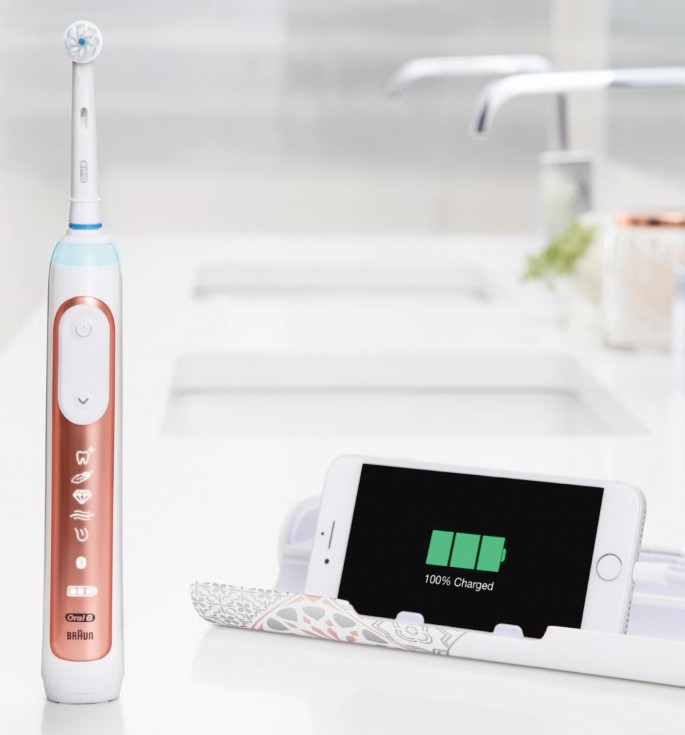
The market response has been emphatic. The global AI toothbrush market, valued at $4.21 billion in 2024, is projected to surge to $17.63 billion by 2034, representing a robust 15.4% compound annual growth rate. The AI-guided segment specifically is forecast to rise from $1.13 billion (2024) to $3.32 billion by 2033 at a 13.8% CAGR. Some analysts model an even more aggressive scenario, with the entire electric toothbrush market expanding at 26.1% CAGR as premium, tech-laden models pull consumers away from traditional manual brushes.
This is where patent innovation becomes the competitive moat. Companies racing to capture this opportunity are filing intellectual property that addresses these exact challenges: from AI-driven handle sensors providing real-time tactile feedback to mini-heliometer VSC sensors detecting gum disease early, to 3D gyro streams that map tooth surfaces with 95.3% accuracy, to phone-based CNN systems that inspect bristle wear and trigger automatic refill subscriptions.
In this analysis, we’ll decode the key patents driving AI toothbrush innovation and examine the unresolved technical challenges limiting mass-market adoption for companies positioned to lead this transformation from hygiene device to reimbursable diagnostic platform.
Check out AI Toothbrush patents filed in 2025:
Recent Patents Shaping AI Toothbrush Innovation
The following patents represent the current frontier in AI-powered oral care, each addressing specific technical barriers that have historically limited clinical efficacy and consumer adoption:
| Patent Number | Publicationn Date | Problem Disclosed | Proposed Solution | Commercial Product |
| IN202541049002A | 2025 | Current smart brushes only time, do not detect disease | Medical-grade optical/pH/pressure/temp sensors fused by AI app for instant cavity, plaque, enamel, gum alerts | None yet |
| US11876543B2 | 2023 | Users lack historic feedback & coaching | AI historic-performance module in connected brush; app shows pattern, duration, coverage trends | Philips Sonicare AI series |
| US20230123456A1 | 2023 | Need better position detection & personalized guidance | ML-driven position engine maps mouth; app delivers zone-by-zone coaching & analytics | Oral-B Genius AI |
| US20240187654A1 | 2024 | Consumers over-brush or miss spots | Connected AI brush with pressure + coverage sensors; real-time app feedback emphasizes prevention | Colgate Connected |
| IN202541077326A1 | 2025 | 2-3 min manual brushing is slow & incomplete | 18,000 bristle full-mouth pad; AI algorithm finishes full clean in 20 s | Feno Smartbrush |
Get the list of AI Toothbrush patents. Discover the problems they solve and the solutions they offer. Fill out the form to access it now!
How Major Brands Are Positioning AI Features in AI Toothbrushes?
Current market leaders demonstrate distinct AI strategy approaches based on sensor sophistication, app integration, and target demographics:
| Company | Flagship AI Features | Strategic Positioning |
| Philips Sonicare | Real-time feedback, personalized coaching via Sonicare app | Premium positioning; clinical validation focus |
| Oral-B (P&G) | 6-zone position detection, ML-based pressure control | Technology leadership; comprehensive analytics |
| Colgate | Smart brushing reports, preventive-care focus | Mass-market accessibility; dental professional partnerships |
| Oclean (Huami) | Voice prompts, gyroscope-based coverage map | Mid-market innovation; visual feedback emphasis |
| Xiaomi/Soocas | Budget AI models with app gamification | Cost-conscious consumers; ecosystem integration |
Key Challenges in AI Toothbrushes
While these patents represent significant progress, several fundamental technical and commercial hurdles remain unsolved. The following challenges define the current research frontier and present opportunities for breakthrough innovation:
| Key Challenge | Challenge Description | Industry Impact if Solved |
| Multi-modal pressure & motion-sensor fusion | No OEM yet runs a single on-device model that fuses ≥100 Hz force data with 6-DoF IMU streams inside a <50 mW power envelope; lab prototypes still need Raspberry-Pi-class boards | Enables genuinely “tooth-level” coaching and differentiates premium SKUs; analysts tag this as a pre-condition for the category to break out of its current 11% CAGR and reach the forecast 15-17% CAGR band worth an extra ~$3B by 2030 |
| Detachable/cartridge diagnostic sensors | Patents abound for snap-on heads carrying pH, glucose or VSC assays, but IP67 sealing, single-motion replacement and weekly calibration remain unsolved; BOM target <$1 vs current $4 | Would convert the brush from a hygiene device into a reimbursable diagnostic platform; McKinsey estimate pegs preventive oral-analytics TAM at $9B if single-use cartridges reach consumer price parity |
| Real-time (<100 ms) AI feedback algorithms | CNN plaque or caries models reach AUC >0.9 on smartphones, but MCU-class inference today needs ≥2 s window, too slow for in-brush coaching | Real-time pathology flagging unlocks dental-chair-quality monitoring at home; insurers already signal willingness to subsidise brushes that cut cavity-related claims by 15%, worth ~$1.2B annual savings in US market alone |
| AI-driven brushing location & trajectory tracking | IMU-only dead-reckoning drifts >15 cm after 30 s; vision-based trackers fail with foam; magnetic-aided lab rigs achieve 0.5 mm but need custom mouthpiece | Sub-millimetre, mouthpiece-free tracking would let OEMs promise “100% surface coverage” and move the conversation from gamified sextant scores to guaranteed plaque removal, addressing the #1 consumer complaint (30% dissatisfaction with coverage feedback) |
| Adaptive motor control for optimal pressure | Present best is ternary LED feedback (too soft/good/too hard) with ±1 N hysteresis; closed-loop torque modulation that adapts to inferred gum health crosses IEC 60601 home-healthcare rules, a $2M, 18-month certification barrier | Medical-grade adaptive control would allow brushes to claim “prevents over-brushing damage,” a differentiator that justifies 2-3× price premium and opens prescription channels currently blocked by safety regulations |
From Smart Device to Preventive Healthcare Platform
The AI toothbrush market stands at a critical inflection point. The category has validated consumer demand, premium brands command $200-300 price points with strong margins, and clinical evidence is mounting that AI-guided brushing improves outcomes. Yet fundamental barriers, real-time AI inference latency, diagnostic sensor economics, position tracking accuracy and regulatory pathways for therapeutic claims, continue to separate current products from their full potential as preventive healthcare platforms.
The patents filed between 2022-2025 reveal an industry systematically addressing these challenges. Sensor fusion tackles the real-time coaching problem. Diagnostic cartridges enable disease detection. Spatial mapping ensures comprehensive coverage. Adaptive motor control promises therapeutic benefits. The innovation pipeline is robust and accelerating.
The transformation from manual to AI-guided brushing mirrors the evolution of fitness tracking, where devices evolved from simple pedometers to comprehensive health monitoring systems commanding premium prices and subscription revenues. The oral care market is following the same trajectory, with AI toothbrushes poised to become the smartwatch of dental health.
The defining question is not whether AI will transform oral care, but which organizations will capture the value from this $17.63B opportunity.
Interested in a deeper AI Toothbrushes patent analysis?
Request a tailored report or claim-to-product mapping to explore competitor strategies.