In New York City, a new food trend recently made headlines – vanilla ice cream dipped in French butter to create a crisp, glossy shell. While it caught attention for its novelty, it also reflects a broader shift happening across the ice cream industry.
Over the past few years, companies have been rethinking how ice cream is formulated, processed, and delivered to meet growing expectations around health, sustainability, and product quality.
The shift is clear. Plant-based bases are becoming more common, natural stabilizers are replacing synthetic ones, and production lines are moving toward energy-efficient freezing, precise mixing, and higher levels of automation. These developments mark a move away from traditional methods and toward a more technical, consistent, and efficient manufacturing approach.
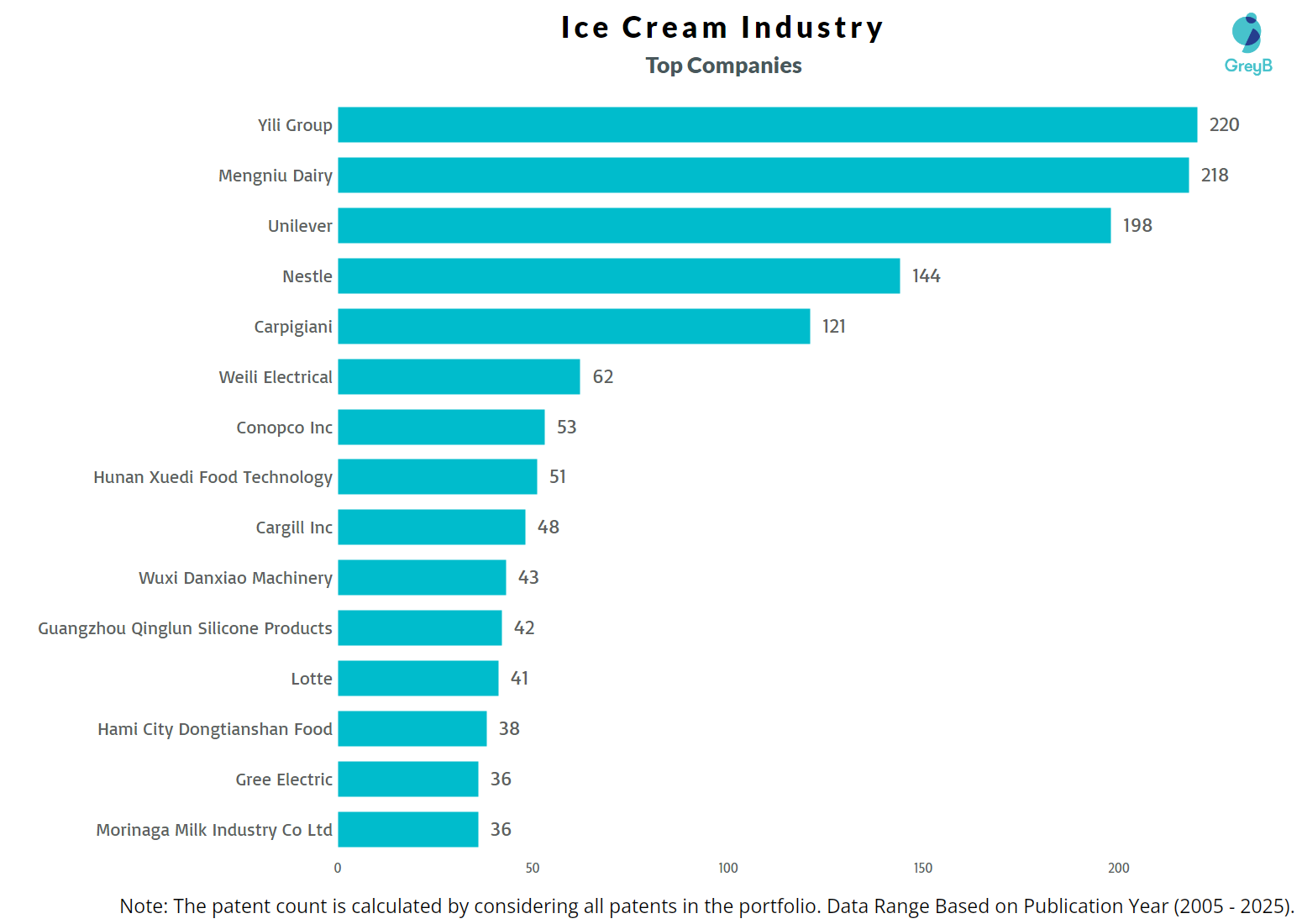
This evolution is also visible in the patent overview. Between 2019 and 2024, more than 11,500 ice-cream-related patents were filed globally. The most active contributors include Yili Group, Mengniu Dairy, Unilever, Nestlé, and Carpigiani, all investing steadily in new formulations, process improvements, and equipment innovation.
What are the problems with ice cream industry?
Health & Nutrition
Reformulating without compromising taste
Ice cream brands face rising demand for low-sugar, low-fat, and clean-label options. Reformulating while maintaining creaminess, flavor, and mouthfeel remains one of the industry’s toughest challenges.
Ingredient Limitations
Replacing synthetic stabilizers with natural alternatives
Natural stabilizers and emulsifiers often fail to match the performance of synthetic ones, affecting texture, shelf life, and product stability especially in plant-based products.
Cold-Chain Vulnerability
Temperature fluctuations affecting quality
Ice cream is highly sensitive to temperature shifts. Even minor breaks in the cold chain can cause ice crystal growth, freezer burn, and product waste, impacting both quality and shelf life.
Regulatory Compliance
Clean-label, allergen, and formulation standards
Global regulations around additives, allergens, and dairy alternatives create complexity for manufacturers, especially when launching products across multiple markets.
Packaging Limitations
Balancing sustainability with performance
Ice cream packaging must survive freezing, moisture, and transport. Finding eco-friendly materials that still protect product quality is a major bottleneck.
R&D Cost and Technical Barriers
High investment needed for new formulations
Developing functional, protein-rich, or sugar-reduced ice creams requires specialized equipment, longer testing cycles, and higher R&D spend—restricting innovation for smaller manufacturers.
Which are the top companies hold the most patents in the ice cream industry?
The global ice cream industry’s innovation is driven by a mix of major dairy brands, global FMCG leaders, and specialized equipment manufacturers.
Patent data shows strong dominance from Chinese companies like Yili and Mengniu, with Western leaders such as Unilever and Nestlé focusing on sustainability and automation.
Together, the top 15 companies hold a significant share of active patents, signaling a clear shift toward Asia-led R&D in the evolving ice cream technology overview.
Curious where your competitors stand?
Which countries are leading global ice cream innovation?
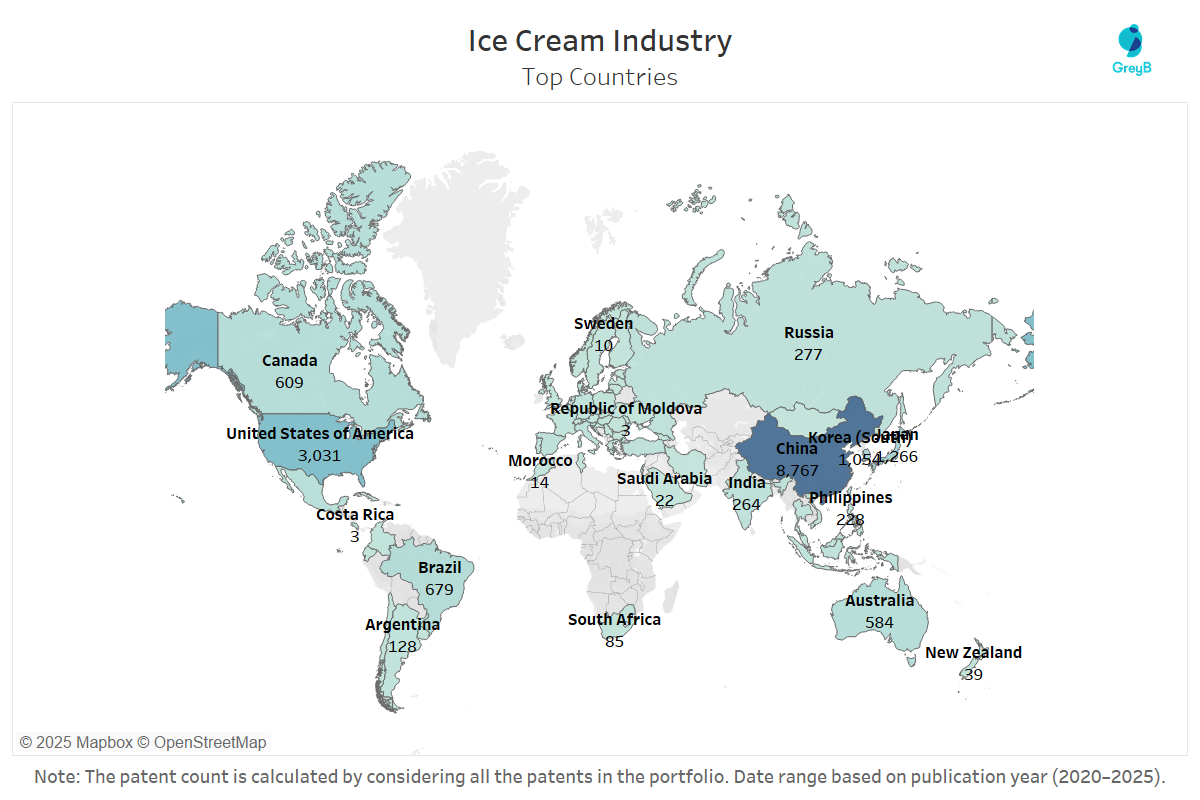
Innovation in the ice cream industry is led largely by Asia, with China emerging as the top patent contributor. China holds over 40% of active global ice cream patents, driven by advancements in dairy processing, frozen dessert technology, and alternative formulations.
The United States remains strong in automation, packaging, and flavor innovation, while Europe and Japan lead in equipment and quality control. The rise of Brazil, India, and South Korea shows how ice cream R&D is now a truly global effort.
Curious how your region stacks up?
How have patent filings in ice cream evolved over the years?
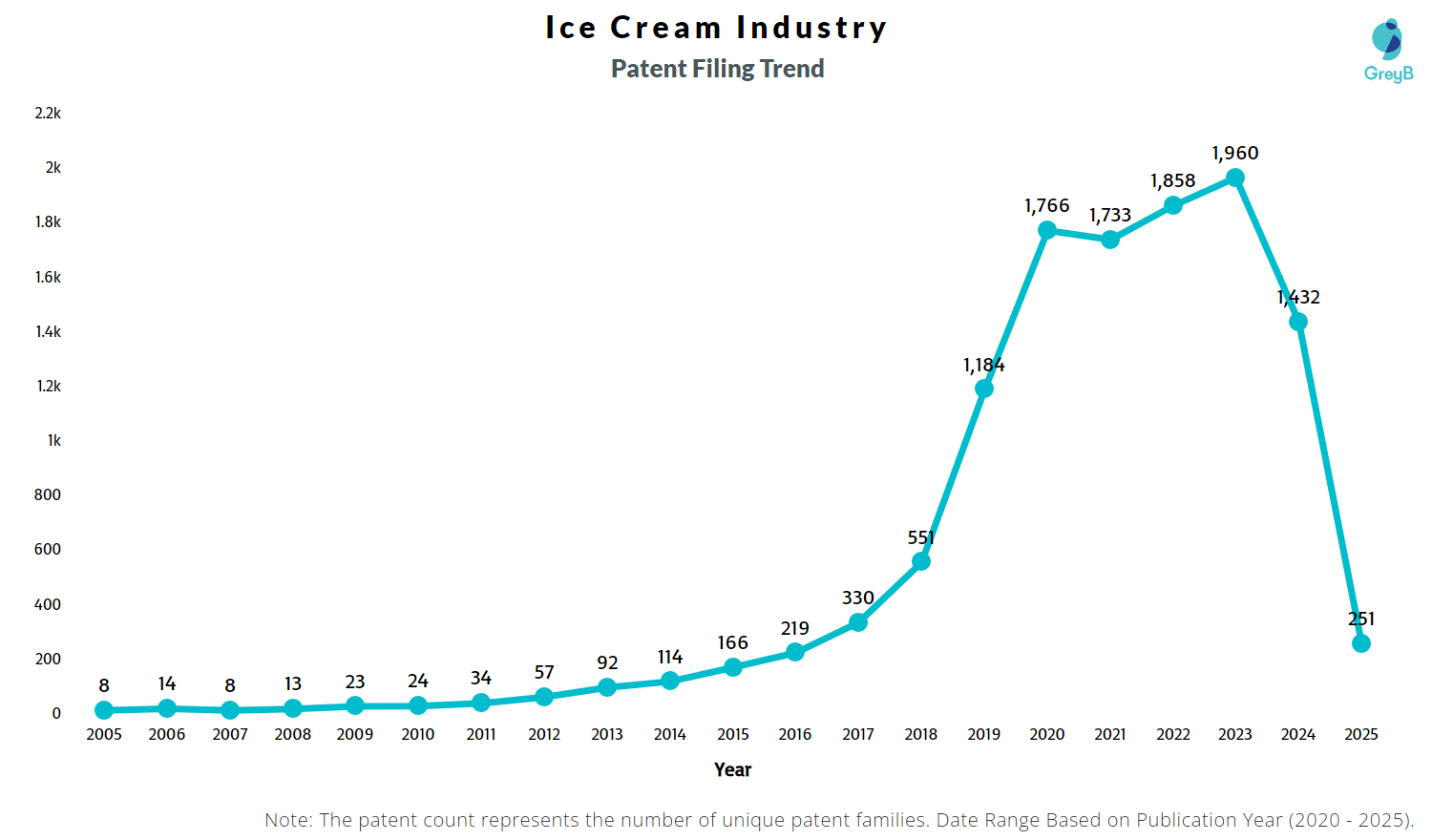
Innovation in the ice cream industry has grown rapidly over the last two decades. After steady increases post-2010, filings surged around 2018-2019 with the rise of health-focused, sustainable, and food-tech advancements.
Patent activity peaked in 2023 with nearly 2,000 filings, reflecting strong investment in new formulations, production technologies, and sustainable solutions. Although 2024-2025 show a slight dip, the overall trend highlights a highly active and evolving innovation landscape.
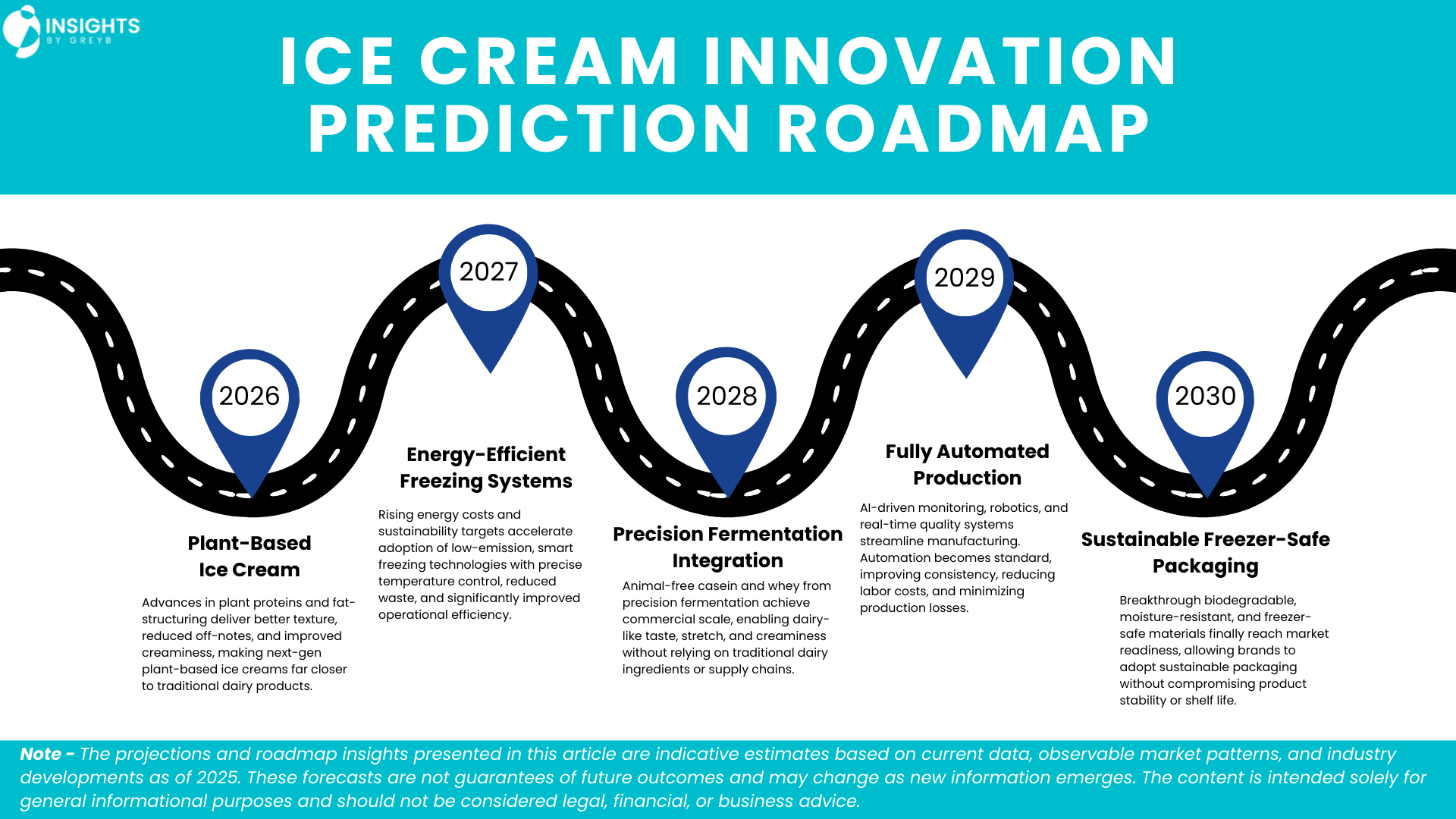
Ice Cream Innovation Prediction Roadmap
What is in the report?
Full breakdown of patent portfolios by technology area.
Year-wise evolution of filings by technology area from 2020 to 2025.
Rank-list of top companies/countries in the ice cream patent landscape and their filing trends.
Global distribution of filings: country-wise data & year-wise evolution.
Legal status analysis: how many are active, granted, abandoned etc.
Future directions & upcoming innovation hotspots in the ice cream industry.