
Picture this: it’s been a long, draining day. You’re frustrated, maybe even angry, stuck in traffic with thoughts racing through your mind. But as you settle into your car and start to drive, something unexpected happens.
The cabin lights dim to a soothing hue. The temperature adjusts just right. A calming playlist fades in. Even the seat contours gently shift to comfort you. You didn’t touch a single button. Your car just… knew.
Welcome to the next frontier of in-vehicle intelligence.
General Motors is paving the way with a newly published patent that could redefine how we experience mobility. This isn’t your average smart car feature. GM’s emotion detection system goes beyond voice commands and automation. It detects your emotional state – stress, joy, anger, fatigue – and dynamically transforms your vehicle’s interior environment to help regulate and elevate your mood.
We’re talking about a driving experience that’s no longer just reactive. It’s intuitive. It’s empathetic. It’s emotional companionship on wheels.
Patent behind this technology
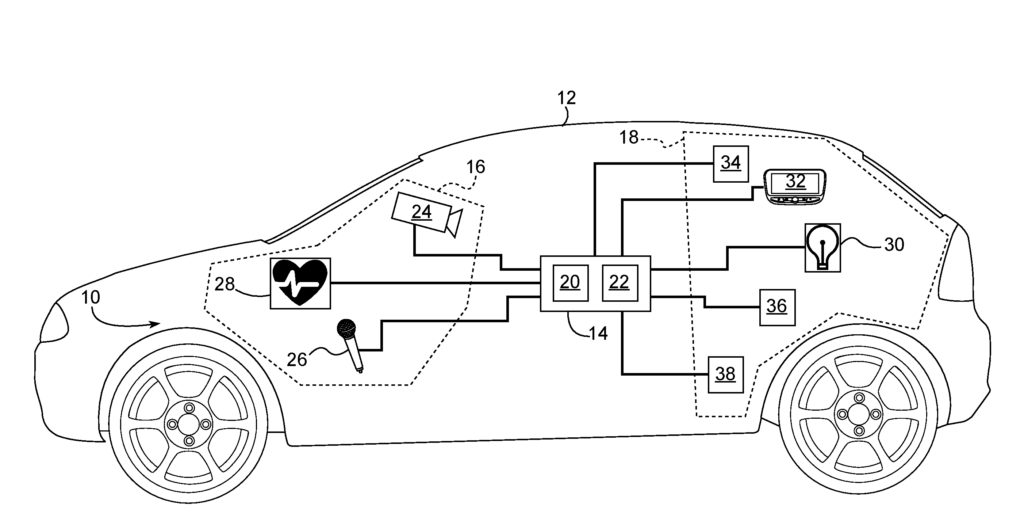
US20250222937A1 – This system is designed to personalize a vehicle’s interior environment based on how the occupant is feeling. It uses sensors inside the car – like cameras, microphones, or biometric devices – to collect data about the person inside. These sensors are connected to a central controller (like the brain of the system).
The controller takes measurements from the sensors and uses that information to analyze the emotional state of the person, whether they’re calm, stressed, happy, or anxious. Based on this emotional analysis, the system then automatically adjusts parts of the car’s interior, such as the lighting, music, temperature, seat massage, or even fragrance – to either match or improve the person’s mood.
In essence, it’s a smart system that helps make the ride more comfortable, personalized, and emotionally supportive – without the occupant needing to lift a finger.
Breaking It Down: How the System Works
1. Multi-Sensor Input Collection
The vehicle gathers data from:
- Interior cameras to monitor facial expressions
- Microphones to capture tone, pitch, and voice patterns
- Biometric sensors to track: Heart rate, Respiration rate, Galvanic skin response (sweat conductivity), EEG-based brain activity.
2. Emotion Identification Algorithm
Using a trained machine learning model, the system analyzes this multimodal data to classify emotional state as:
- Positive (happy, relaxed, calm)
- Negative (stressed, anxious, irritated)
3. Adaptive Environmental Response
The system then controls various interior environmental devices, including:
- Ambient lighting system: Adjusts color and brightness based on mood
- Infotainment system: Changes music genre, volume, or suggests new routes
- HVAC system: Tweaks temperature, airflow, or vent position
- Seat massage system: Activates relaxing or energizing massage routines
- Interior aroma system: Dispenses calming or mood-lifting scents
Why This Matters: Beyond Comfort
While this might sound like luxury tech for top-tier vehicles, the real implications are far broader:
Safety – By detecting stress, anger, or drowsiness, the vehicle can intervene, suggesting rest stops, calming the atmosphere, or rerouting via less congested roads.
Mental Wellness – In a time when in-cabin stress and screen overload are real concerns, this system supports mental balance by creating adaptive wellness spaces inside the vehicle.
Multi-User Support – Designed for future mobility models like shared autonomous vehicles, the system can tailor experiences per user, automatically recognizing them and adapting accordingly.
Ethical Considerations & Challenges
Of course, no system is without hurdles. Key challenges stand out:
Data Privacy: The collection of sensitive biometric and emotional data is a significant concern. The patent applicant, General Motors, acknowledges this by outlining a system where data processing occurs locally within the vehicle, which can help minimize the risk of external data breaches. However, robust transparency and clear consent protocols for how data is used and stored will be paramount for earning consumer trust.
Accuracy of Emotion Recognition: Human emotions are nuanced and culturally specific. An algorithm trained primarily on one demographic might misinterpret the emotional cues of another. Continuous training on diverse, global datasets will be essential to ensure the system is inclusive and accurate.
Consent and Control: The system wisely includes a prompt for user approval before making adjustments. This is critical not only for individual drivers but also in a multi-passenger scenario, ensuring that changes intended to comfort one person do not create an unpleasant environment for another.
Conclusion
Emotion-aware vehicle personalization is redefining what it means to have an intelligent car. By seamlessly blending biometric sensing, machine learning, and adaptive interior systems, vehicles are moving beyond reactive functionality toward truly empathetic experiences.
This innovation doesn’t just enhance comfort – it fosters safety, mental well-being, and a deeper connection between humans and machines. As this technology matures, it promises to transform every journey into a personalized, emotionally attuned experience – quietly responsive, intuitively human.