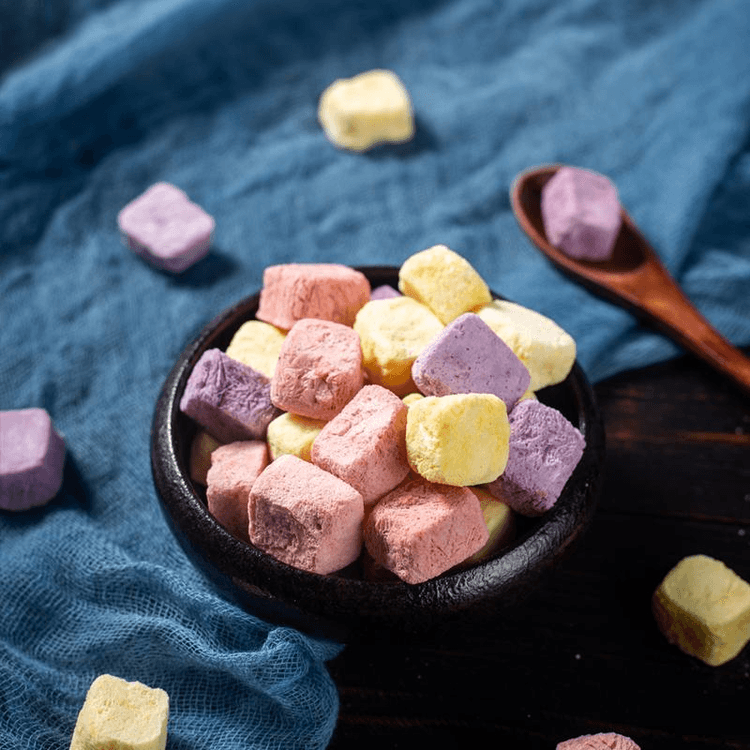
In 2025, the dry yogurt market is estimated at approximately USD 840 million, and analysts forecast it will nearly double to USD 1.68 billion by 2035, growing at a CAGR of 7.2 % over the decade. This trajectory signals more than consumer curiosity, it marks a shift toward ambient, functional dairy forms that challenge traditional cold-chain constraints.
Dry yogurt or yogurt converted into powders, granules or rehydratable flakes is emerging as a vehicle to deliver probiotics, protein and flavor in a stable, portable format. Yet behind its apparent simplicity lie complex technical demands: preserving live cultures through dehydration, maintaining creaminess upon reconstitution and designing packaging systems that curb moisture ingress and oxidative degradation.
Dry yogurt represents a frontier of multidomain innovation. Patents are being filed for novel dehydration methods, encapsulation matrices and stabilizer systems aimed at maintaining probiotic viability, texture, and rehydration capacity. These developments are shaping new product formats, market categories and IP strategies across regions.
This article takes a closer look at the technical innovations and patent trends enabling the dried yoghurt transformation, from process technologies to formulation advances and shelf-life enhancements.
Check out Dried Yoghurt patents filed in 2025:
10 Key Patents Powering Innovation in Dried Yoghurt
| Patent No | Patent Holder | Publication Date | Strain Used | Drying Method | Target Problem | Proposed Solution |
| CN114946945A | Inner Mongolia Mengniu Dairy | 30-08-2022 | Lactobacillus bulgaricus, Streptococcus thermophilus, Lactococcus lactis | Membrane filtration + pasteurization | Destruction of bioactive proteins during ultra-pasteurization | Low-temperature processing to preserve lactoferrin and immunoglobulins |
| CN113662046A | Quantum Hi-Tech Guangdong | 19-11-2021 | Lactobacillus rhamnosus, L. casei, Streptococcus thermophilus, L. bulgaricus, L. paracasei, Bifidobacterium | Vacuum low-temperature belt drying (20-58°C) | Transportation and storage limitations of liquid yogurt | Cost-effective alternative to freeze-drying maintaining probiotic viability |
| BR102020001343A2 | Instituto Federal Rio Grande do Norte & Universidade Federal Campina Grande | 03-08-2021 | Streptococcus thermophilus, Lactobacillus bulgaricus | Lyophilization (-6 to -24°C, 40-60 hours) | Need for shelf-stable prebiotic yogurt without refrigeration | Mango-based prebiotic powder for cold chain-free distribution |
| ES2798025B2 | Corporacion Alimentaria Penasanta | 08-07-2021 | Bifidobacterium animalis subsp. lactis | Modified atmosphere packaging (not specified) | Limited cold chain infrastructure | Room-temperature stable powder with microencapsulated acidulants |
| CN112655761A | Shandong Ulezi Biotechnology | 16-04-2021 | L. bulgaricus, Streptococcus thermophilus, L. paracasei, Bifidobacterium, L. acidophilus | Freeze-drying | Short shelf life and temperature sensitivity of liquid yogurt | Automated freeze-drying system maintaining probiotic functionality |
| ES2798025A1 | Corporacion Alimentaria Penasanta | 04-12-2020 | Bifidobacterium animalis subsp. lactis | Modified atmosphere packaging | Limited yogurt access in regions without cold chains | Instant powder with trilayer aluminum packaging |
| CN109497139A | Huaibei Normal University | 22-03-2019 | L. bulgaricus, Streptococcus thermophilus, Lactococcus lactis, L. johnsonii PM308 | Freeze-drying (-60°C, 10Pa vacuum, 40 hours) | Need for customizable yogurt with extended shelf life | Multifunctional powder with separate flavor and probiotic packets |
| CN107927166A | Heze Bigtree Incubation Base | 20-04-2018 | Streptococcus thermophilus, L. bulgaricus, Bifidobacterium | Spray drying (110-140°C inlet, 72-78°C outlet) | Storage and transportation limitations of liquid yogurt | Four-step process with glucose syrup and protein addition |
| CN107136217A | Zhang, Li-ming | 08-09-2017 | L. bulgaricus, Streptococcus thermophilus | Freeze-drying (-20 to -30°C, 30-50 hours) | Limited distribution due to refrigeration requirements | Probiotic fermented powder with wolfberry and glucose |
| CN106615218A | Beijing Sanyuan Food | 10-05-2017 | Streptococcus thermophilus, L. bulgaricus | Spray drying (150-190°C inlet, 55-95°C outlet) | Market dominated by dry-mixed products vs. true fermented yogurt | Actual fermentation followed by spray drying |
Get the list of Dried Yoghurt patents. Discover the problems they solve and the solutions they offer. Fill out the form to access it now!
The patent activity surrounding dried yoghurt isn’t occurring in a vacuum. It mirrors a broader shift in how yoghurt is being reimagined and reformulated for diverse commercial applications. From on-the-go snacks to functional nutrition products, dried yoghurt is now appearing in multiple formats tailored for convenience, shelf stability and targeted health benefits.
Product Formats in Dried Yoghurt Innovation
The table below outlines how dried yoghurt is evolving across different product formats, each aligned with unique application needs and consumer segments:
| Format Category | Product Types | Key Applications |
| Powdered/Granulated | Instant mixes, flavored variations | Beverages, baking, meal replacement |
| Freeze-Dried Snacks | Crisps, bars, shaped snacks | Direct consumption, kids’ products |
| Functional Spreads | Fortified pastes, meal replacements | Space food, malnutrition applications |
| Hybrid Matrices | Plant-dairy blends, protein-enriched | Sports nutrition, sustainability-focused |
Despite its rising popularity, transforming traditional yoghurt into a shelf-stable format presents a series of complex technical hurdles. Whether it’s protecting probiotic viability, achieving consistent rehydration, or ensuring consumer-acceptable texture — every step introduces variables that affect both product integrity and commercial scalability.
Navigating the Innovation Gaps in Dried Yoghurt
The following tables summarize the key technical and formulation challenges being addressed by innovators and highlight where opportunities exist for strategic differentiation.
Technical Challenges & Market Opportunities Matrix
| Challenge Area | Current Technical Gaps | Market Opportunities | Innovation Potential |
| Probiotic Viability | • 50-80% probiotic loss during drying processes • Limited survival rates in spray drying • Maintaining 10⁶-10⁹ CFU/g consistently | • Premium probiotic products with guaranteed potency • Targeted health positioning • Clinical validation opportunities | Advanced encapsulation technologies, protective carriers |
| Sensory Acceptance | • Powdery mouthfeel and grainine • Off-flavors in plant-based variants • Texture defects in reconstituted products | • Hybrid dairy-plant formulations • Novel texture modification solutions • Flavor masking technologies | Consumer acceptance drives market success |
| Processing Efficiency | • High energy costs in freeze-drying • Equipment scaling limitations • Wall build-up in spray drying | • Cost-effective drying alternatives • Continuous processing solutions • Equipment optimization | Process innovation for cost reduction |
| Functional Enhancement | • Limited bioactive retention • Nutrient degradation during processing • Incomplete prebiotic-probiotic synergy | • Nutraceutical market expansion • Targeted health claims • Personalized nutrition | Growing functional food demand |
Shelf Life & Stability Challenges
| Technical Issue | Current Limitations | Commercial Impact | Solution Pathways |
| Moisture Sensitivity | • Water activity control challenges • Packaging barrier limitations • Regional humidity variations | • Geographic market restrictions • Storage cost implications • Product degradation risks | Advanced packaging, modified atmosphere, moisture barriers |
| Oxidative Degradation | • Vitamin loss over time • Lipid rancidity development • Color changes in fortified variants | • Shortened shelf life claims • Quality consistency issues • Premium pricing challenges | Antioxidant systems, protective encapsulation |
| Microbial Contamination | • Post-process contamination risks • Temperature abuse sensitivity • Cross-contamination in facilities | • Food safety compliance costs • Recall risks • Regulatory barriers | Antimicrobial packaging, processing controls |
As dried yoghurt gains ground as a shelf-stable, functional alternative to traditional dairy, it’s clear that this transformation is being driven by more than consumer demand. It’s being enabled by targeted scientific breakthroughs, in drying methods, formulation matrices, probiotic encapsulation and moisture- and oxygen-resistant packaging, all of which are turning long-standing technical hurdles into solvable innovation challenges.
At the heart of these developments is a growing body of intellectual property. Patents aren’t just protecting isolated process tweaks; they’re defining new formats, enabling functional claims and creating entry barriers in a space that is still in its early commercial stages. Whether it’s a powdered mix for space food or a hybrid dairy-plant matrix aimed at sports nutrition, the IP strategy behind dried yoghurt is quietly becoming a differentiator.
Interested in a deeper Dried Yoghurt patent analysis?
Request a tailored report or claim-to-product mapping to explore competitor strategies.