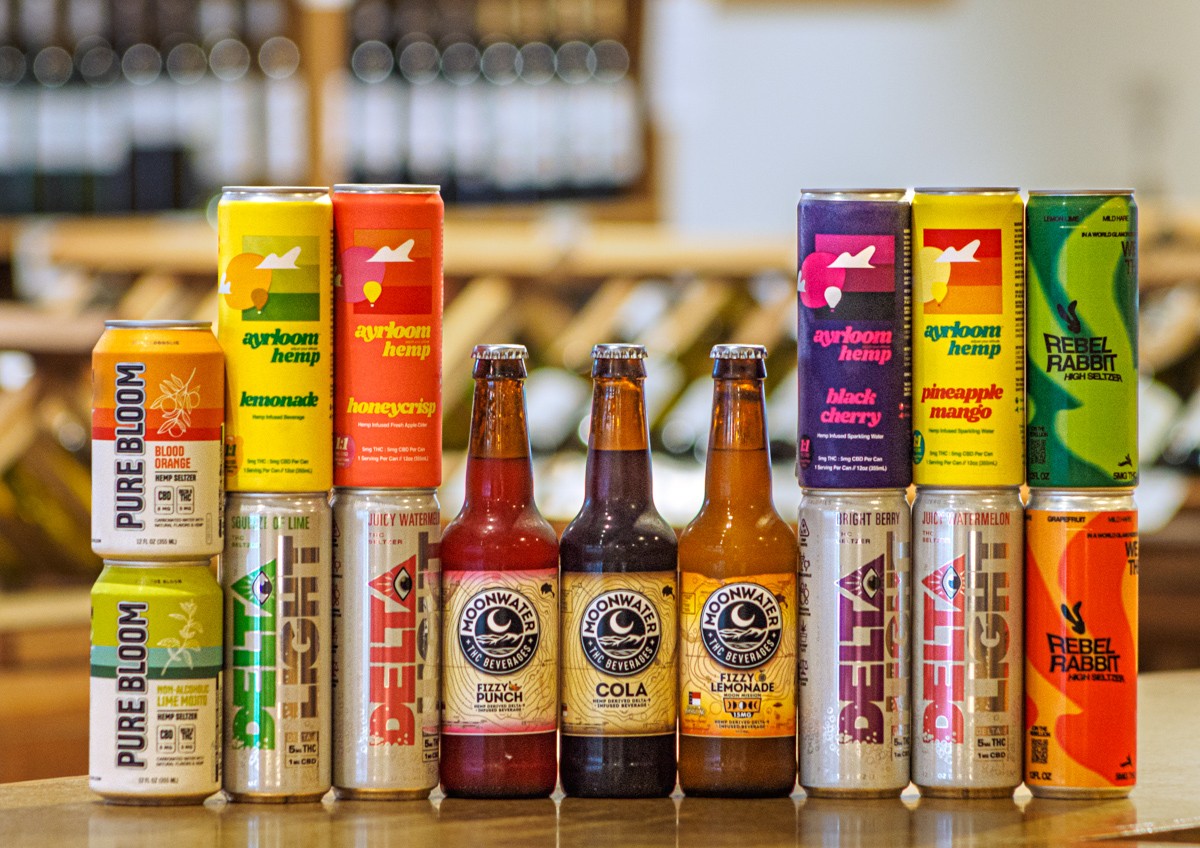
Not long ago, the idea of a THC-infused beverage felt like something reserved for dispensary shelves and experimental labs. Yet somewhere between shifting hemp regulations and a wave of creative formulation work, Delta-9 drinks have started turning up everywhere from boutique wellness shops to mainstream beverage aisles. What seemed like a fringe trend has quickly become one of the most closely watched experiments in modern drink innovation.
The momentum hasn’t come from hype alone. Over the past year, several brands have unveiled Delta-9 seltzers and sparkling waters that promise a controlled, predictable experience: an alternative that sidesteps alcohol but still offers a noticeable mood lift. Some are leaning on nano-emulsified cannabinoids for faster onset, while others are racing to perfect flavor-stable formulations that can survive long shelf lives without separation or bitterness. Even traditional beverage companies, once cautious about cannabis-adjacent products, are quietly piloting their own hemp-derived variants after seeing early sales numbers outpace projections.
Amid this rush, something interesting is happening behind the scenes: a surge of patent filings. Novel extraction steps, encapsulation systems, stabilizing methods, cannabinoid-delivery architectures, each represents a different attempt to claim technical real estate in a market moving faster than regulators can write definitions.
Track Delta-9 Drinks Patents Filed in 2025:
This article steps into that quieter but far more revealing world, the inventions powering Delta-9 drinks and the patents that will define how this category evolves over the coming years.
Where Is the Delta-9 Drinks Market Headed Over the Next Few Years?
Explosive Revenue Growth: The market is projected to reach $3.8-4.1 billion by 2025-2028, up from $200 million in 2020, representing a 4.6% compound annual growth rate through 2029.
Hemp-Derived Segment Performance: The hemp-derived THC beverage segment saw 143% growth in 2023, reaching $98.1 million in sales, though still trailing CBD drinks ($166.9 million) and marijuana-derived THC beverages ($347 million).
Market Share Context: Cannabis beverages currently hold a 0.9% share of total cannabis sales, generating $54.6 million in Q1 2025, representing a 15% increase from Q1 2024.
What Are the Key Patents Behind Delta-9 Drinks?
| Patent Number | Patent Holder | Publication Year | Problem Addressed | Technical Solution Proposed | Market Products |
| US20230321031A1 | Karnak Technologies LLC | 2020 | Poor water solubility, low oral bioavailability, dose inconsistency of cannabinoids in beverages | Converts Δ9-THC into shelf-stable, water-dispersible powder via nano-emulsion: solid surfactant-coated lipophilic nanospheres (50–900 nm) using Poloxamer 407/188 plus cryoprotectants; 12-month stability, pH-invariant | Technology licensed to various cannabis-beverage manufacturers; no direct consumer SKUs identified |
| US20210315817A1 | HEXO Operations Inc | 2021 | Incorporating hydrophobic Δ9-THC into clear, shelf-stable beverages at industrial scale | Self-emulsifying system tuned to HLB ≈ 16.7 using Tween-20 + vitamin-E-TPGS; ≤100 nm droplets, ≤20 NTU turbidity, 10–60 min onset | HEXO’s Canadian cannabis beverage lines (e.g., sparkling waters, beers) |
| US11712430B2 | Karnak Technologies LLC | 2023 | Extreme lipophilicity, poor solubility, low bioavailability, rapid Δ9-THC degradation | Solid nano-emulsion with ammonium glycyrrhizinate surfactant + cryo-protectants; 50–900 nm spheres, up to 75% cannabinoid load, 12-month RT stability | Licensed to pharma & recreational producers; no branded consumer item yet |
| US20210315818A1 | HEXO Operations Inc | 2021 | Solubilizing Δ9-THC in non-aqueous yet shelf-stable beverage matrices | Cannabinoid self-emulsification system, combined HLB 11–19; ≤100 nm droplets, D90 ≤80 nm, ≥6 months at 40°C | Incorporated across HEXO’s beverage portfolio |
| US20220296526A1 | HEXO Operations Inc | 2022 | Creating shelf-stable, transport-friendly Δ9-THC drink powders that re-create nano-emulsion on re-hydration | Spray-dry pre-formed cannabinoid nano-emulsion into high-melting sugar carrier (lactose, mannitol, cyclodextrin); water activity <0.5, D50 <200 nm upon re-hydration | Powdered cannabis drink mixes sold in Canada under HEXO brands |
| US20210196629A1 | HEXO Operations Inc | 2021 | Industrial-scale delivery of water-insoluble cannabinoids into clear, shelf-stable beverages | Nano-emulsification optimizing: combined HLB 11–15, emulsifier:oil 1:1–2.5:1, oil:water 1:30–1:40; D50 ≤80 nm, ≤20 NTU, ≥2 months at 40°C | Multiple HEXO cannabis beverages |
| US20200170944A1 | Canopy Growth Corporation | 2020 | Water-soluble, transparent, shelf-stable cannabinoid beverages | Micro-emulsion with monoglyceride carrier oil, soy lecithin, sucrose monoester, vegetable glycerin; ~40 nm droplets, ≤5 NTU, calorie-free, ≥55 days RT stability | Canopy’s THC-infused sparkling waters & teas |
| US20220202710A1 | Canopy Growth Corporation | 2022 | Preventing oil-phase cannabinoids from precipitating or degrading in aqueous drinks | True water-soluble micro-emulsion concentrate: monoglyceride carrier + dual emulsifiers (soy lecithin + sucrose monopalmitate) + glycerin; 40 nm, <5 NTU, 10–30 min onset | Part of Canopy’s recreational beverage portfolio |
| US20210177013A1 | Canopy Growth Corporation | 2021 | Rapid-onset, low-calorie, shelf-stable cannabinoid drinks | Transparent nano-emulsion using Quillaja saponins, monoglyceride carrier, glycerin; 30–100 nm, <30 min onset, ≤3.6% THC loss after 3-month storage | Sports drinks, flavoured waters under Canopy brands |
| CA3109852A1 | Canopy Growth Corporation | 2021 | Poor solubility & rapid oxidation of Δ9-THC in aqueous drinks | Oil-in-glycerin nano-emulsion: monoglyceride carrier, dual emulsifiers (soy lecithin + sucrose monopalmitate), calcium-disodium-EDTA chelator; <100 nm droplets, 10–30 min onset | Various cannabis-infused beverages under Canopy labels |
Get the list of Delta-9 Drinks Patents. Discover the problems they solve and the solutions they offer. Fill out the form to access it now!
Which Key Challenges Remain Unresolved in Delta-9 Beverage Development?
| Challenge | Description |
| Bioavailability & Absorption Variability | Oral Δ9-THC is subject to extensive first-pass metabolism; the 11-OH-THC/Δ9-THC AUC ratio can differ up to 8-fold between individuals, making dose-to-effect prediction unreliable. Nano-emulsions (20–200 nm) raise Caco-2 permeability ≈1.5× relative to oil solutions, but clinical PK data still show high inter-individual scatter; SMEDDS formats help yet do not eliminate variability. |
| Chemical Stability & Degradation | THC oxidises to cannabinol (CBN) via allylic hydroperoxides; 34 % potency is lost in 127 days at 30 °C. Acidic pH (< 5) accelerates decarboxylation, while alkaline pH (> 8) promotes oxidative cleavage. Commercial nano-emulsions guarantee only 6-week potency hold at 5–8 pH; freeze/thaw, carbonation and high-sucrose matrices trigger droplet coalescence and ring formation. |
| Taste-Masking & Sensory Defects | Bitter, terpene-heavy notes are detectable at sub-ppm levels, depressing repeat-purchase intent—especially in low-calorie or unsweetened lines. Effective masking needs cyclodextrin complexation or multi-layer coatings that add 5–15 % bulk and can retard dissolution; micro-encapsulation payloads remain < 5 % w/w THC and redisperse poorly in carbonated bases. |
| Regulatory Fragmentation | FDA has no food-additive regulation for Δ9-THC; products rely on enforcement discretion. At least twelve U.S. states now cap hemp-derived Δ9 drinks at 2 mg per serving or 10 mg per package—below many 5–10 mg/can SKUs. Harmonised specs for nano-emulsion particle-size or residual solvents do not exist, forcing case-by-case submissions. |
| Scalability & Manufacturing Gaps | High-throughput, sensory-friendly taste-masking for clear, low-viscosity beverages is still emerging; no standardised analytical methods for cannabinoid nano-emulsions are accepted across jurisdictions. Environmental life-cycle impacts (energy input, surfactant waste) of nano- vs. micro-emulsion routes remain un-quantified, complicating sustainability claims for large-scale production. |
The rapid rise of Delta-9 drinks signals more than a passing trend, it marks the beginning of a new category where formulation science, regulatory creativity, and intellectual property shape the competitive landscape. As companies refine faster-acting emulsions, more stable infusions, and cleaner flavor profiles, the next wave of innovations will determine which brands lead and which follow.
With patent activity accelerating and consumer interest steadily climbing, the industry stands on the edge of a broader transformation. The coming years are likely to bring tighter regulations, more sophisticated delivery systems, and a clearer division between commoditized products and truly differentiated technologies. For innovators willing to navigate this evolving terrain, Delta-9 beverages offer a rare opportunity: a still-forming market where the most influential breakthroughs are yet to be written.
Interested in a deeper Delta-9 Drinks patent analysis?
Request a tailored report or claim-to-product mapping to explore competitor strategies.