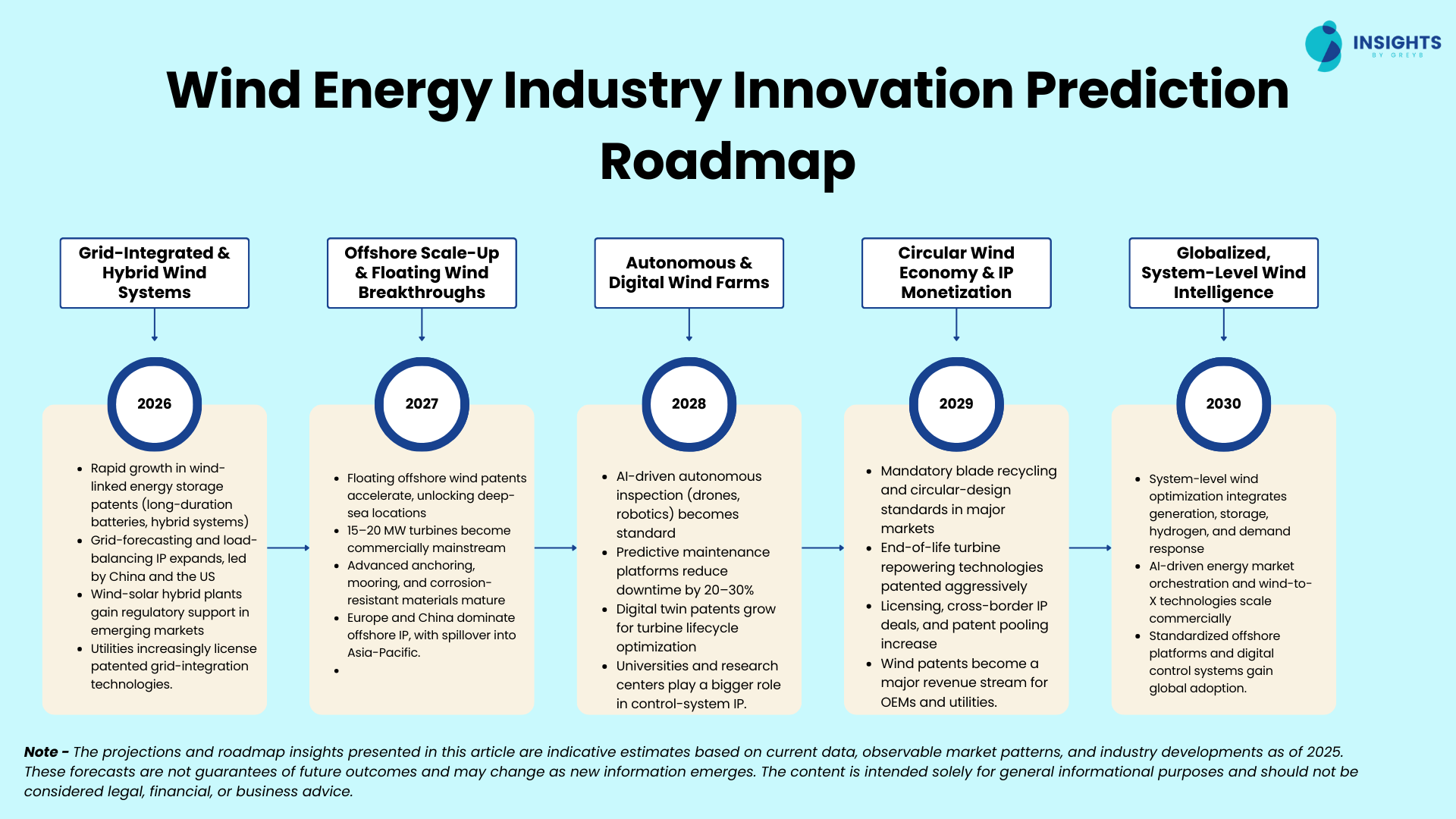
Wind energy has become one of the most important sources of clean power in the world. It uses the natural force of moving air to generate electricity, helping reduce our dependence on fossil fuels. Over the past few decades, wind energy has grown rapidly, and many countries are investing in new technologies to make it more efficient and affordable.
Patents play a key role in this journey. They show us how inventors and companies are working to improve wind turbines, storage systems, and grid integration. By studying patent trends, we can understand where innovation is happening and which areas are receiving the most attention. This helps us see the future direction of wind energy and the opportunities it brings.
Innovations in wind energy are not only about bigger turbines. They also include smarter designs, better materials, and digital solutions that make wind farms more reliable. For example, improvements in blade design, offshore wind systems, and AI-based monitoring are changing the way wind energy is produced and managed. These developments are making wind power more sustainable and cost-effective.

Wind doesn’t blow consistently, creating fluctuations in electricity production. This variability challenges grid operators who must balance supply and demand in real-time. Advanced forecasting systems, battery storage solutions, and demand response programs help reduce intermittency. Hybrid systems combining wind with solar or other sources enhance reliability and grid integration.
Turbine manufacturing, transportation, installation, and grid connection demand substantial capital. Offshore wind farms are particularly expensive due to complex marine engineering requirements. Economies of scale, improved manufacturing processes, and supportive policies such as subsidies, tax credits, and long-term contracts help make wind projects more economically viable.
Rotating blades pose collision risks to flying wildlife, particularly migratory birds and bats. Noise pollution and habitat disruption affect local fauna and communities. Advanced radar systems, turbine shutdown protocols during migration seasons, careful site selection to minimize wildlife casualties. Ongoing research into blade design and detection technologies continues to improve environmental compatibility.
Turbines need significant spacing for optimal performance, consuming large land areas. Visual appearance and shadow flicker create local opposition and regulatory challenges in populated regions. Offshore wind development, repowering existing sites with larger turbines, and community engagement through transparent communication, participatory planning and benefit-sharing schemes improve public acceptance.
Extreme weather, lightning strikes, and mechanical stress on key components make maintenance particularly difficult and expensive to maintain due to accessibility issues and corrosive marine environments. Predictive maintenance using IoT sensors, drone inspections, and AI-powered monitoring systems reduce downtime, improved materials and protective coatings extend component lifespan and reliability.
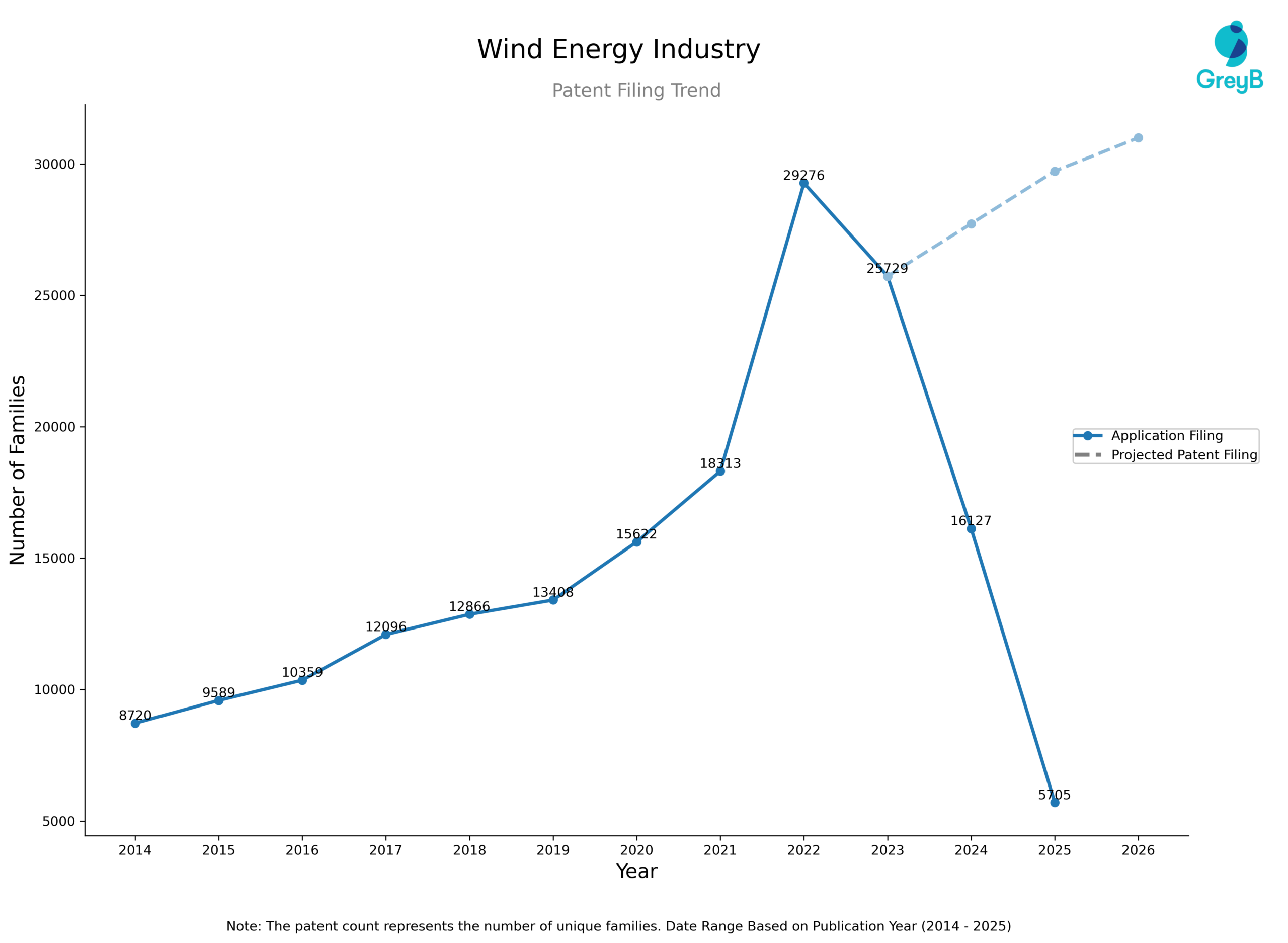
Are you wondering why there is a drop in wind patent filings in 2024 and 2025? The reason is simple: patent applications take time to get published, often up to 18 months. So, the recent dip doesn’t mean innovation has slowed down – it just means many filings are still waiting to appear in the records.
Why filings rose
Rapid global buildout: 2022 was a record year for new wind capacity added worldwide, signalling strong market pull that often drives upstream R&D and patents.
Policy support: The U.S. Inflation Reduction Act expanded long‑term tax credits and options for wind projects, boosting investment expectations and related innovation.
Offshore and storage innovation: Agencies report a steep rise in offshore wind‑related patents and growth in long‑duration storage tied to wind integration, encouraging more filings.
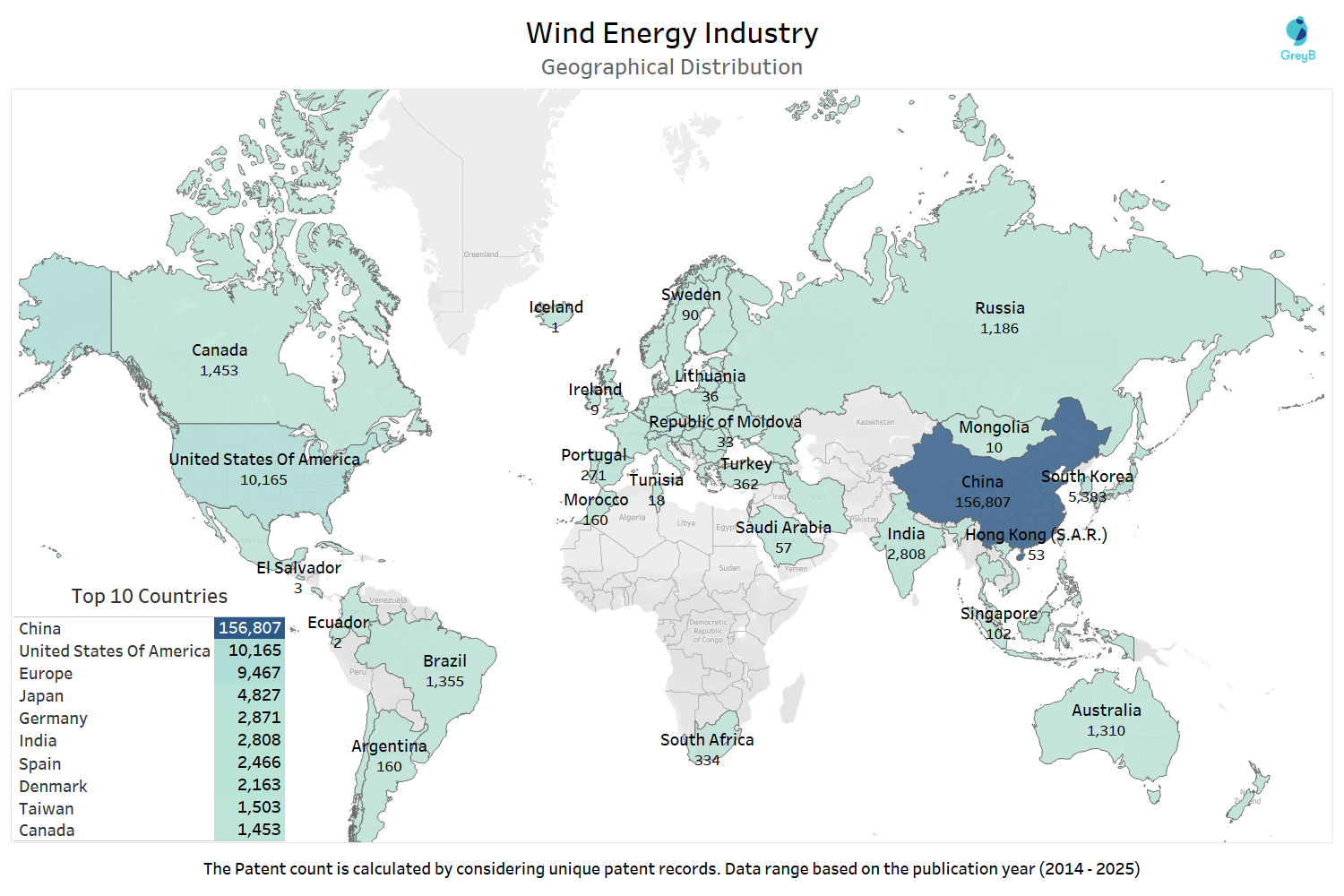
The chart shows that China leads the world in wind energy activity, with many more projects and filings than any other country.
The United States and European countries come next, with strong focus on both land‑based wind farms and growing offshore wind projects.
Emerging economies such as India, Brazil, and South Africa are quickly increasing their wind capacity to supply cleaner and more reliable power.
Smaller markets like Vietnam, Morocco, and Chile are testing new project models, which could help them attract more investment and grow their wind sectors in the future.
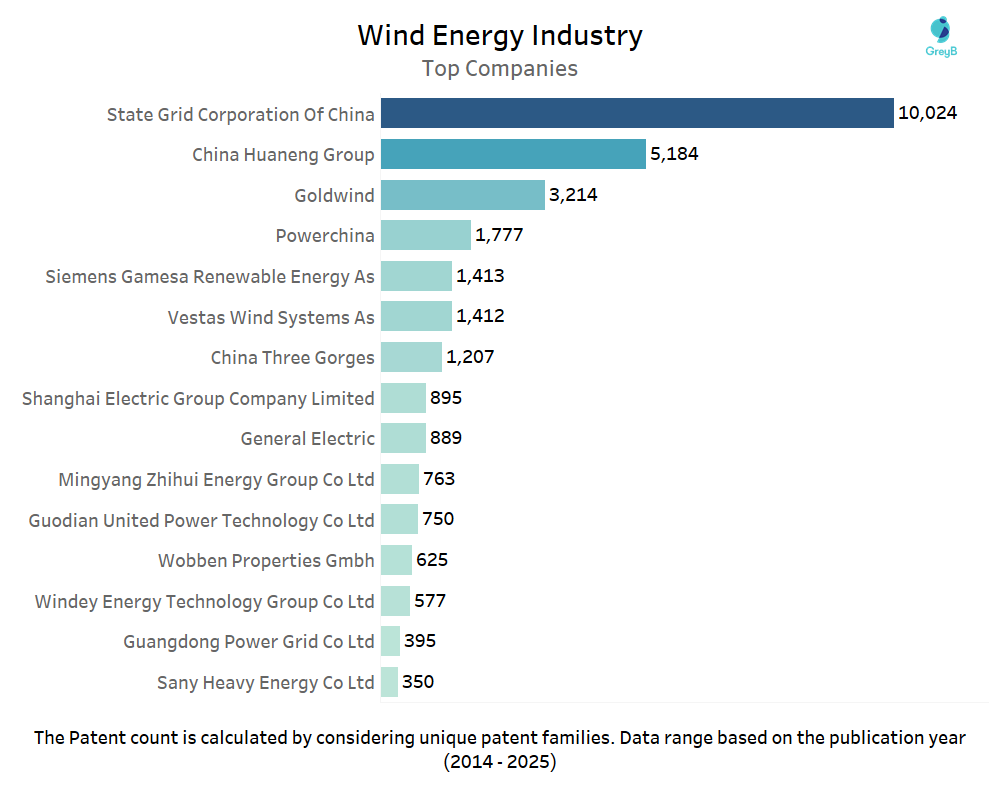
State Grid Corporation of China and China Huaneng Group lead wind energy innovation, making wind flow efforts into grid tech for China’s massive wind farms, including advanced forecasting to handle peak loads and integrate solar hybrids seamlessly.
Global players like Goldwind, Vestas with its 15MW V236 turbine and recyclable blades, Siemens Gamesa via record offshore prototypes, and GE drive turbine efficiency and scale, powering projects from Europe to Asia amid 2025 order surges.
China Three Gorges, Mingyang, and PowerChina excel in offshore giants like CTG’s 800MW Dafeng farm – China’s farthest, grid-connected in 2025 – unlocking deep-water sites for millions of homes.
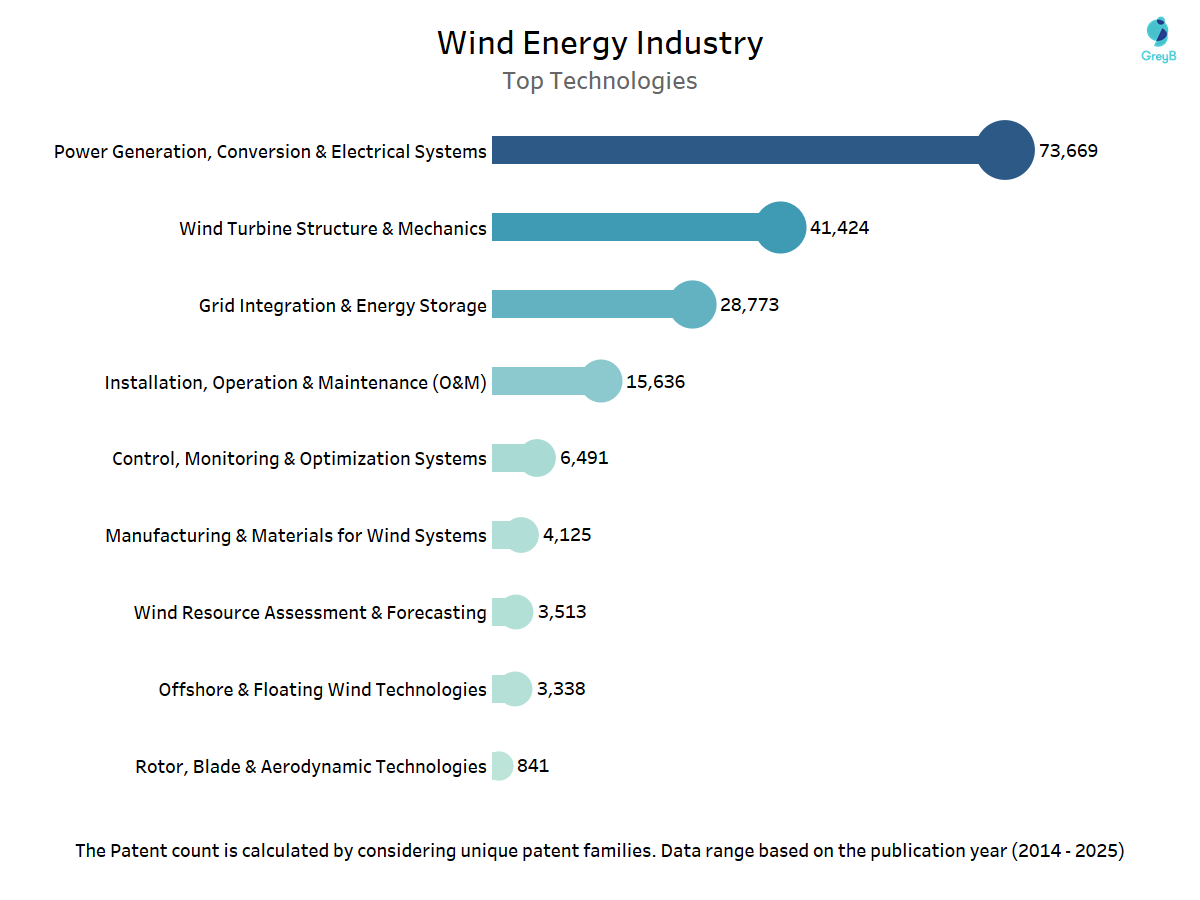
Power Generation, Conversion & Electrical Systems tops wind energy patents at 73,669 families, powering efficient turbines amid a 15 – 20% annual patent surge in the sector.
Wind Turbine Structure & Mechanics (44,424 families) and Grid Integration & Storage (28,773 families) follow, with innovations like Vestas’ recyclable blades and US $1B hybrid projects boosting reliability and offshore growth.
Offshore & Floating Tech (3,386 families) surges 18% in filings since 2002, unlocking deep-sea potential via UK’s 4 GW auction and Siemens’ 16 MW turbine records.