GLP-1 drugs are rapidly reshaping how we think about metabolic health. What began as treatments for diabetes and weight loss is now expanding into new therapeutic areas and broader health outcomes. Recent data show that GLP-1 therapies may have benefits for cardiovascular health and appetite regulation beyond weight loss, and researchers are actively developing multiple next-generation drugs – including new oral GLP-1 options and advanced combination therapies expected to come to market in 2026.
The shift toward oral GLP-1 and multi-hormone agonists is particularly significant, as it aims to overcome bioavailability challenges and improve patient compliance. In a recent analysis, we explored a notable patent that demonstrates how companies are tackling the bioavailability barrier in oral multi-hormone GLP-1 development.
Real-world usage is surging, with growing numbers of adults turning to these medicines for health and metabolic benefits. GLP-1 receptor agonists are being studied for effects on heart and metabolic outcomes, and evidence continues to accumulate about their wide-ranging impacts.
At the same time, consumer interest is transforming adjacent markets such as food and nutrition. Dietary trends, satiety-focused eating patterns, and functional ingredients aligned with metabolic health are gaining attention as food innovators seek to complement or enhance GLP-1 related benefits. Companies like Nestlé, Arla, and General Mills are exploring research-backed products that support appetite control and metabolic wellness, blurring the lines between pharmaceuticals and consumer health solutions.
This broadening interest is reflected in patent activity. Since 2021, approximately 2,386 GLP 1-related patent families have been filed globally, spanning therapeutic drugs, delivery technologies, novel combinations, and functional compositions. These filings signal intense innovation across industries and a competitive race to secure intellectual property in a fast-evolving landscape.
Why GLP-1 Patents Matter
Patent activity provides a real-time view of where innovation is happening and how intensely companies are positioning themselves for tomorrow’s competitive landscape. High filing volumes and diversified applications suggest that the GLP-1 ecosystem is evolving into a broader innovation network, rather than remaining confined to a single therapeutic class.
This article dives into the key trends shaping the GLP-1 patent landscape from 2021 to the present. We explore filing patterns, leading innovators, patent status distribution, and strategic shifts to show how this space is transforming across industries.
How have patent filings in GLP-1 evolved over the years?
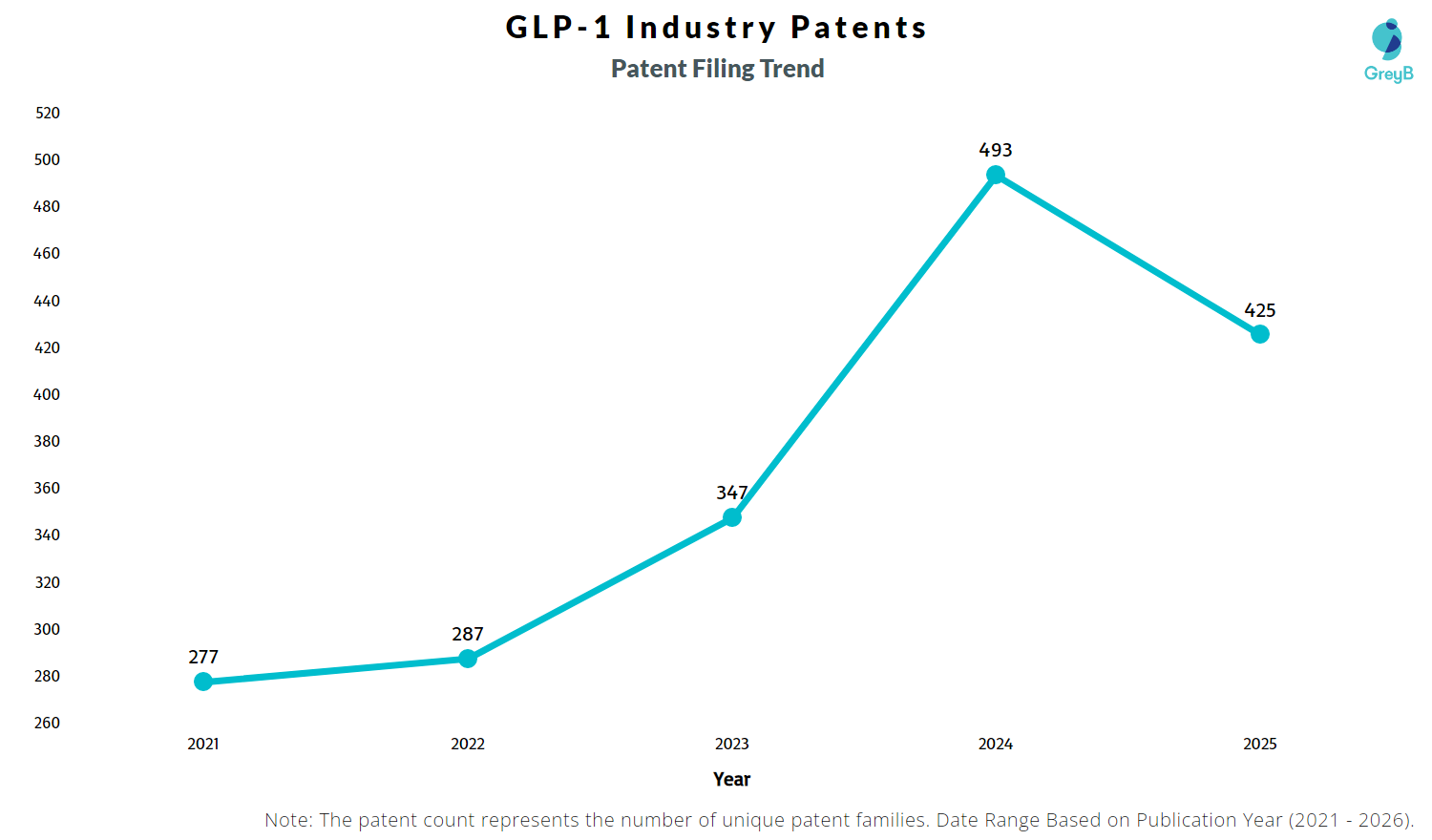
Are you wondering why there is a drop in patent filing for the last two years? It is because a patent application can take up to 18 months to get published. Certainly, it doesn’t suggest a decrease in the patent filing.
| Years | GLP-1 Application Filed | GLP-1 Patent Granted |
| 2026 | 1 | 8 |
| 2025 | 425 | 79 |
| 2024 | 493 | 71 |
| 2023 | 347 | 97 |
| 2022 | 287 | 81 |
| 2021 | 277 | 130 |
Which are the top companies that hold the most patents in the GLP-1?
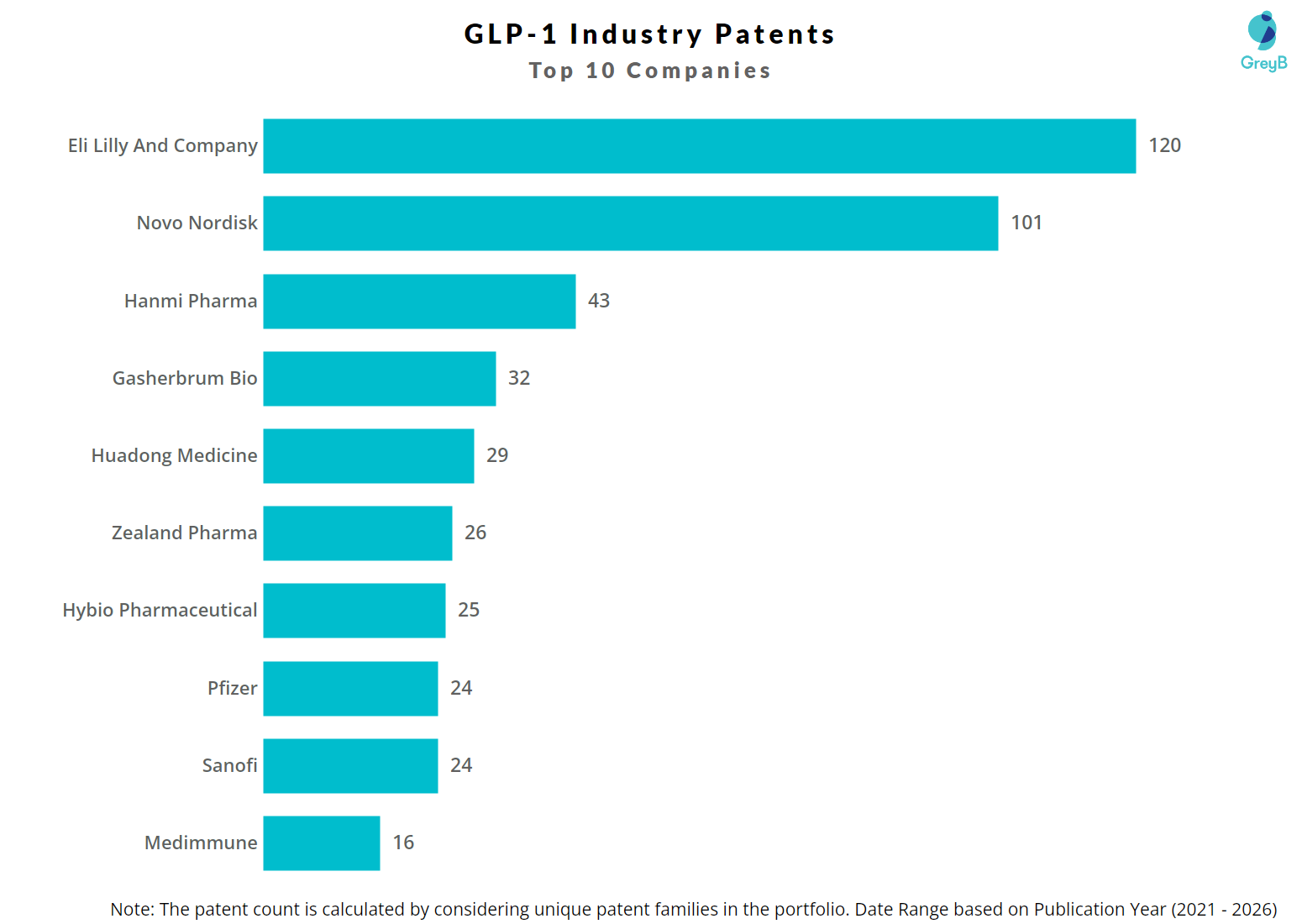
The GLP-1 patent landscape is strongly led by Eli Lilly (120 patent families) and Novo Nordisk (101 families), who are far ahead of other companies in terms of filings. This shows that both companies are not only leading in the market but are also actively strengthening their patent positions.
After these two leaders, the competition becomes more spread out. Companies like Hanmi Pharma (43), Gasherbrum Bio (32), and Huadong Medicine (29) are building noticeable portfolios, showing that more players are entering and investing in this space.
The presence of large global companies such as Pfizer, Sanofi, and Medimmune, along with smaller biotech and regional firms, suggests that GLP-1 innovation is no longer limited to just a few dominant names. Instead, it is becoming a wider and more competitive field.
Overall, the data shows that while a few companies lead the race, many others are actively working to secure their place in the growing GLP-1 ecosystem.
Beyond portfolio size, innovation quality also matters. For example, we recently analyzed a key patent focused on next-generation GLP-1 hypoglycemic therapeutics, highlighting how companies are advancing treatment strategies beyond first-generation approaches.
GLP-1 innovation is expanding fast – and competition is intensifying across industries. If you’d like the comprehensive list of all companies filing GLP-1 patents in pharma and food, along with deeper portfolio insights, fill out the form to access the full report.
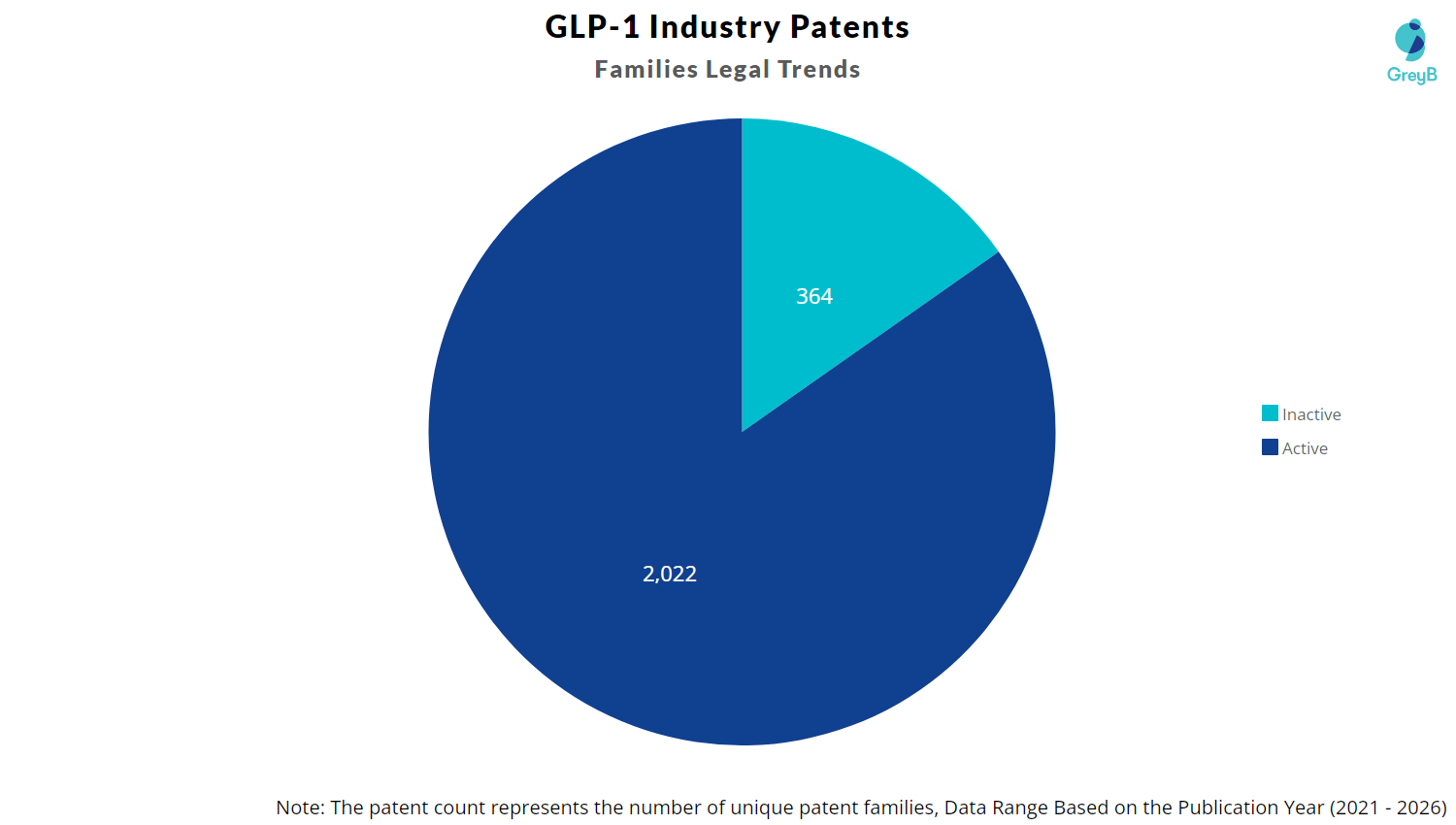
How Many GLP-1 Patent Families Are Still Active?
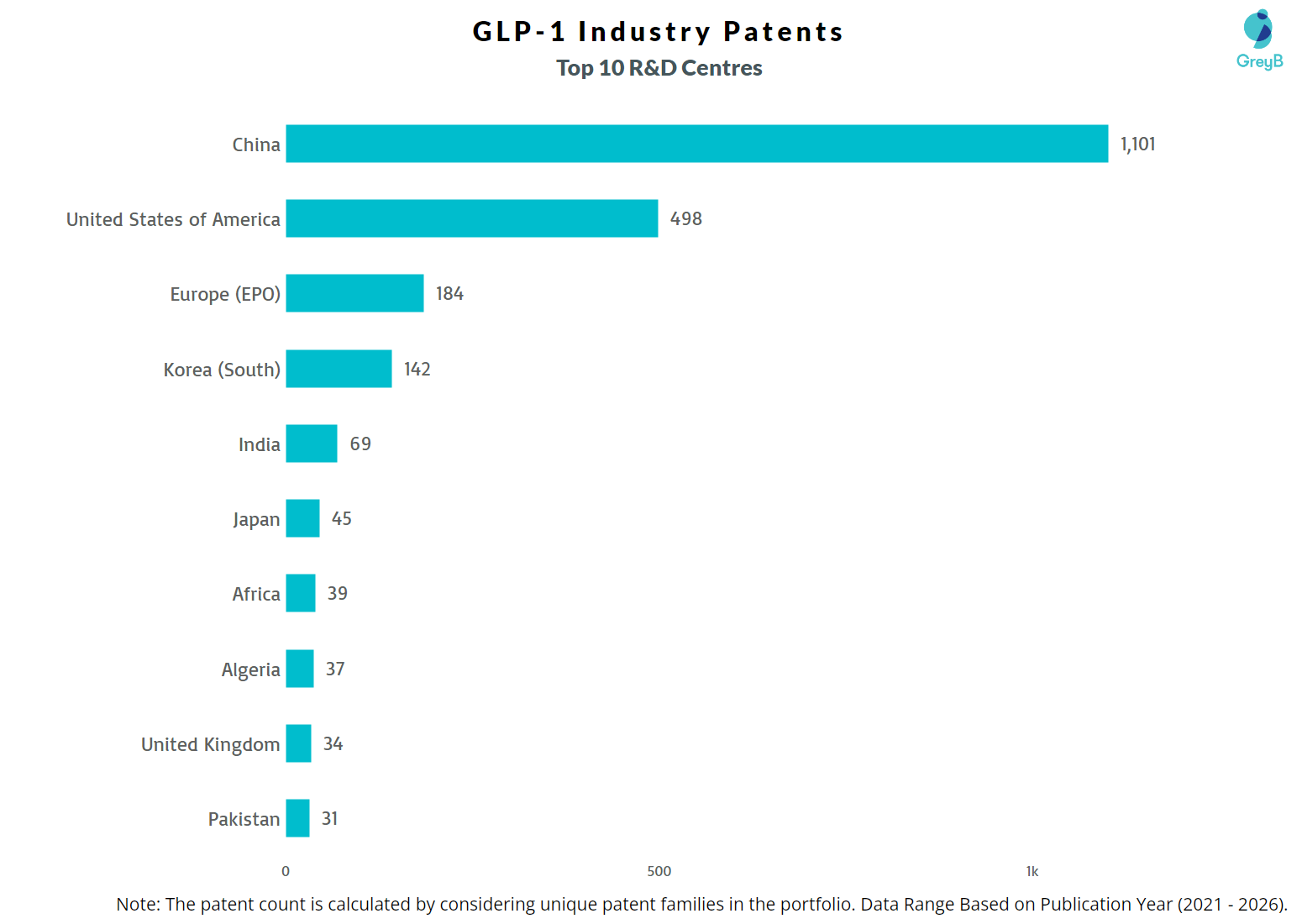
Where Are the R&D Centers Behind GLP-1 Patents?
Did you know GLP-1 technologies are also being explored in cancer treatment? If you’d like insights into related patents and emerging filings in this space, fill out the form to access the detailed analysis.
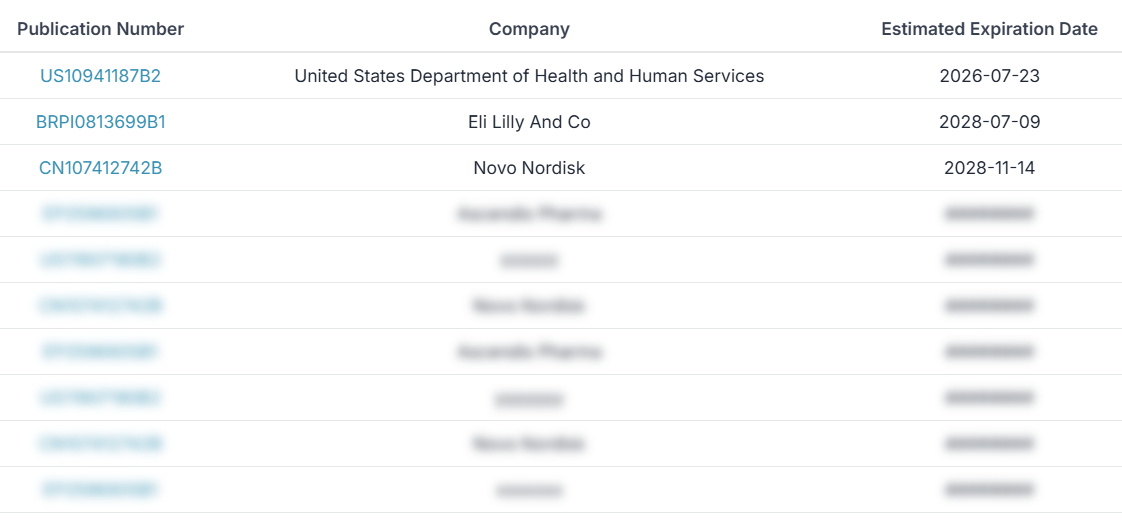
Which Key GLP-1 Patents Are Expiring Soon?
As the GLP-1 market continues to grow, patent expiry timelines are becoming increasingly important. Several key GLP 1 patents are expected to expire in the coming years, potentially opening the door for generic or biosimilar versions, alternative formulations, and new market entrants.
The expiry of core patents may reduce exclusivity barriers, allowing generic manufacturers to evaluate entry opportunities. However, companies often rely on secondary patents – such as formulations, delivery systems, or combination therapies – to extend protection. This creates both opportunities and challenges for generic players, who must carefully assess the remaining patent landscape before entry.
Tracking patent expiry trends therefore becomes critical for understanding when and where competitive openings may emerge in the GLP-1 space.
As several key GLP-1 patents are nearing expiry, opening potential opportunities for generic and biosimilar entry. Understanding these timelines can help identify where competitive gaps may emerge.
Want access to the full list of expiring patents and detailed insights? Fill out the form to receive the complete report.
What Technologies Are Covered by GLP-1 Patents?
R&D Focus: How has GLP-1 search focus changed over the years?
Interested in understanding which areas of innovation are being protected by GLP-1 patents?