
The global infant nutrition market has witnessed 8,982 new product launches over the past five years, highlighting the strong pace of innovation in products designed for infants and young children. These launches span a wide range of categories, including baby formula, growing-up milk, baby cereals, snacks, savory meals, fruit products, desserts, beverages, and other baby food products, reflecting the increasing diversification of the infant nutrition and baby food landscape.
Innovation in this sector is no longer limited to traditional infant formula. Companies are expanding their portfolios across complementary feeding products such as baby fruit products, desserts and yogurts, baby snacks, cereals, savory meals and dishes, biscuits and rusks, and beverages, many of which fall under the broader baby food category.
At the same time, milk-based nutrition continues to play a central role, with substantial activity in baby formula for 0–6 months, follow-on formula for 6–12 months, and growing-up milk products targeted at toddlers and young children.
This diversification reflects changing consumer expectations and evolving parenting lifestyles. Caregivers today are seeking nutritionally balanced, convenient, and development-focused baby food and nutrition options that support infants through different stages of early growth. As a result, brands are introducing products tailored to specific age groups, developmental needs, and feeding occasions-from early-stage formula to snacks, cereals, and meals designed for toddlers.
Year-wise Product Launch Trends in the Infant Nutrition Market
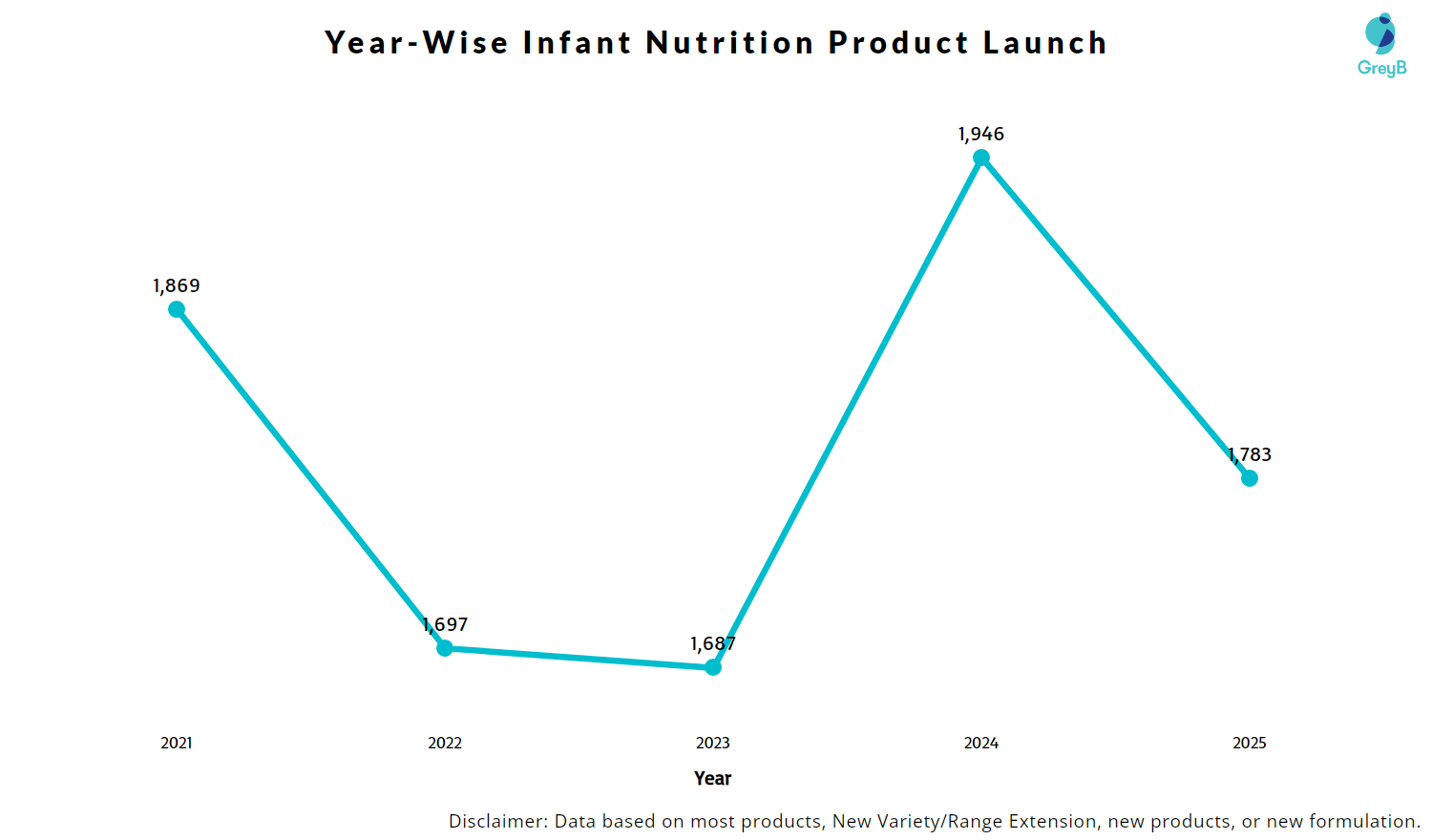
Between 2021 and 2025, the infant nutrition market recorded 8,982 product launches worldwide, reflecting sustained innovation across formula, baby foods, snacks, cereals, and toddler nutrition products. While the number of launches fluctuated slightly year to year, overall activity remained relatively stable, highlighting consistent product development in this category.
The data shows that 2021 started with strong innovation momentum, recording 1,869 launches globally. However, product introductions saw a slight decline in the following two years, with 1,697 launches in 2022 and 1,687 launches in 2023. This dip may reflect temporary adjustments in product development pipelines as companies navigated supply chain disruptions, regulatory requirements, and shifting consumer demand across global markets.
Innovation activity rebounded significantly in 2024, which recorded 1,946 product launches-the highest in the five-year period. This surge suggests renewed investments in infant nutrition product development, potentially driven by increasing demand for diversified baby foods, specialized nutrition products, and functional formulations targeting digestive health, immunity, and cognitive development.
In 2025, launches declined slightly to 1,783, but the figure still indicates strong and sustained innovation compared to earlier years. The relatively consistent launch volume across the five-year period suggests that infant nutrition remains a highly active product development category, with companies continually introducing new offerings to meet evolving parental expectations and dietary needs for infants and toddlers.
Overall, the trend indicates that innovation in infant nutrition remains steady rather than cyclical, with companies maintaining a continuous pipeline of product launches across formula, complementary feeding products, and toddler nutrition segments.
Top Product Categories in the Infant Nutrition Market
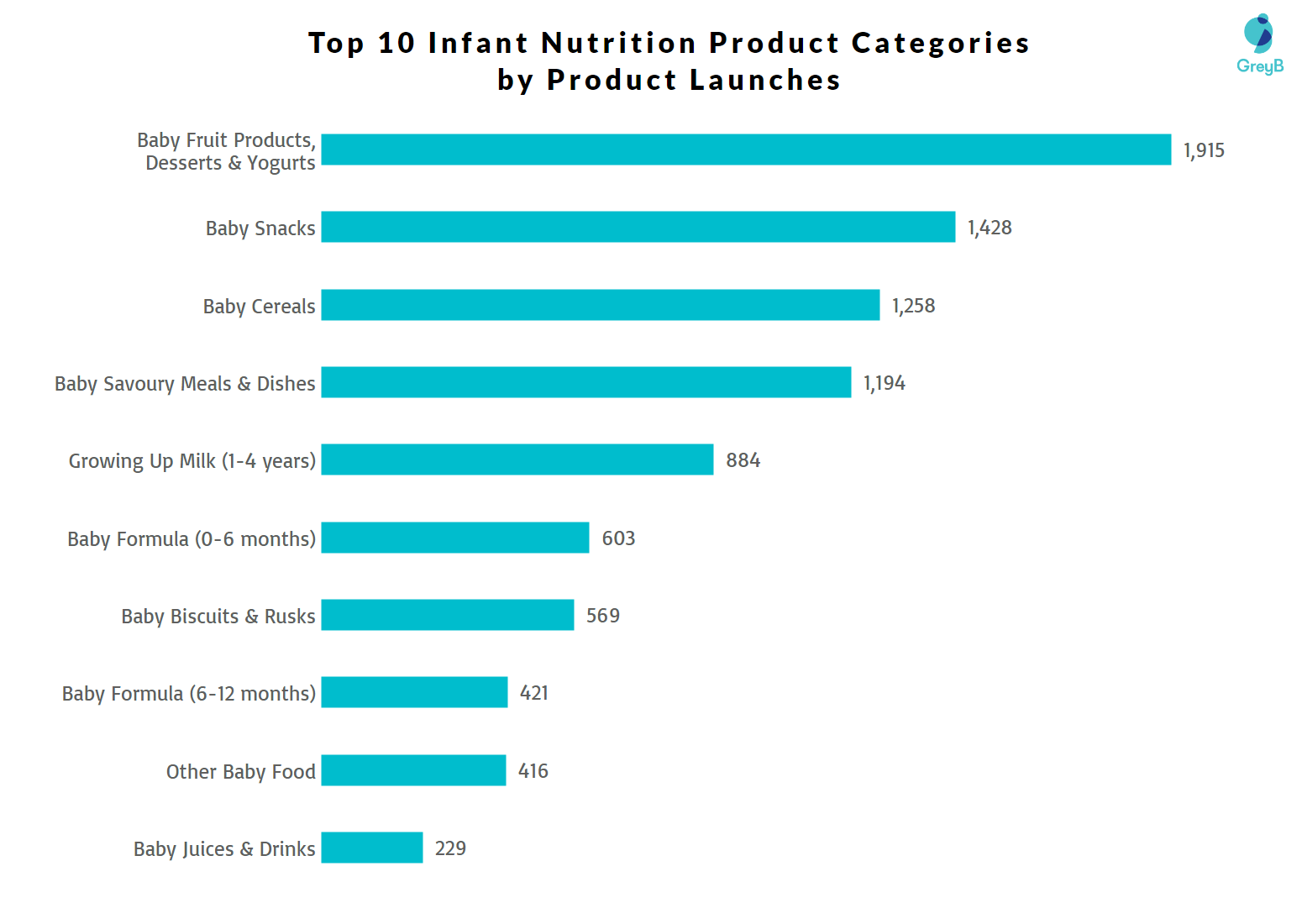
Innovation in infant nutrition is concentrated mainly in complementary feeding products. Baby Fruit Products, Desserts & Yogurts lead the market with 1,915 launches, making them the most active category. These products play an important role in introducing infants to solid foods, often focusing on fruit blends, yogurt-based options, and smooth textures suitable for early feeding stages.
Other highly active categories include Baby Snacks (1,428 launches), Baby Cereals (1,258 launches), and Baby Savoury Meals & Dishes (1,194 launches). Together, these segments represent a large share of product innovation and highlight the growing variety of foods designed for infants transitioning to solid diets. Many of these products support self-feeding and provide balanced nutrition as babies progress through different developmental stages.
Milk-based nutrition also remains a key part of the market. Growing Up Milk (1-4 years) recorded 884 launches, showing strong activity in toddler nutrition. Meanwhile, Baby Formula for 0-6 months and 6-12 months together account for more than 1,000 launches, indicating steady development despite stricter regulations.
Smaller categories such as Baby Biscuits & Rusks, Other Baby Food, and Baby Juices & Drinks contribute fewer launches but still add diversity to the infant nutrition market.
Top 10 Infant Nutrition Companies by Product Launches
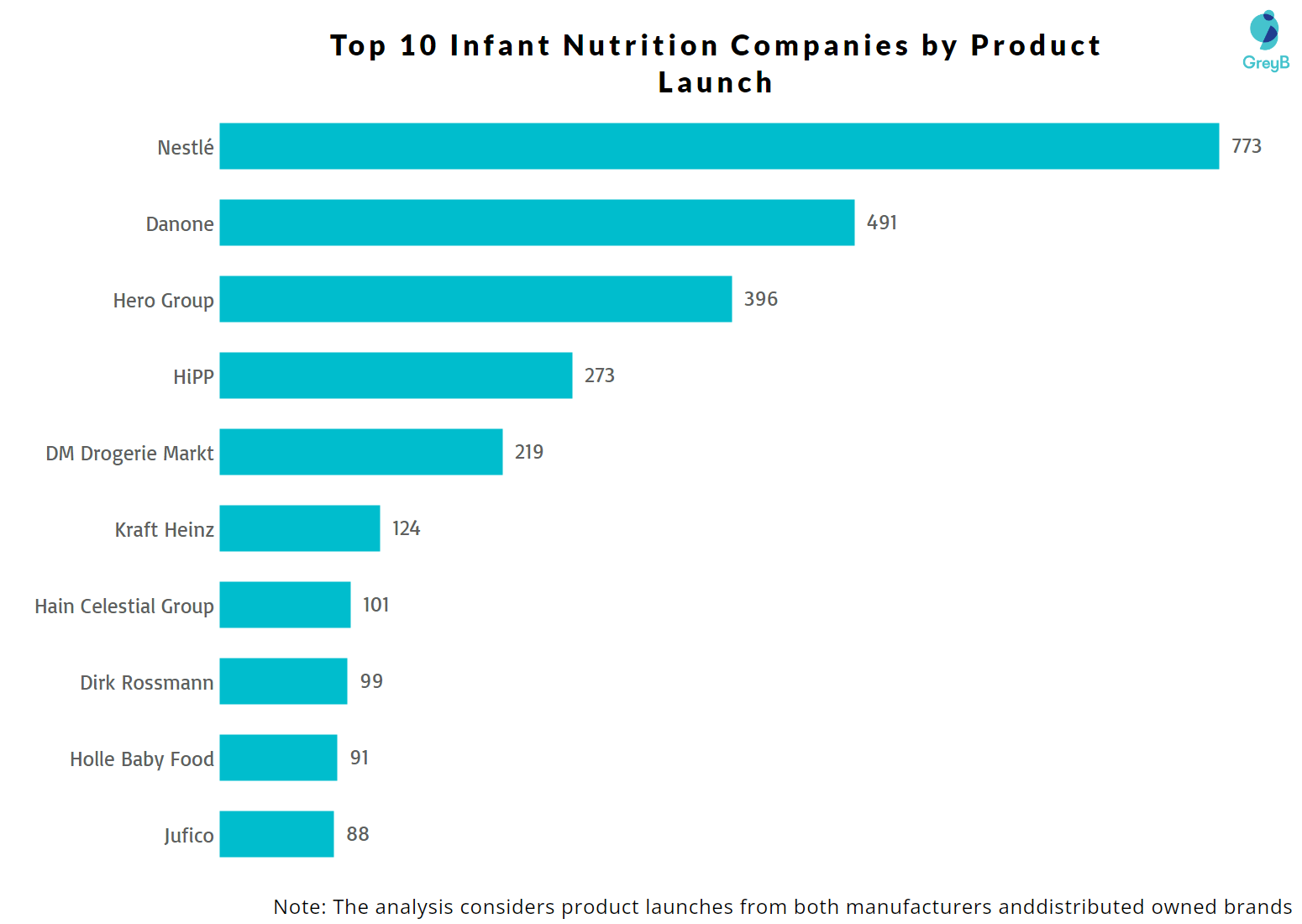
Product innovation in infant nutrition is led by a mix of global food companies, specialized baby food brands, and large retail private labels. Among all companies, Nestlé leads the market with 773 product launches, reflecting its extensive portfolio across baby cereals, meals, snacks, and infant formula through brands such as Gerber and other regional baby nutrition lines. Nestlé’s broad product coverage and global presence make it one of the most active innovators in the category.
Danone ranks second with 491 launches, driven by its strong presence in infant formula and toddler nutrition through brands such as Aptamil, Nutrilon, and other baby food lines. Hero Group follows with 396 launches, supported by its well-known baby food brand portfolio, particularly in fruit-based products and complementary feeding segments.
Several specialized baby nutrition brands also appear among the most active innovators. HiPP recorded 273 launches, reflecting its strong focus on organic infant nutrition products. Holle Baby Food (91 launches) similarly emphasizes organic and biodynamic baby food offerings. These companies highlight the growing importance of premium and organic positioning in the infant nutrition market.
Retail private labels are also playing an increasingly important role. DM Drogerie Markt (219 launches) and Dirk Rossmann (99 launches) demonstrate how major retail chains are expanding their own baby food product lines. Other notable companies include Kraft Heinz (124 launches), Hain Celestial Group (101 launches), and Jufico (88 launches), all contributing to the growing diversity of infant nutrition products available to consumers.
Which Infant Nutrition Categories Are Growing, Plateauing, or Declining?
A closer look at year-wise launch activity reveals different growth patterns across infant nutrition categories, with some segments expanding rapidly while others remain relatively stable or gradually decline.
Growing categories.
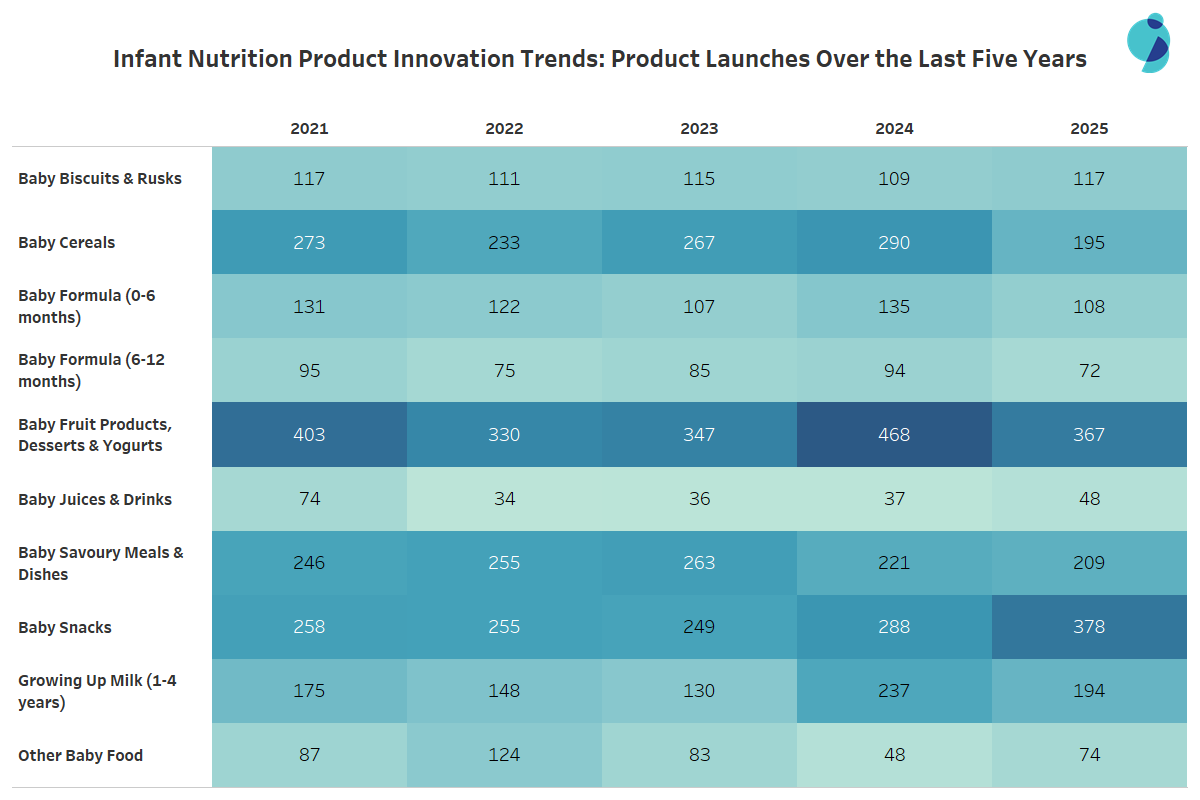
Among all segments, Baby Snacks show the strongest growth trend, rising from 258 launches in 2021 to 378 in 2025. This increase suggests rising demand for convenient, self-feeding products designed for older infants and toddlers. Growing Up Milk (4+ years) also shows gradual expansion, though from a small base, increasing from 10 launches in 2021 to 21 in 2025. Additionally, Baby Juices & Drinks experienced a slight recovery toward the end of the period, rising from 34 launches in 2022 to 48 in 2025.
Plateauing categories.
Some segments have maintained relatively stable innovation levels. Baby Biscuits & Rusks show minimal fluctuation across the five years, staying close to around 110-117 launches annually. Similarly, Baby Cereals and Baby Fruit Products, Desserts & Yogurts remain consistently active categories, although they experience moderate yearly variations rather than a clear long-term growth trajectory.
Declining or fluctuating categories.
Certain categories show signs of gradual decline or volatility. Baby Formula (0-6 months) and Baby Formula (6-12 months) both fluctuate across the period but end with slightly fewer launches compared to earlier years, suggesting a more mature and regulated product segment. Baby Savoury Meals & Dishes also trends slightly downward after peaking in 2023. Meanwhile, Other Baby Food shows notable variability, reflecting shifting product definitions and innovation strategies within niche segments.
Overall, the data indicates that snack-based and toddler-oriented nutrition products are gaining momentum, while more traditional categories such as infant formula and savory meals show steadier or slightly declining innovation patterns.
How Are Infant Nutrition Categories Evolving Over the Past Five Years?
The global infant nutrition market has witnessed 8,982 new product launches over the past five years, highlighting the strong pace of innovation in products designed for infants and young children. These launches span a wide range of categories, including baby formula, growing-up milk, baby cereals, snacks, savory meals, fruit products, desserts, beverages, and other baby food products, reflecting the increasing diversification of the infant nutrition and baby food landscape.
Innovation in this sector is no longer limited to traditional infant formula. Companies are expanding their portfolios across complementary feeding products such as baby fruit products, desserts and yogurts, baby snacks, cereals, savory meals and dishes, biscuits and rusks, and beverages-categories that collectively represent a significant portion of the evolving baby food market. This expansion highlights how brands are responding to growing demand for convenient, nutritious, and stage-specific feeding options.
At the same time, milk-based nutrition continues to play a central role in the infant nutrition market, with substantial activity in baby formula for 0–6 months, follow-on formula for 6–12 months, and growing-up milk products targeted at toddlers and young children.
This diversification reflects changing consumer expectations and evolving parenting lifestyles. Caregivers today are increasingly seeking nutritionally balanced, convenient, and development-focused baby food and nutrition solutions that support infants through different stages of early growth. As a result, brands are introducing products tailored to specific age groups, developmental needs, and feeding occasions-from early-stage formula to snacks, cereals, and ready-to-eat baby food meals designed for toddlers.
Which Infant Nutrition Companies Are Innovating Across the Widest Range of Sub-Categories?
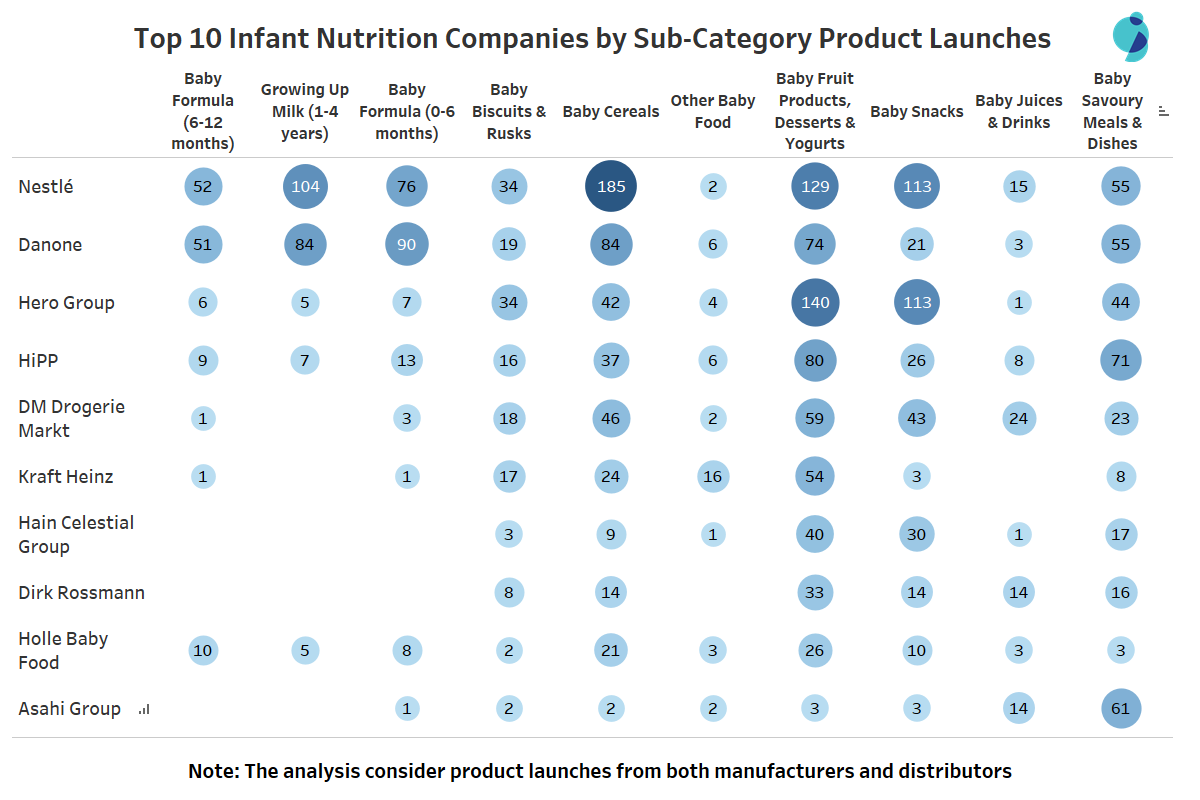
An analysis of company activity across infant nutrition segments shows that a few major players are innovating across a broad spectrum of product categories, while others focus on specific niches such as organic foods, snacks, or formula.
Nestlé stands out as the most diversified innovator, launching products across nearly every major category. Its activity spans fruit products, snacks, cereals, meals, growing-up milk, and both stages of infant formula. The company shows particularly strong presence in Baby Cereals (154 launches) and Baby Fruit Products, Desserts & Yogurts (97 launches), reflecting its wide product portfolio and global market reach.
Several other companies also demonstrate strong cross-category innovation. HiPP, known for organic baby nutrition, shows activity across multiple complementary feeding categories, including fruit products, cereals, savory meals, snacks, and formula. DM Drogerie Markt, a major retail private label, also operates across numerous segments such as snacks, cereals, fruit products, and beverages, highlighting the growing role of retailer brands in infant nutrition.
Some companies display more specialized innovation strategies. For example, Nutricia focuses strongly on milk-based nutrition and cereals, while Asahi Group Foods shows significant activity in Baby Savoury Meals & Dishes. Meanwhile, brands such as Holle Baby Food, Erdbär, Semper, and Jufico primarily concentrate on complementary feeding products, including snacks, cereals, and fruit-based baby foods.
Overall, the data suggests that while a few multinational companies lead with broad, diversified portfolios, many other brands compete by specializing in specific infant nutrition segments or premium product niches.
What ingredient or whitespace opportunities exist in the Infant Nutrition?
How is sustainability driving innovation in the Infant Nutrition?
How Is the Infant Nutrition Market Advancing Health-Focused Product Innovation?
Interested in accessing the complete list of active products in the Infant Nutrition Industry or detailed innovation benchmarking? Fill out the form to access it now!