In 2015, a diaper was still just a diaper. A decade later, smart diapers integrate moisture sensors, temperature indicators and app connectivity and AI-based health analysis features are among the fastest-growing areas of patent filings in the entire category. That single product tells the story of a whole industry.
This transformation shows up most clearly in the patent record. Across strollers, neonatal incubators, feeding systems, biodegradable diapers and connected monitors, the past decade has seen inventors and corporations stake out IP positions in categories that barely existed before.
The 2020 surge in filings, driven by a pandemic that forced parents to confront every gap in home-based infant care, marked a turning point. Recent patents in baby personal care alone highlight free-from and hypoallergenic formulations, superfood ingredients and next-generation skin-barrier technologies that reflect how seriously R&D labs are now taking the category.
This report examines what that decade of invention actually looks like, who filed, what they protected, and where the next wave is building.
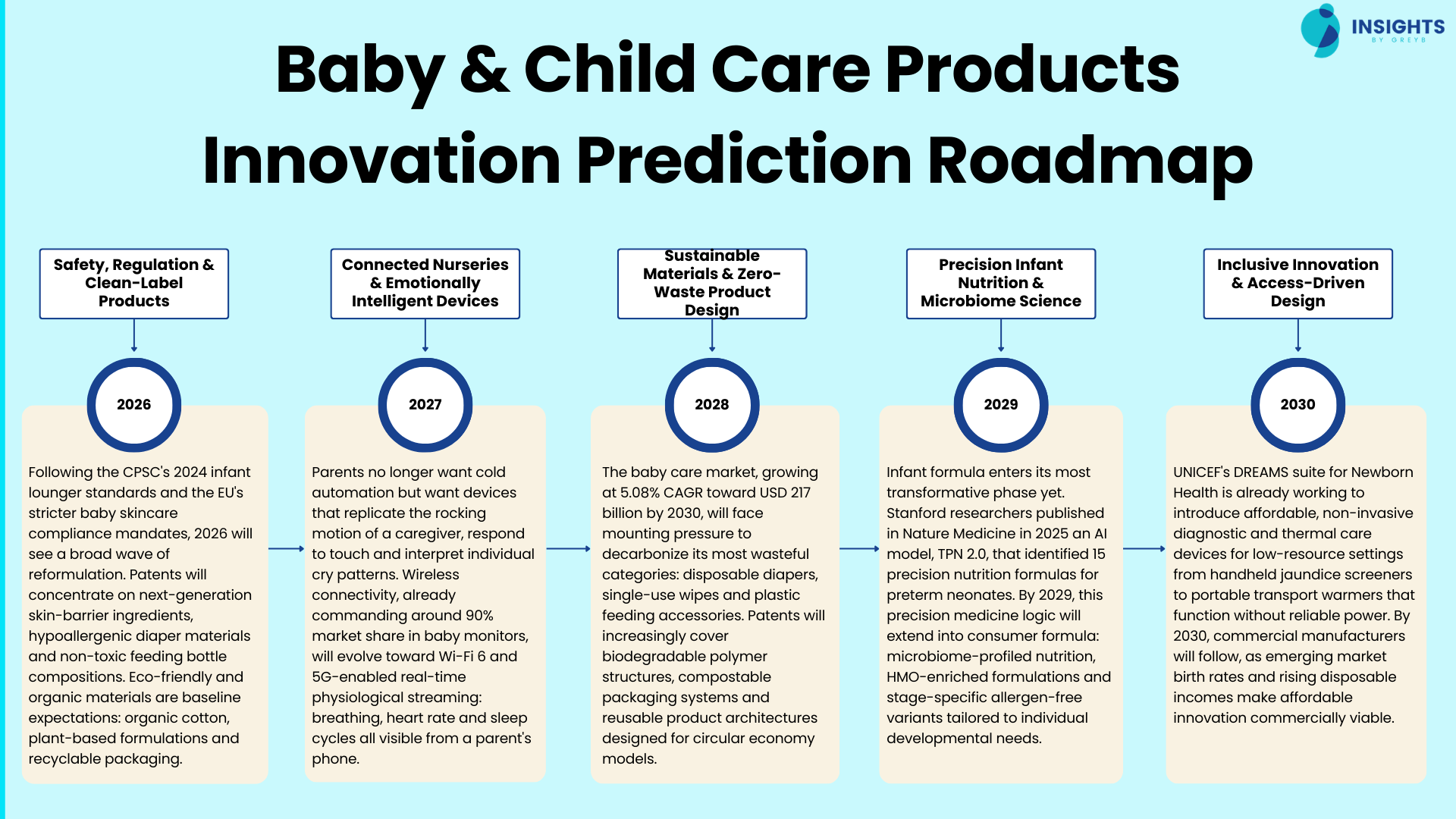
Despite tighter regulations, unsafe products continue reaching homes. The CPSC passed new rules in 2024 requiring most infant loungers to be redesigned, yet products manufactured before the deadline can still legally be sold. From unstable bath seats to self-feeding pillows that prevent infants from pulling away, the gap between innovation speed and regulatory enforcement remains a persistent danger for parents navigating an overwhelming market.
Nine in ten parents report worrying about toxic chemicals in baby products, and with good reason. In 2024, class-action lawsuits were filed against major baby bottle brands including Dr. Brown, Philips Avent and Tommee Tippee over claims that plastic bottles release microplastics when heated. Parabens, phthalates, artificial fragrances and bleaching agents remain common across product categories, pushing demand for transparent, clean-label formulations.
Conventional cotton farming consumes 16–25% of the world’s pesticides and that’s before a single baby garment is made. Disposable diapers, single-use wipes and plastic packaging collectively make baby care one of the most wasteful consumer categories. A study by Nielsen revealed that 73% of consumers are willing to pay more for eco-friendly products.
Parents face a deeply confusing feeding landscape. Formula ingredient safety, microplastic contamination in bottles, misleading health claims on baby food labels, and the widening premium-to-budget divide in infant nutrition all create genuine anxiety. The organic baby food market is expected to expand at 13.1% CAGR between 2024-2032,largely because parents no longer trust conventional alternatives by default.
Premium innovation is outpacing affordability. Smart monitors, organic formulas, ergonomic carriers, and sustainable diapers carry price premiums that put them out of reach for a significant share of the global parent population. The factor behind the preference for the need for natural, toxin-free ingredients to protect infants is that around 60% of infants experience skin sensitivities in their first year.
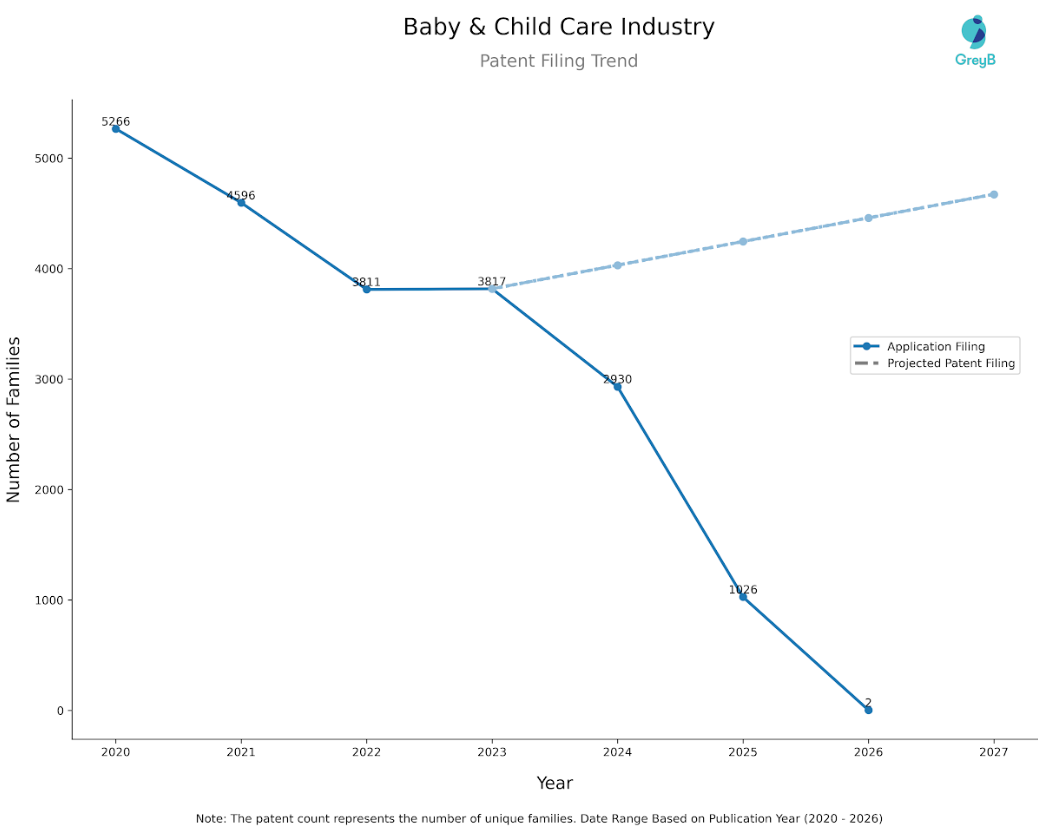
The industry filed 5,266 patent families in 2020: its most active year on record. That peak wasn’t accidental. The pandemic forced parents to confront every gap in home-based infant care simultaneously, accelerating R&D investment across monitors, feeding, hygiene and neonatal equipment all at once.
The sharper drop in 2024 and near-zero figure in 2026 are a data artifact, not a slowdown. Patent applications typically take 12–18 months to be published after filing, meaning thousands of 2024–2025 filings simply haven’t surfaced in the public record yet.
The projected trajectory tells the real story: filings are expected to rebound toward ~4,600 families by 2027, almost matching the 2020 peak. In the context of slowing global birth rates, the baby care market is accelerating its transformation from large-scale expansion to value-driven growth and the patent pipeline reflects exactly that shift.
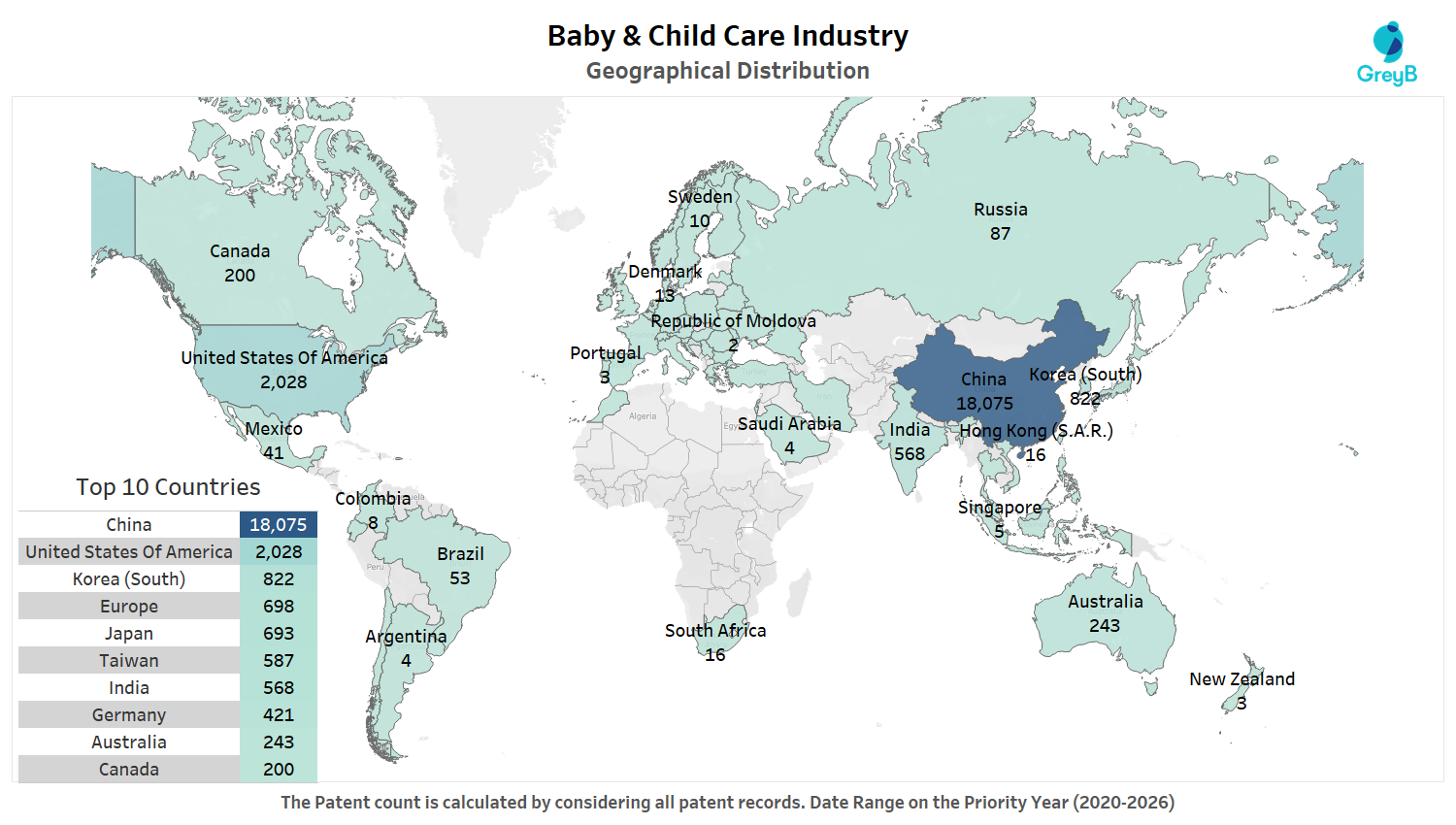
China’s lead here with 18,075 patent families against the United States’ 2,028 which is nearly a 9x gap and it reflects something more than manufacturing scale. China recorded 9.54 million births in 2024, its first rise since 2017, triggering a fresh consumption cycle across the entire mother and baby market. When the world’s largest birth market and the world’s most aggressive patent filer are the same country, the numbers compound fast.
What’s equally telling is the tier below China. South Korea at 822, Japan at 693 and Taiwan at 587 confirm that Asia-Pacific is a cluster of distinct innovation cultures operating in parallel.
South Korea, for instance, is driving cutting-edge baby skincare formulations: probiotic-infused creams, herbal washes and premium ingredient science while Japan’s filings run deep in feeding systems and oral care, categories where incremental refinement is itself a competitive strategy.
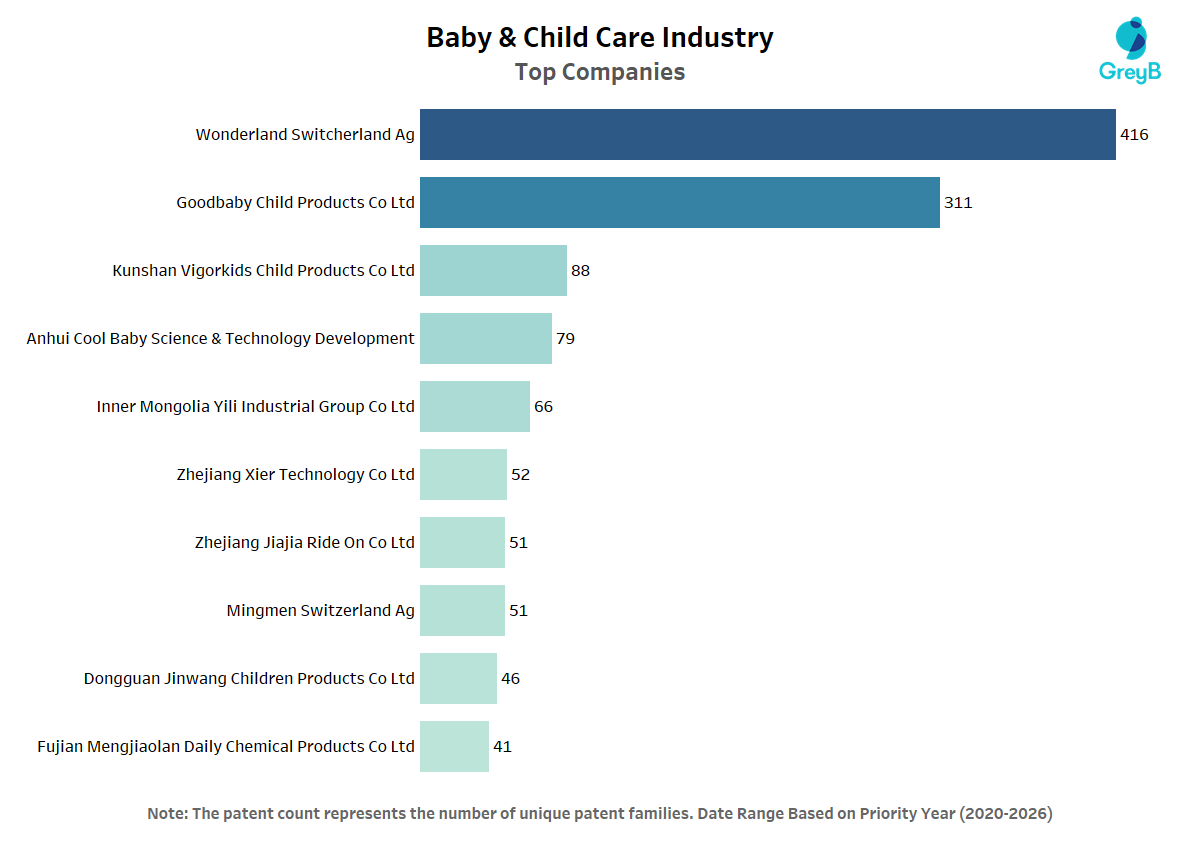
Wonderland Switcherland AG’s 416 patents at the top of this chart might surprise at first glance but behind the name sits one of the most powerful IP machines in the industry. Founded in 1983, the Wonderland Group is the force behind consumer brands Nuna and Joie: two of the most trusted names in premium strollers and car seats globally.
Goodbaby’s 311 patents tell an even bigger story. Founded with a single stroller patent in 1989, Goodbaby now holds over 10,000 patents globally and is recognized as a model IP entity by the Chinese government. One in every three strollers sold in the US, Europe or China is made by Goodbaby with brands including CYBEX, Evenflo, and gb operating as distinct market identities, all underpinned by the same patent infrastructure. In 2025, Evenflo was named to TIME’s list of the Best Inventions for its SensorySoothe™ car seat technology.
What’s striking about the rest of the list is how Chinese it is. Seven of the ten companies are Chinese, spanning infant formula (Yili) and ride-on toys (Zhejiang Jiajia). The lone Swiss entries, Wonderland and Mingmen, signal that Europe’s presence here is strategic and premium, not volume-driven.
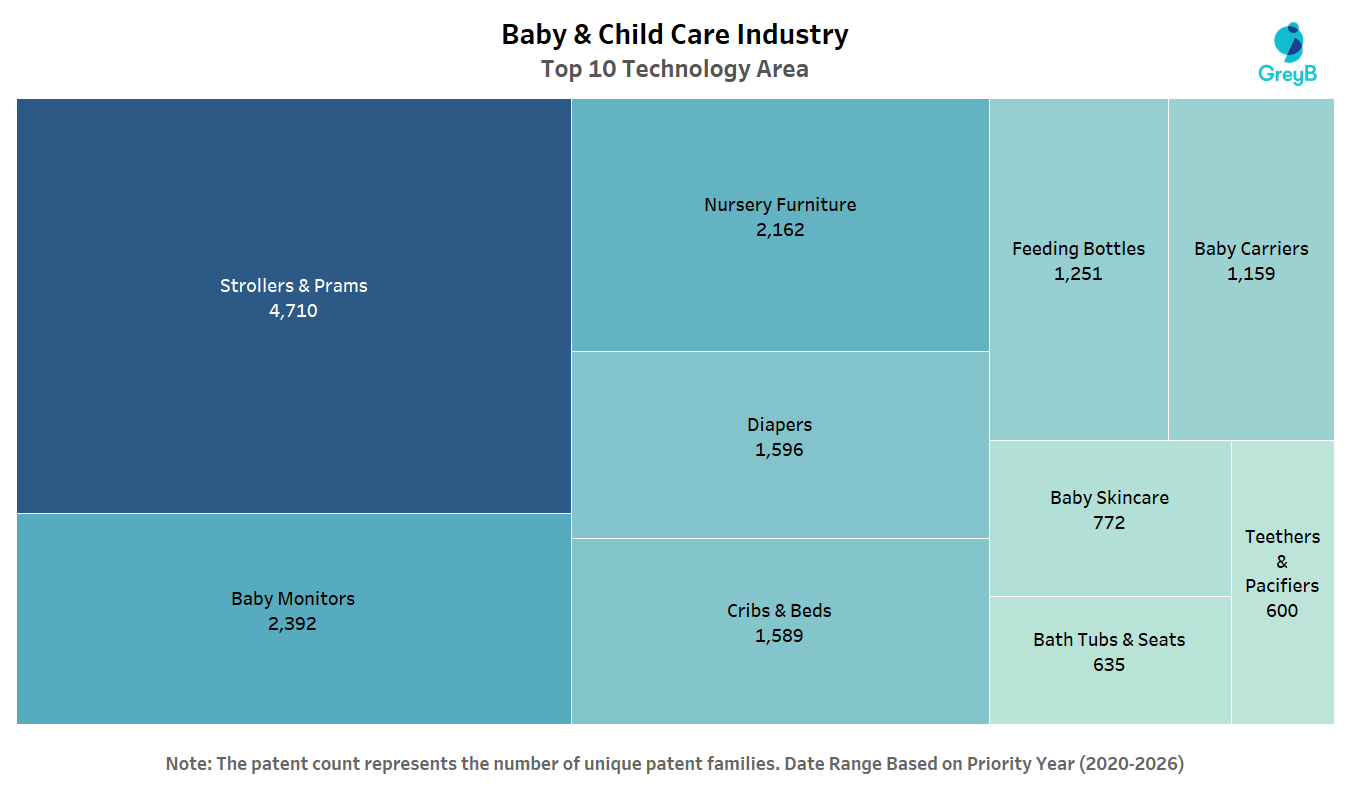
Strollers & Prams at 4,710 patent families is the single largest technology block, and the gap to every other category is significant. The Cybex e-Gazelle S, named the most innovative stroller of 2024 by TIME, integrates electric push-assist that auto-adjusts to terrain, regenerative braking and a USB charging port, a product that would be unrecognizable to stroller designers of a decade ago.
Baby Monitors at 2,392 is the second largest category, a signal of how rapidly connected parenting has moved from novelty to necessity. In October 2024, Philips Avent launched its Premium Connected Baby Monitor with SenseIQ™ wearable-free breathing tracking and AI-powered cry translation technology, one of several major product launches in a category that is expected to grow from USD 1.4 billion in 2024 to USD 3.7 billion by 2034.
The real signal of where the industry is heading, though, sits in the smallest blocks: Baby Skincare, Teethers & Pacifiers and Bath Tubs & Seats. These are categories historically treated as commodity purchases, now seeing material science and ingredient innovation drive entirely new IP positions.
Full breakdown of patent portfolios by technology area.
Year-wise evolution of filings by technology area from 2020 to 2025.
Rank-list of top companies/assignees in the Baby & Child Care Products patent landscape and their filing trends.
Global distribution of filings: country-wise data & year-wise evolution.
Legal status analysis: how many are active, granted, abandoned etc.
Future directions & upcoming innovation hotspots in the Baby & Child Care Products space.