A decade ago, conversations about menstrual and intimate hygiene products were largely transactional something bought monthly, used discreetly and rarely discussed beyond brand preferences or price points.
But from 2015 to 2025, a remarkable transformation quietly unfolded. What was once a functional necessity has become a nexus of scientific ingenuity, sustainability imperatives and cultural momentum, and the patent landscape tells this story more vividly than any market forecast alone.
The global market for feminine hygiene products surpassed USD 45 billion in 2025, with strong projected growth into the next decade. Research shows that consumers are increasingly choosing products that minimize waste and personal cost over time, creating fertile ground for patenting novel materials, absorbent structures, and design configurations that can be reused.
Against this backdrop, this report delves into patent activity from 2015 through 2025 to reveal patterns of inventive emphasis, technological clusters and emerging frontiers in feminine hygiene products.
What are the problems with Feminine Hygiene?
Health & Comfort Concerns
Many products can cause skin irritation, rashes, or allergic reactions due to synthetic materials, fragrances, dyes, and adhesives. Breathability and moisture management remain critical issues, as poor airflow can lead to discomfort, odor, and increased risk of infections. Fit and leakage control are also persistent challenges, especially across different body types and activity levels.
Environmental & Sustainability Issues
Conventional pads and tampons rely heavily on plastics and non-biodegradable materials, contributing to significant waste and long decomposition times. Recycling is limited, and disposable products generate a large environmental footprint. This has created pressure to develop biodegradable materials, reusable solutions, and lower-impact manufacturing processes.
Safety & Material Transparency
Concerns exist around chemical residues, such as bleaching agents, absorbent polymers, and potential trace contaminants. Lack of clear labelling and material transparency can reduce consumer trust, pushing demand for safer, dermatologically tested, and chemical-free alternatives.
Accessibility & Affordability
In many regions, feminine hygiene products remain expensive or inaccessible, leading to period poverty. Limited availability, social stigma, and inadequate sanitation infrastructure further restrict safe usage, especially in developing markets.
Performance Limitations
Balancing high absorbency with thinness, flexibility, and comfort remains technically challenging. Products must perform reliably under varying flow levels and extended wear times without leakage or odor buildup.
How many patent families were filed annually in the Feminine Hygiene?
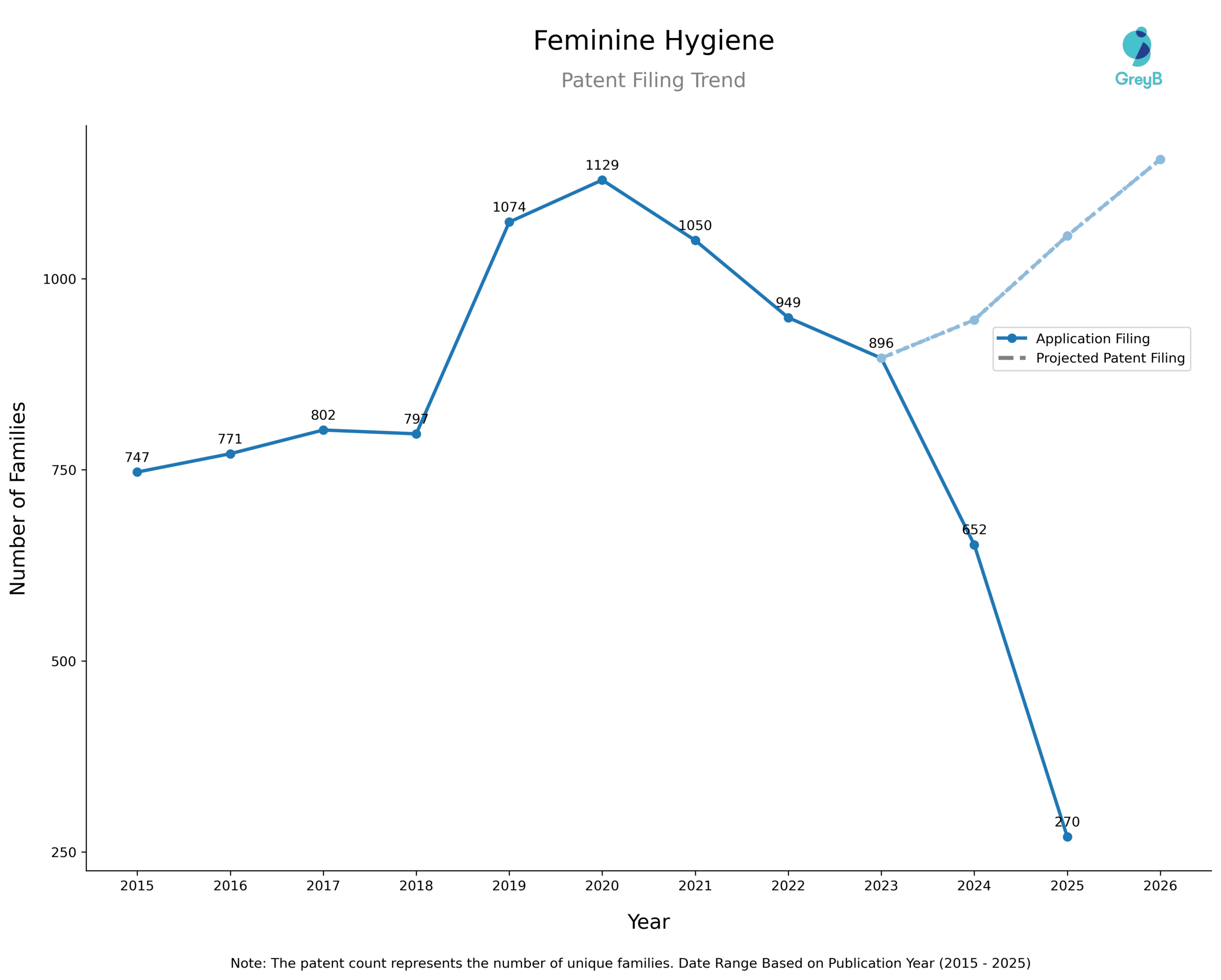
Patent applications typically take up to 18 months to be published, meaning the recent dip doesn’t signal a slowdown in innovation, many of those filings are simply still waiting to appear in the records.
The 2020 peak is equally telling: it coincides with a pandemic-era surge in hygiene awareness globally, when menstrual health suddenly became part of a much bigger conversation about bodies, safety and self-care.
The projected rebound through 2026 suggests the pipeline is full and given that the next era of the industry is being shaped by biodegradable materials, AI-assisted menstrual health analytics and zero-waste product models, the coming wave of patents is likely to look very different from the last one.
Who are the key companies in Feminine Hygiene?
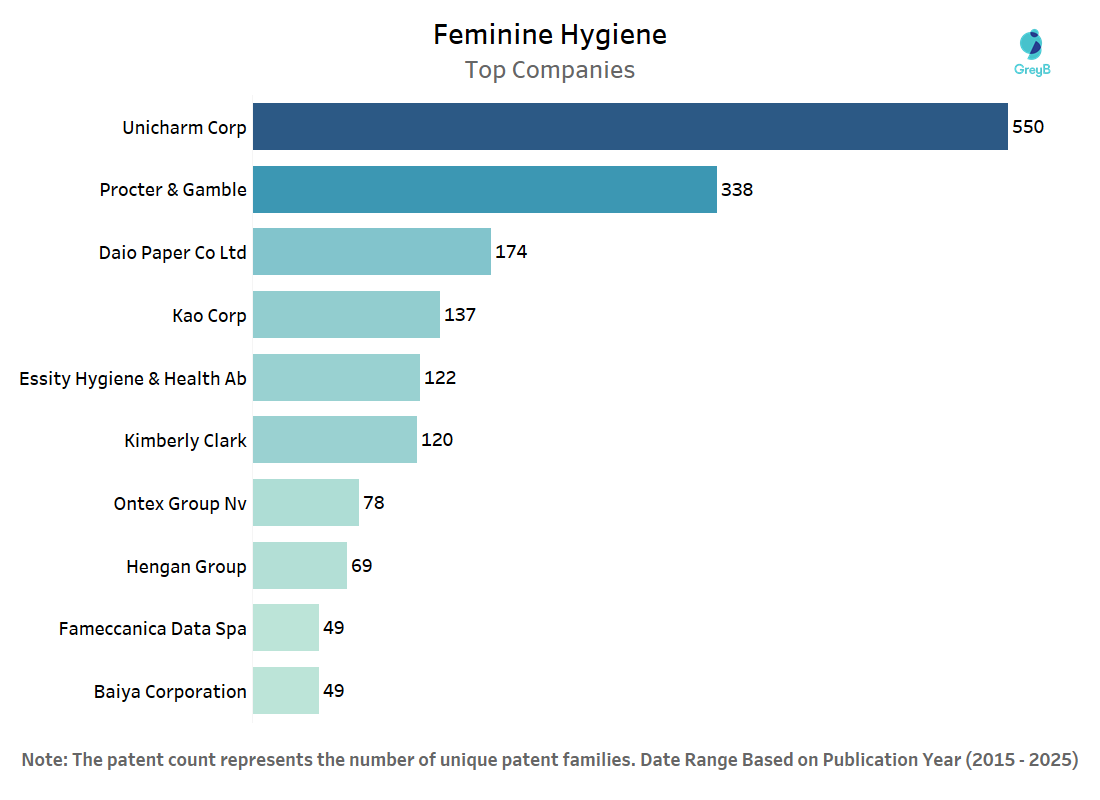
Unicharm’s dominance here with 550 patents, comfortably ahead of P&G’s 338 patents is a signal of where the industry’s most focused innovation is happening.
Japanese firms like Daio Paper and Kao further reinforce Japan’s stronghold, driven by advances in absorbent materials, skin-friendly designs and relentless incremental innovation.
What’s telling, however, is how far the gap stretches below the top two: the remaining eight companies combined barely match Unicharm alone. European and North American players like Essity and Kimberly-Clark maintain steady but modest patent activity, focused largely on hygiene safety and sustainability compliance, while Chinese newcomers Hengan Group and Baiya Corporation signal that the next wave of challengers is already warming up.
Which Countries Are Leading the Global Race for Feminine Hygiene?
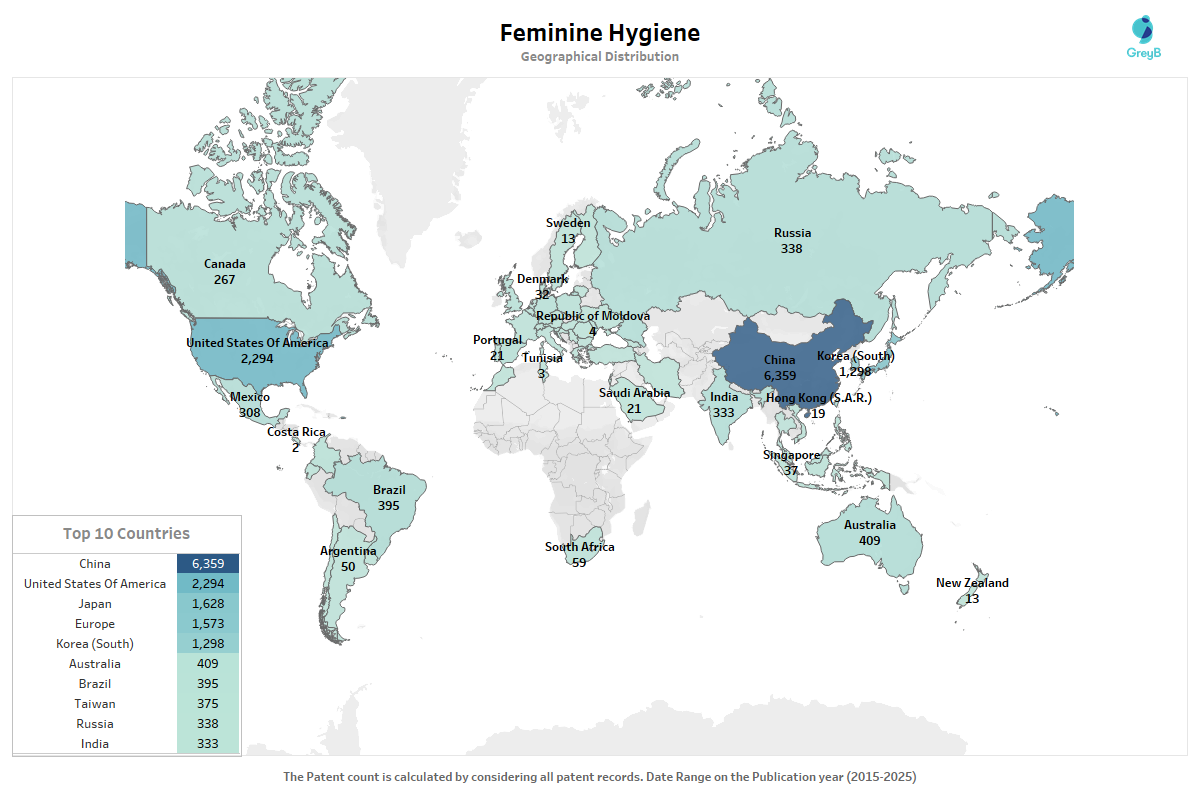
The map tells a story of two very different innovation worlds. China stands alone at the top with 6,359 patent families, nearly three times that of the United States (2,294) and that’s no accident.
China is home to the largest market for feminine hygiene products worldwide giving companies there every reason to innovate aggressively. Meanwhile, countries like China, Italy and Mexico heavily favour sanitary pads over tampons: a cultural preference that directly shapes where R&D energy flows.
What’s striking, though, is the near-silence from regions with the most unmet need: Africa, South Asia and Latin America contribute a fraction of global filings, despite housing billions of menstruating women with limited access to quality products.
The geography of innovation, it turns out, closely follows the geography of purchasing power leaving the world’s most underserved markets waiting.
Which Technologies Dominate the Feminine Hygiene Industry?
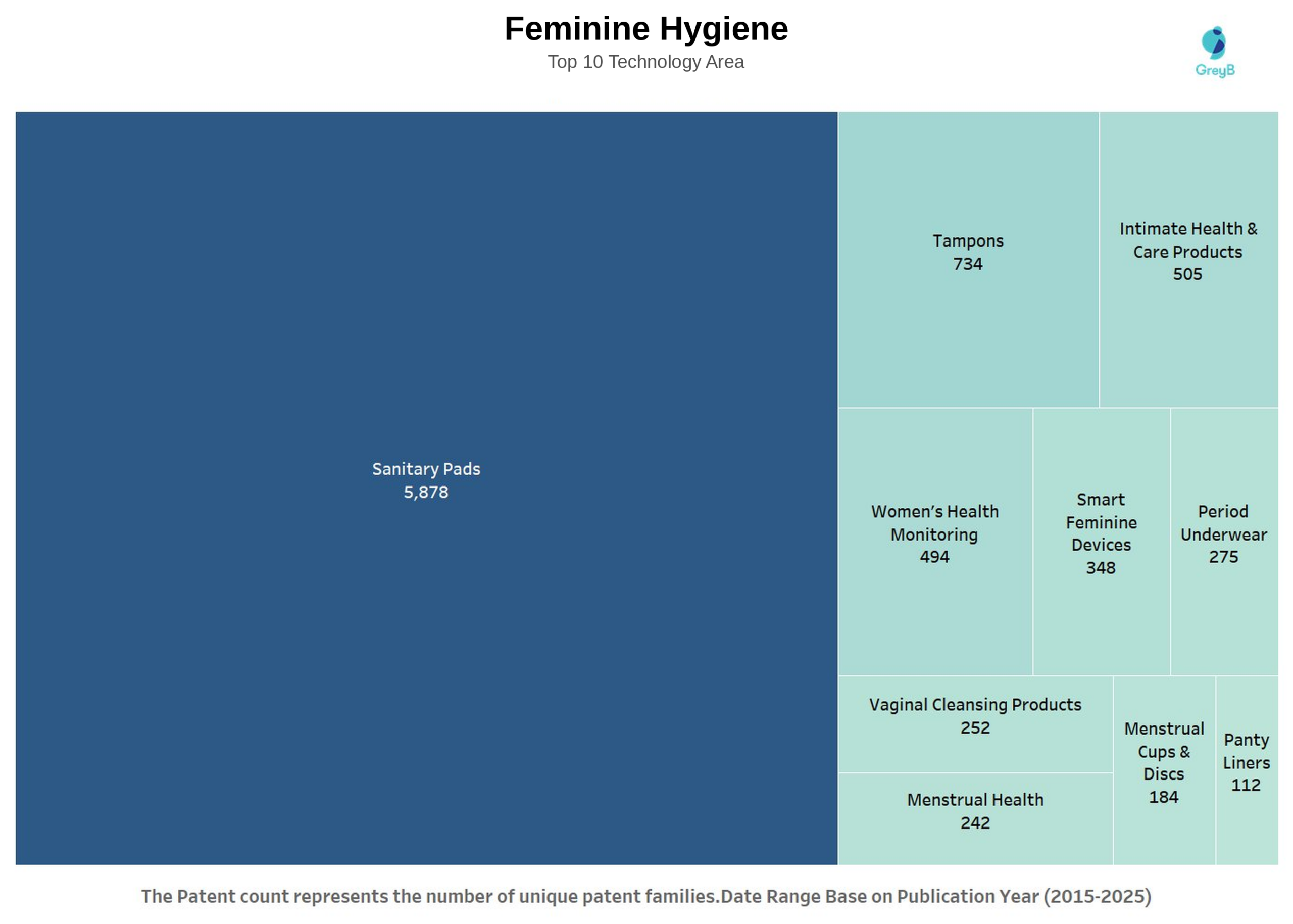
For decades, the feminine hygiene aisle has been synonymous with one product: the sanitary pad. And the numbers back it up: nearly 6 in every 10 patents filed in this space over the last decade belong to it.
But flip to the other side of that chart and something quietly radical is happening. Categories like Smart Feminine Devices, Period Underwear and Menstrual Cups, products that barely existed in mainstream conversations ten years ago, are steadily carving out space, both on the innovation map and in bathroom cabinets worldwide.
What this chart ultimately reveals is an industry in the middle of a quiet identity crisis, one where the biggest players are still perfecting the pad, while a new generation of consumers is asking for something fundamentally different: products that are reusable, body-safe and smarter.
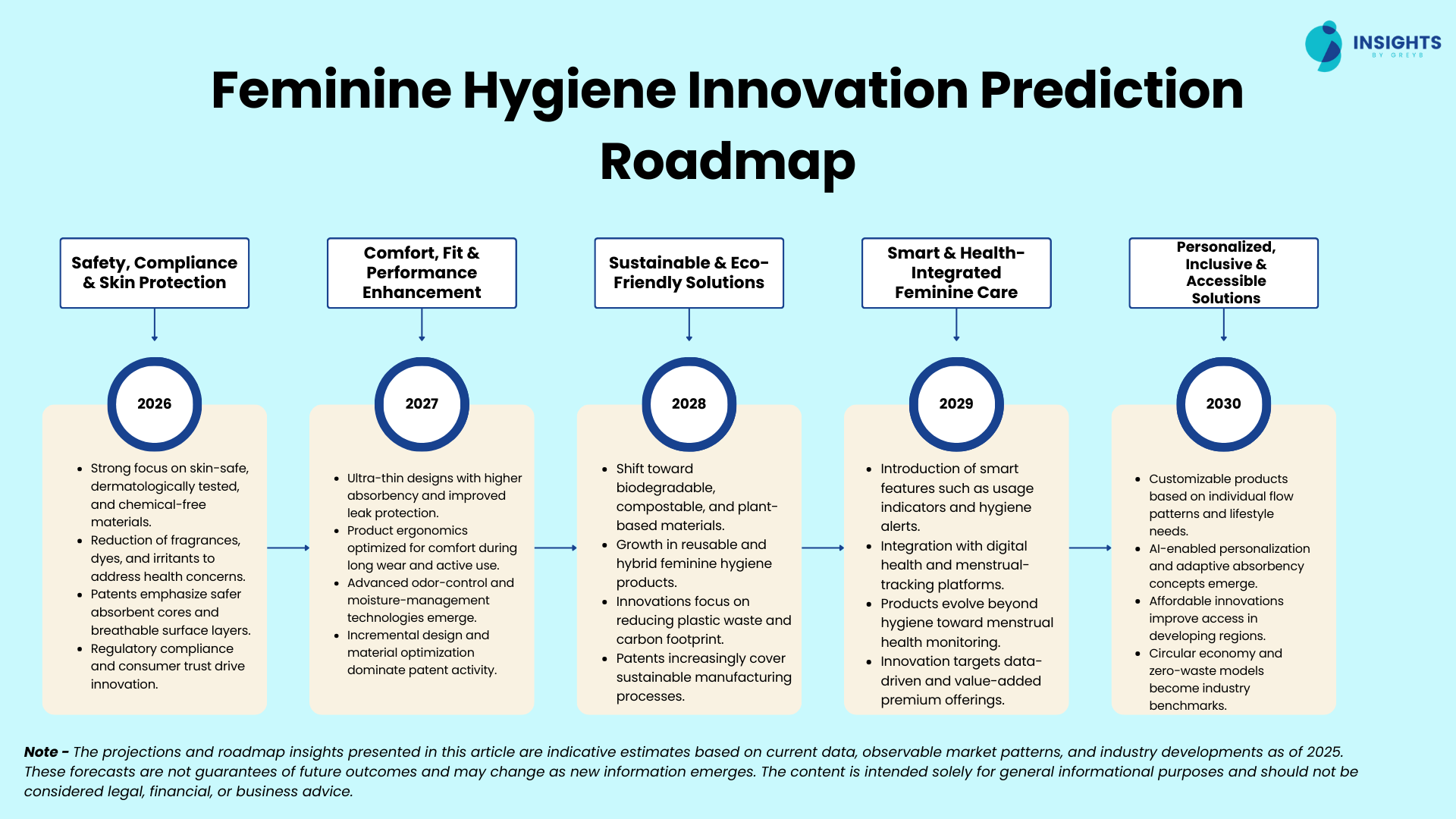
Feminine Hygiene Innovation Prediction Roadmap
What is in the report?
Full breakdown of patent portfolios by product and technology area.
Year-wise evolution of patent filings by technology area (2015–2025) highlighting shifts from basic absorbency toward comfort enhancement, sustainability-driven materials, and health-oriented product features.
Ranked list of top assignees in the feminine hygiene patent landscape.
Global distribution of patent filings, with country-wise leadership analysis and year-by-year filing trends across mature and emerging consumer markets.
Legal status analysis of the patent corpus (assessing the proportion of active, granted, pending, expired, and abandoned filings to understand competitive strength and white-space maturity.)
Future directions and emerging innovation hotspots.