Probiotics are no longer just ingredients listed on food and supplement labels. They have become an important area of innovation across the food, healthcare, and nutrition industries. As interest in gut health grows and consumers seek products that support daily wellness and disease prevention, probiotics are moving from niche offerings to mainstream solutions shaping the future of health and nutrition.
This change is driven by improvements in how probiotic products are developed and produced. Companies are focused on enhancing the quality, safety, and effectiveness of probiotic strains so they remain stable throughout their shelf life. Better testing methods, cleaner production processes, and improved manufacturing equipment are helping deliver consistent results across food, dairy, supplements, and medical nutrition.
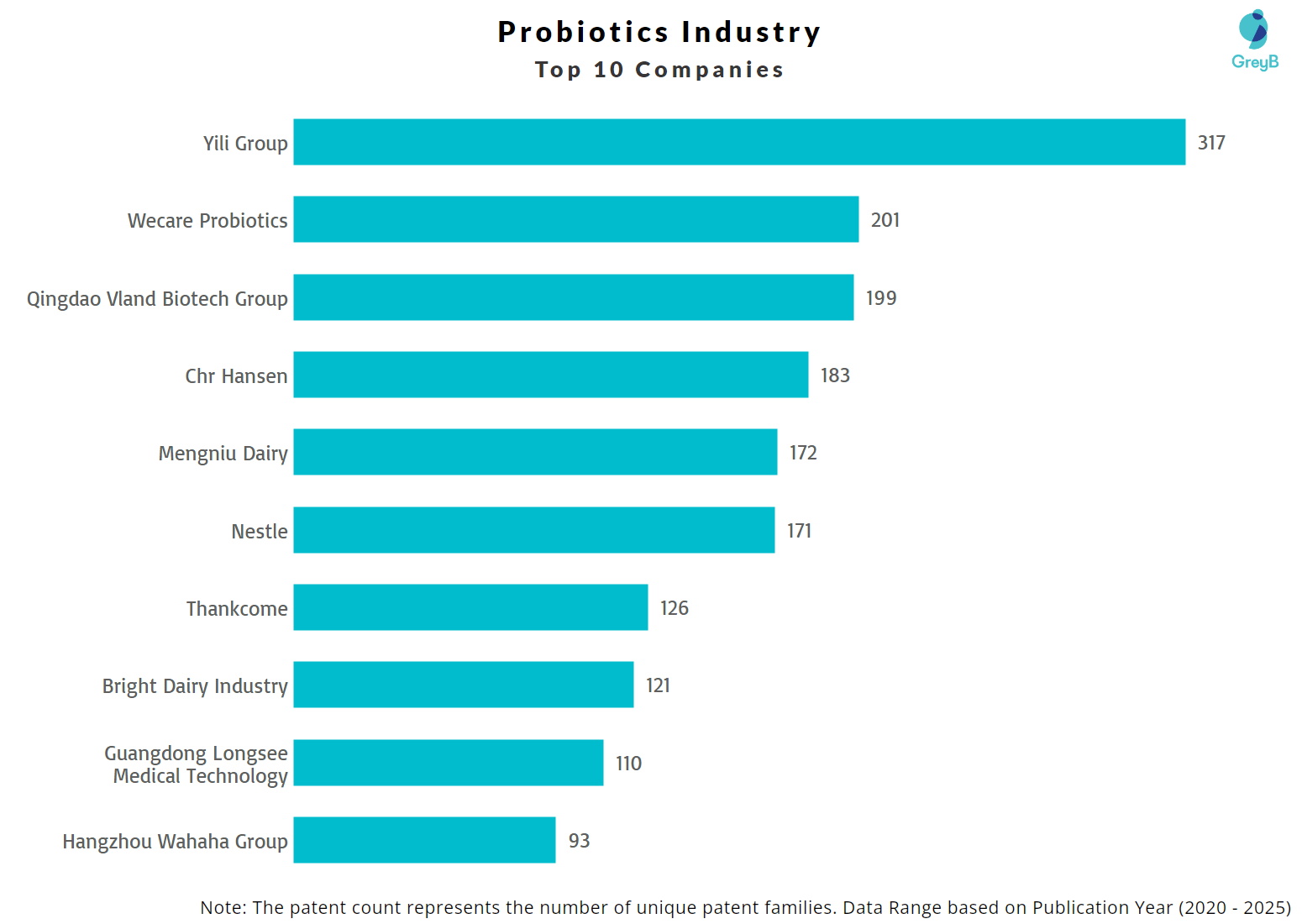
Between 2020 and 2025, more than 32,500 probiotic-related patents were filed worldwide. Leading patent filers include Nestlé, Chr. Hansen, Yili Group, Mengniu Dairy, Bright Dairy Industry, Hangzhou Wahaha Group, Wecare Probiotics, Qingdao Vland Biotech Group, Thankcome, and Guangdong Longsee Medical Technology, highlighting a fast-growing and competitive probiotics industry.
What are the problems with Probiotics?
Regulatory Differences
Varying rules across regions
Probiotic products are regulated differently across countries. What qualifies as a food, supplement, or medical product can vary widely, creating uncertainty for companies. These differences slow product approvals and make global expansion more complex.
Strain Stability Challenges
Keeping probiotics alive and effective
Probiotics are live microorganisms and can lose effectiveness during processing, storage, or transport. Maintaining stability throughout a product’s shelf life remains a major challenge, especially in mass production.
Clinical Proof Requirements
Need for stronger scientific evidence
Regulators and consumers increasingly expect clear proof of health benefits. Generating clinical data for specific probiotic strains is costly and time-consuming, limiting faster product development.
Manufacturing Scale-Up
From lab to large-scale production
Producing probiotics consistently at large scale is difficult. Small changes in temperature, moisture, or handling can affect quality, making scale-up a key technical hurdle.
Quality Control & Safety
Avoiding contamination and variability
Ensuring purity and safety is critical when working with live bacteria. Strict testing and clean production processes are required to prevent contamination and ensure reliable product performance.
Patent & IP Competition
Crowded innovation landscape
With rising patent activity, protecting new probiotic strains and processes is becoming more challenging. Companies must navigate a crowded intellectual property space to avoid overlap and protect innovation.
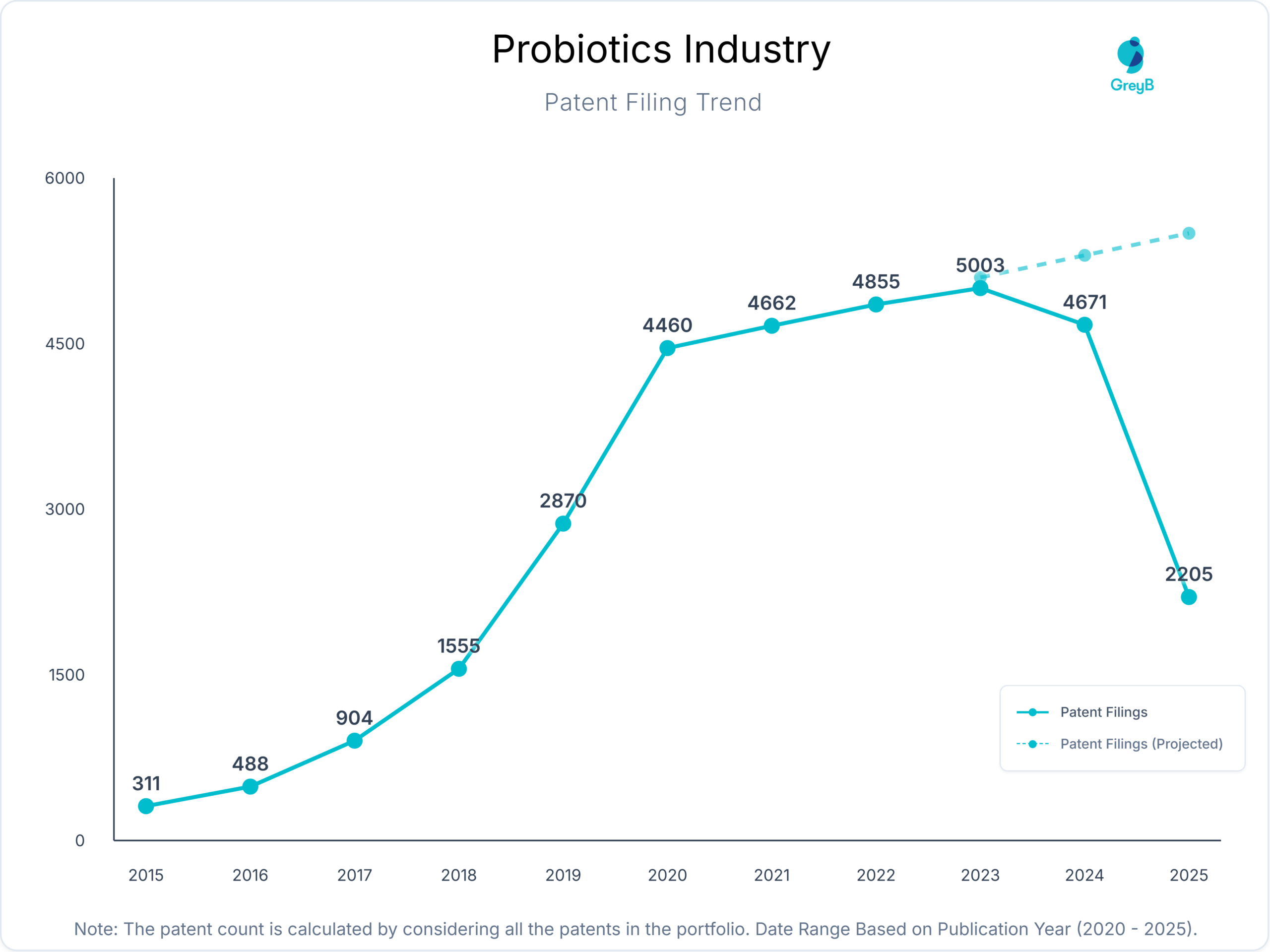
How many patents were filed in Probiotics Industry by Every Year?
Are you wondering why there is a drop in wind patent filings in 2024 and 2025? The reason is simple: patent applications take time to get published, often up to 18 months. So, the recent dip doesn’t mean innovation has slowed down – it just means many filings are still waiting to appear in the records.
Patent filings in the probiotic industry show a strong acceleration from around 2016, peaking during 2020-2022, reflecting heightened R&D and commercialization activity. The sharp drop in the most recent year likely reflects publication lag rather than an actual decline, while projections indicate continued long-term growth and innovation momentum in the sector.
Who are the key companies in Probiotics?
The probiotic patent landscape is led by Yili Group with a clear gap over competitors, indicating strong IP dominance and sustained R&D investment. The presence of multiple dairy and biotech players highlights intense competition, with innovation concentrated among large food, nutrition, and healthcare-focused companies.
Curious where your competitors stand?
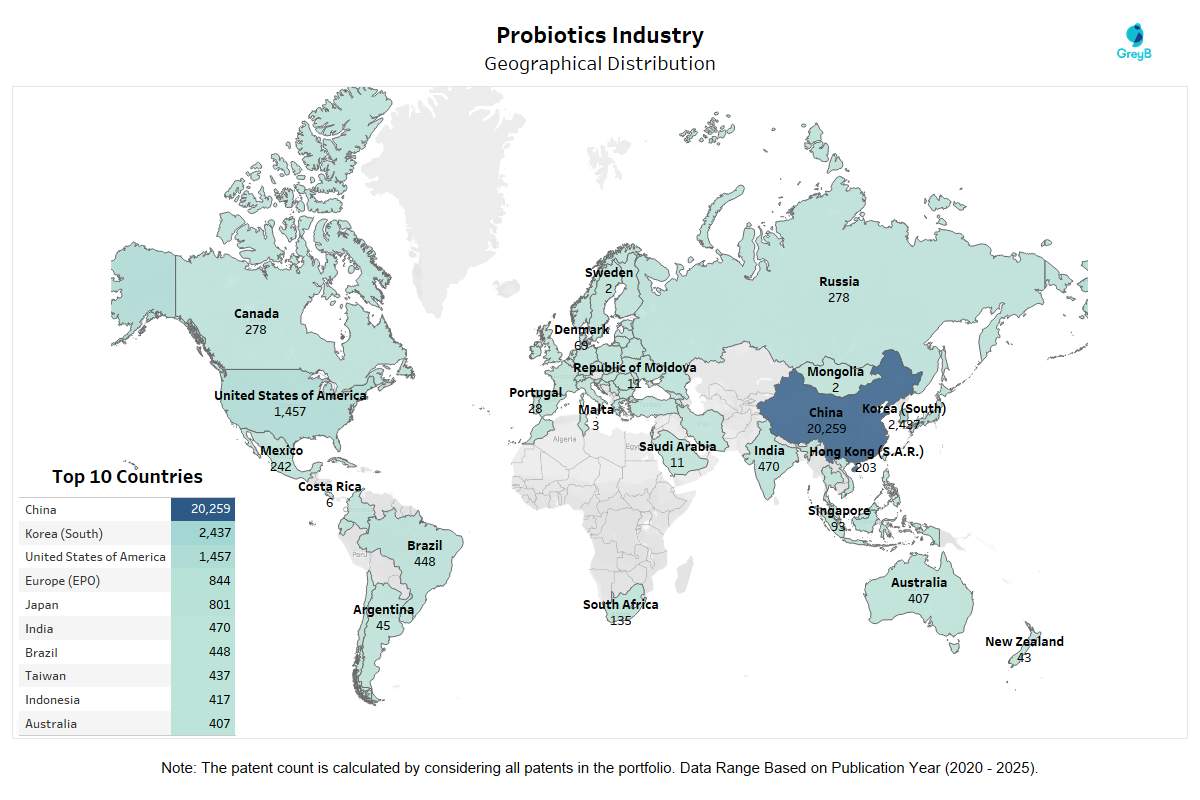
Which Countries Are Leading the Global Race for Probiotics Patents?
Probiotic patent activity is heavily concentrated in Asia and North America, with China emerging as the clear global leader, followed by South Korea and the United States.
This geographic pattern reflects strong regional focus on functional foods, gut health, and biotech innovation, supported by robust R&D ecosystems and domestic markets.
Curious how your region stacks up?
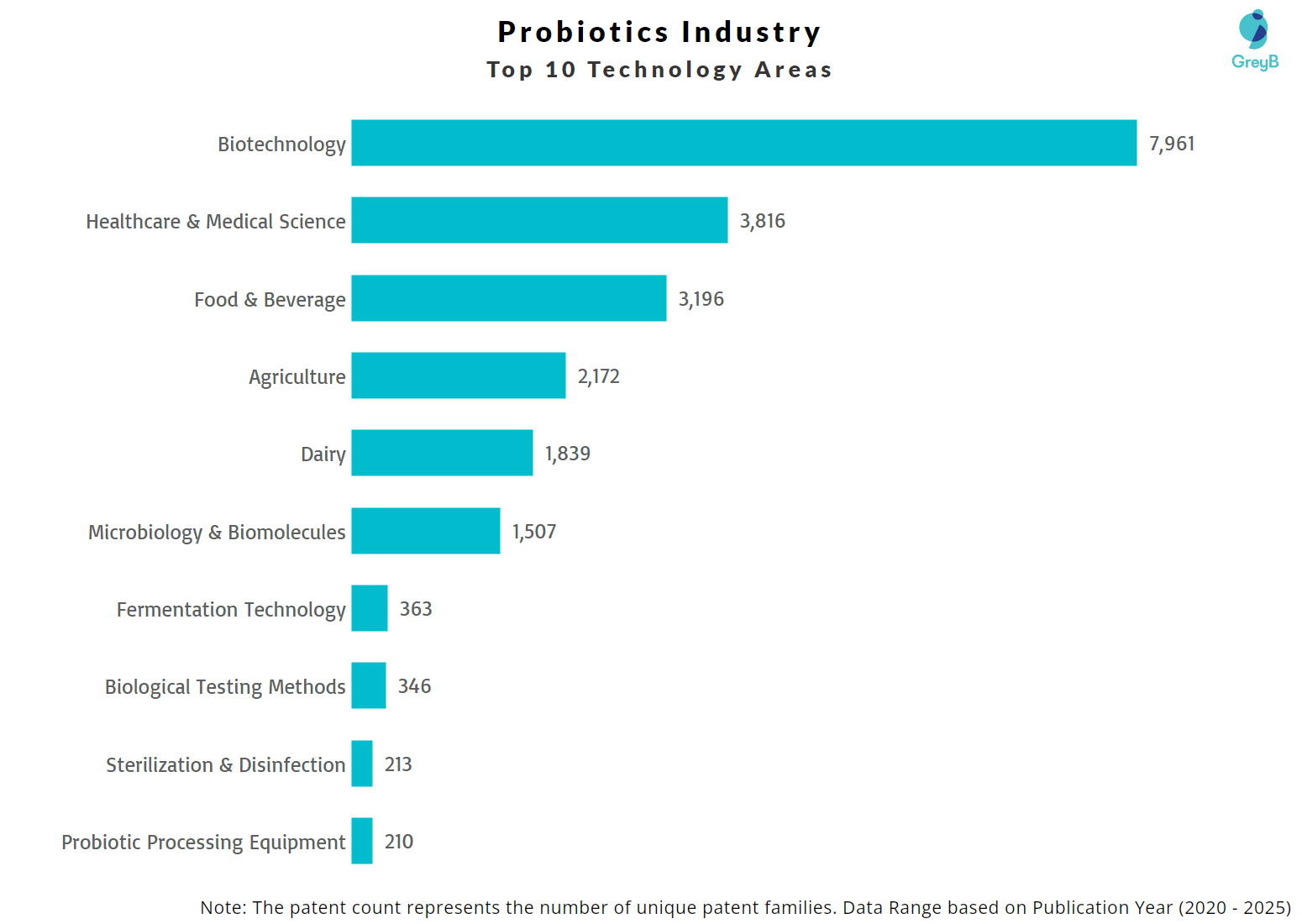
Which Technologies Dominate the Probiotics Patent Landscape?
Probiotic innovation is strongly driven by biotechnology and healthcare applications, indicating a shift toward clinically validated and science-led solutions.
Significant activity in food, agriculture, and dairy highlights the convergence of health, nutrition, and industrial fermentation in shaping next-generation probiotic technologies.
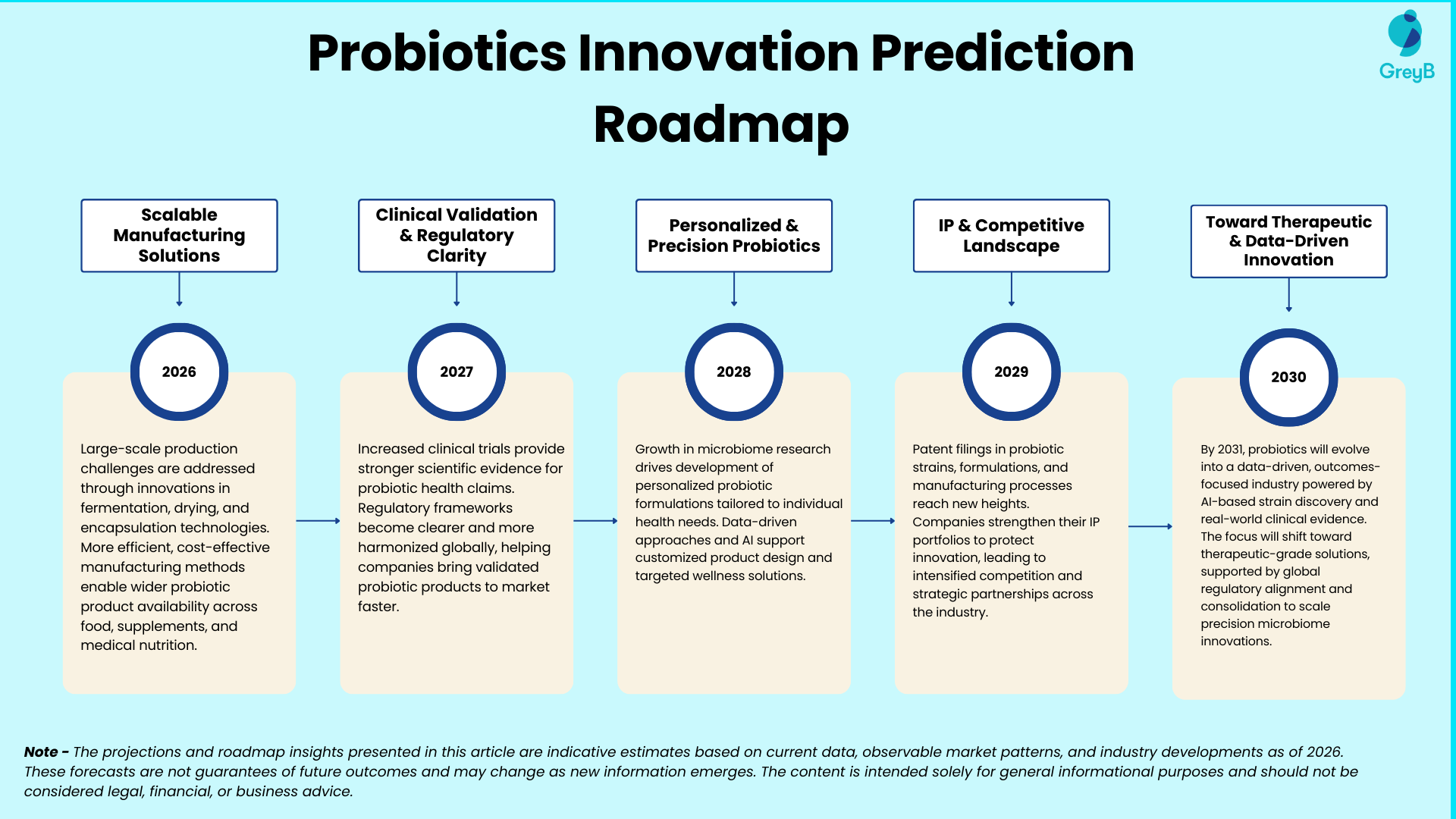
Probiotics Innovation Prediction Roadmap
What is in the report?
Full breakdown of patent portfolios by technology area.
Year-wise evolution of filings by technology area from 2020 to 2025.
Rank-list of top companies/assignees in the probiotics patent landscape and their filing trends.
Global distribution of filings: country-wise data & year-wise evolution.
Legal status analysis: how many are active, granted, abandoned etc.
Future directions & upcoming innovation hotspots in the probiotics space.