
Every year, cities worldwide generate millions of tons of construction and demolition (C&D) waste, including concrete, wood, metal, and debris. With rapid urbanization and the increase in construction activities, the volume of C&D waste continues to escalate, pushing the industry to explore more efficient and environmentally friendly methods. Traditionally, much of this waste has ended up in landfills, leading to significant environmental costs such as land occupation, groundwater contamination, and the loss of valuable recyclable resources. However, the industry is undergoing a transformation: construction waste recycling is emerging as a cornerstone of sustainable construction.
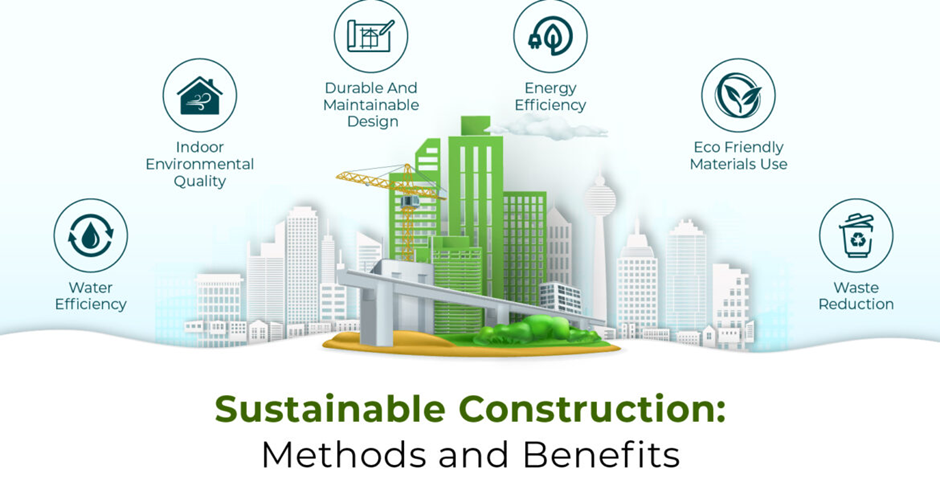
The Growing Challenge of Construction Waste
Despite increasing awareness of the environmental impacts, many regions still face challenges in efficiently managing and recycling C&D waste. This section introduces the key issues, from waste accumulation to landfills, and sets the stage for the need for technological innovations.
Check out Sustainable Construction patents filed in 2025:
Key Challenges in Recycling Construction Waste
Despite increasing awareness, several barriers continue to hinder effective recycling:
- Impurities in Recycled Aggregates: Recycled aggregates often contain impurities such as dirt, glass, and metals, making them unsuitable for use in high-quality concrete. These contaminants degrade the structural integrity of concrete, leading to reduced durability and strength.
- Worker Safety Risks: Construction waste recycling involves manual sorting, which exposes workers to sharp debris and hazardous materials like asbestos or lead, resulting in significant safety concerns and injuries.
- Low Recycling Efficiency: In some regions, less than 10% of construction waste is recycled due to the lack of efficient sorting technologies and inadequate infrastructure, leading to large volumes of waste still ending up in landfills.
- Environmental Pollution and Land Occupation: Large volumes of construction waste contribute to pollution and the occupation of valuable land areas, exacerbating urban sprawl and environmental degradation.
- High Energy and Water Consumption: Older recycling systems consume considerable amounts of energy and water, making the recycling process less environmentally friendly compared to newer, more efficient technologies.
These challenges underscore the importance of innovation in advancing waste recycling practices.
Innovative Solutions: Patented Technologies Paving the Way
Recent years have seen a wave of patented technologies that directly tackle these issues, pushing the industry toward smarter, safer, and more sustainable practices.
| Patent Number | Company / Institution | Problem | Patented Innovative Solution | Impact of the Patents |
| CN118616205A | China Construction Machinery | Impurities in recycled aggregates | Dual-system hybrid method combining photoelectric identification, pneumatic devices, and jig machines | Enables the removal of impurities from aggregates, improving the quality of recycled materials for concrete production. |
| CN115846351A | Harbin Institute of Technology (Shenzhen) | Worker safety risks from manual labor | Automated robotic arm system with depth cameras and visual recognition | Reduces manual labor and minimizes safety risks by automating dangerous sorting tasks. |
| CN112934718B | Shenzhen Bao’anwan Construction Waste Recycling | Manual Effort | Fully automated AI-enabled robotic manipulators reducing worker injuries | Significantly lowers worker injury rates by fully automating waste handling and sorting. |
| CN118527452A | Hai’an Lvfa Environmental Protection Technology | Low recycling efficiency | Intelligent sorting system using machine vision, airflow separation, and CNN algorithms | Increases sorting efficiency, enabling higher recycling rates and reducing the need for landfills. |
| CN214108260U |CN112296065A | Yongan Yongfu Concrete Engineering | Environmental pollution and landfill occupation | IoT + infrared imaging for real-time monitoring and safer classification | Reduces pollution and landfill use by enabling more accurate waste classification and management. |
| IN202541010860A | Annapoorana Engineering College (India) | High energy and water consumption | Recycling system embedding renewable energy use and water recycling loops | Lowers energy and water consumption, making the recycling process more sustainable and cost-effective. |
These innovations are helping the industry address major challenges and significantly improve the efficiency, safety, and environmental sustainability of recycling processes.
Get the complete list of Sustainable Construction patents. Discover the problems they solve and the solutions they offer. Fill out the form to access it now!
Market Trends: Growth and Opportunities in Recycling
The construction waste recycling market is rapidly growing:
- Construction Waste Recycling Market is expected to rise from US $28.97 Billion in 2022 to US $41.88 Billio\n by 2030, growing at 5.4% CAGR.(Source)
- This expansion reflects not only the urgency of addressing environmental issues but also the growing economic opportunity in the sustainable materials and recycling sectors.
The continuous advancements in technology, combined with market growth, offer substantial opportunities for businesses, governments, and environmental organizations to invest in these solutions.
5 Recent Sustainable Construction Startups
While large corporations and institutions lead in filing patents, a wave of startups is also reshaping sustainable construction with agile, tech-driven innovations. These companies are harnessing AI, green chemistry, bio-based materials, and circular economy principles to tackle C&D waste.
| Startups | Founded Year | Breakthrough Innovation |
| ReefCycle | 2024 | Produces bio-cement using plant enzymes for eco-friendly reefs/structures |
| NOVACRET | 2024 | Creates cement-free concrete from industrial byproducts |
| Agreka Build | 2024 | Produces bio-based, natural fiber insulation panels |
| Algyy Cleantech | 2024 | Creates algae-infused bioconcrete for carbon capture |
| Switchable Insulation Innovations | 2024 | Makes adaptive insulation panels responsive to weather conditions |
These startups reflect a global shift toward decentralized, clean-tech solutions. From AI compliance tools to algae-infused bioconcrete, they’re accelerating the transition to circular construction.
The Future Path: Advancing Towards Sustainable Construction
Construction waste recycling has evolved from unsafe, inefficient manual processes to advanced AI-driven, IoT-enabled, and eco-friendly systems capable of recovering up to 98% of materials. The next stage of progress will depend not only on technological breakthroughs but also on policy support, economic incentives, and socially responsible practices. To accelerate the adoption of these innovations, collaboration between industry stakeholders and policymakers is essential. By integrating advanced recycling systems, the industry can help achieve a more sustainable and circular economy, reducing waste, conserving resources, and minimizing environmental harm.
Unlock 90% of Global Construction Waste Recycling Insights
Tired of sifting through endless reports? We’ve gathered 90% of the world’s top research on construction waste recycling in one place. Want insights that speak to your needs? Simply fill out the form below, and we’ll send you tailored, actionable information!