The patent market doesn’t wait for the dust to settle. Even as companies are still finalizing annual strategies, the first reassignment cycle of the year is already underway and January 2026 came in with purpose.
More than 750 US patents changed hands across 141 patent transactions, with 757 unique assets moving to new owners. The mix told an interesting story: early-stage patent filings sitting alongside expired patents, design assets bundled with active ones. This is the profile of organizations making calculated moves deciding what to hold, what to offload and what to quietly accumulate before the rest of the market catches on.
What made January particularly worth watching was the range of industries involved. From Pharmaceuticals to Semiconductor and Automotive, the transfers cut across some of the most contested technology spaces of our time. Patents were moving not because they had to, but because someone, somewhere, decided they were more valuable in different hands.
That’s the story January 2026 tells. Not just a list of ownership changes, but an early signal of where the real IP action is likely to unfold over the next twelve months.
The trends shaping January didn’t emerge overnight. Revisit our December 2025 patent transaction analysis to see where the groundwork was laid before 2026 even began.
Key Highlights of Patent Assignments in January 2026
January 2026 opened the year with 757 US patents changing hands across 141 deals, a market active enough to span 124 sellers and 125 buyers. Here is a snapshot of what moved and what it means.
| Insight | Count |
| Total Patents Transferred | 757 |
| Total Patent Deals | 141 |
| Unique Patent Sellers | 124 |
| Unique Patent Buyers | 125 |
| Alive Patents | 660 |
| Dead Patents | 97 |
| Patent Applications | 191 |
| Granted Patents | 566 |
| Design Patents | 25 |
| Patents with Ongoing Litigation | 31 |
| Standards-Essential Patents (SEPs) | 3 |
Three numbers from this dataset deserve a closer look. First, 566 of the 757 transferred patents are already granted, meaning the bulk of January’s activity involved assets with established, enforceable rights rather than speculative early-stage patent filings.
Second, 31 patents in this month’s transfers are currently tied up in active litigation, which means some of these ownership changes happened mid-dispute (lis pendens), a reminder that patent transfers don’t pause for courtroom proceedings and a new owner can mean an entirely new approach to an ongoing case.
Third, 97 dead patents changed hands, which might sound counter-intuitive until you consider that lapsed patents can still carry significant prior art value and strategic relevance in the right hands.
Perhaps the most striking pattern in January’s data was that two patent families changed hands not once, but multiple times within the same month.
The Glowforge portfolio completed a full chain of transfers in January alone: from Glowforge Inc to Laser Equipment Company LLC, then onward to Purplevine IP Singapore Pte Ltd, and finally to Makeblock Hongkong Holding Limited: four owners in thirty days. A separate patent family followed a similar path, moving from Photanol BV to RPG Industries BV, and then again to Rayyan Holding BV within the same window.
And then there’s the citation story. Out of the 757 patents transferred in January, 19 carry 100 or more forward citations, a strong indicator of technical influence and potential licensing leverage. High citation counts don’t just reflect how often a patent has been referenced; they reflect how foundational an invention is to the technologies that came after it. If you need a deeper look at these high-impact assets or want a customized breakdown tailored to your specific technology area or competitive landscape, fill out the form below.
Which Technology Areas Are Leading in the Latest Patent Transfers?
The distribution of patent reassignments in January offers a clear view of where innovation pressure is most pronounced.
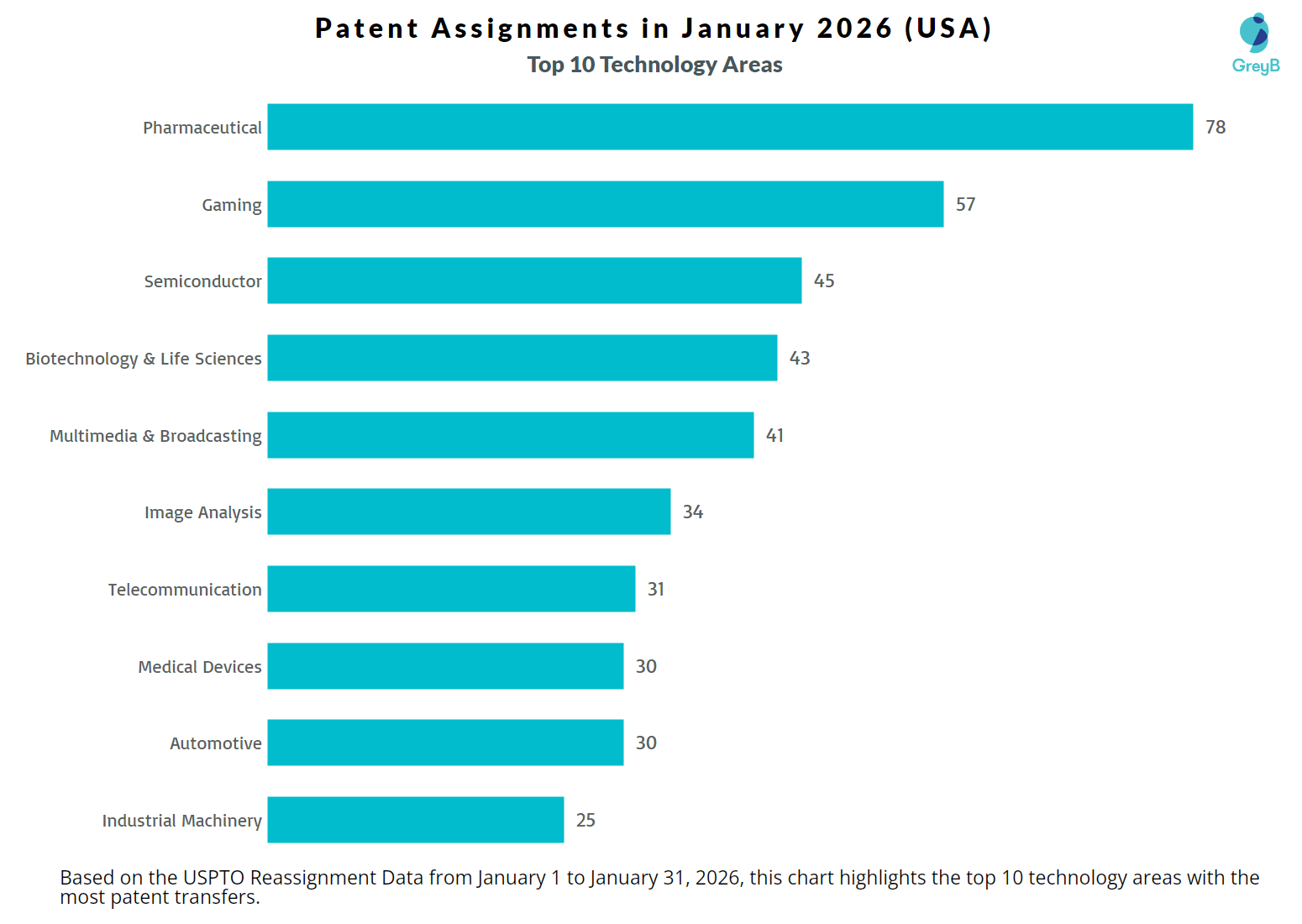
Pharmaceuticals took the top spot in January with 78 transfers, and the timing speaks for itself. The industry is staring down a patent cliff of historic proportions, with over $300 billion in branded prescription drugs set to lose exclusivity through 2030 and companies are clearly already moving their IP in response. But what made January’s data genuinely interesting was everything happening below that headline number.
Gaming came in second with 57 transfers, a figure that would have seemed unlikely just a few years ago. As the industry crosses $180 billion in global revenues and AI starts reshaping how games are built and experienced, the underlying technologies are becoming just as valuable as the titles themselves. Semiconductors followed closely with 45 transfers, no surprise given that chip IP sits at the heart of the AI arms race, with the semiconductor IP market projected to reach $13.54 by 2030.
Multimedia & Broadcasting, Image Analysis and Telecommunications each contributed between 31 and 41 transfers, reflecting three industries where the real competition isn’t just in products anymore, it’s in who controls the foundational technologies behind streaming platforms, AI-powered vision systems and next-generation networks. Medical Devices and Automotive tied at 30 transfers each, with both sectors navigating major transitions: one adjusting to regulatory and market uncertainty, the other rewriting its entire IP map around electrification and software.
Taken together, January’s top ten isn’t a random cross-section of industry activity. It’s a map of where competition is intensifying, where technology is shifting and where companies are quietly repositioning before the rest of the market catches up.
While the chart above captures the ten most active technology areas of the month, January’s transfers ran deeper than any single ranking can show. The complete dataset also surfaced patent activity in areas like solar energy, robotics, 3D printing, e-cigarettes and NFTs. If you’d like an in-depth analysis of the full technology landscape covered in January’s patent transfers, fill out the form below.
Who Are the Top Sellers Shaping the Patent Landscape in January 2026?
The January reassignment cycle reveals pronounced portfolio realignment with several established patent holders accelerating divestments across pharmaceuticals and automotive technologies.
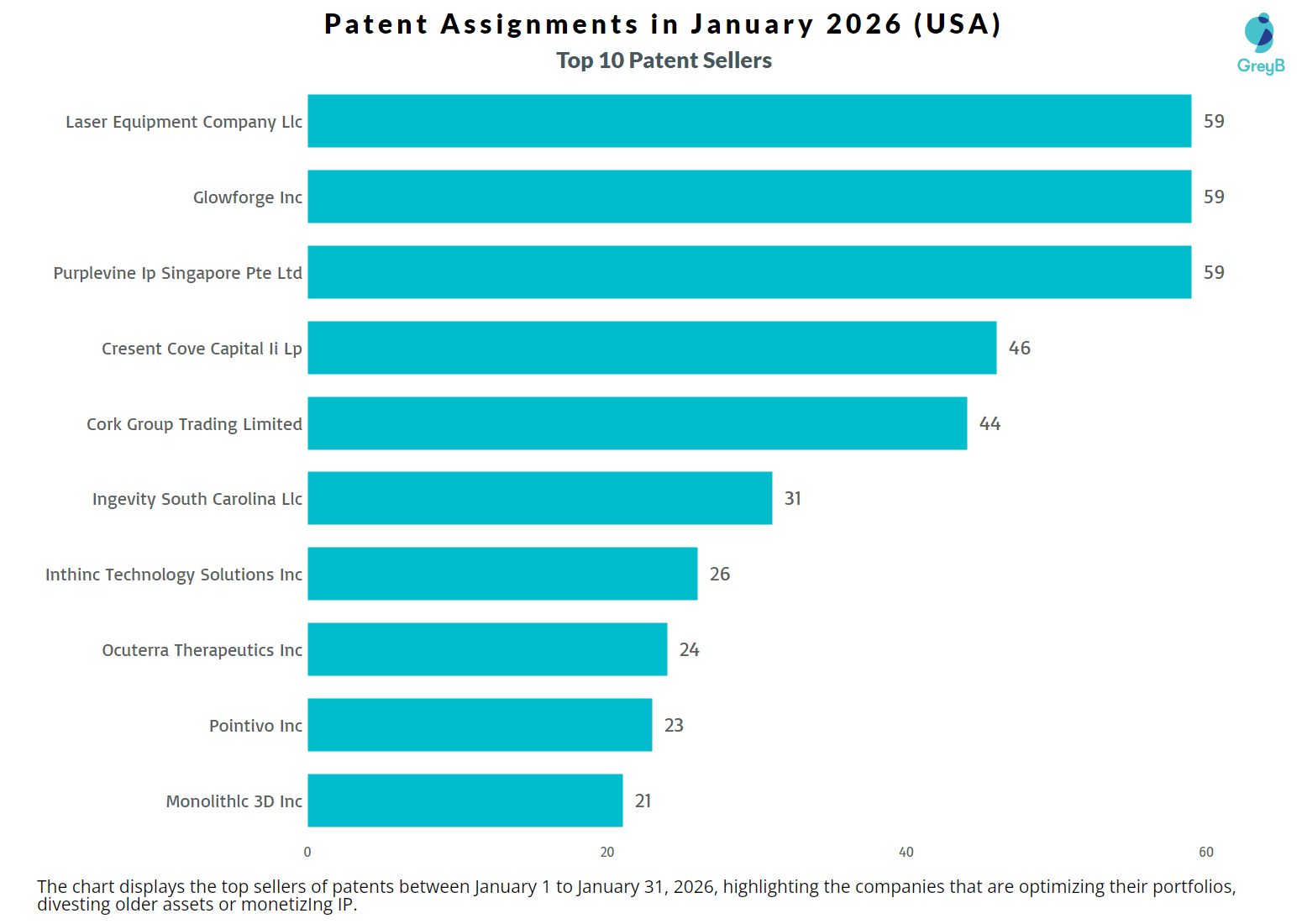
January’s sell-side activity tells three very different kinds of stories and together, they paint a vivid picture of why companies part with their patents.
The chart is dominated by a three-way tie at the top. Laser Equipment Company LLC, Glowforge Inc and Purplevine IP Singapore Pte Ltd each transferred 59 patents, making them the most active sellers of the month.
Glowforge’s presence here carries a particularly striking backstory: the Seattle-based laser engraver startup, which had raised $183 million from investors, went through a restructuring process after a failed funding round and multiple rounds of layoffs, with its co-founders ultimately buying back key assets from their own savings. For a company rebuilding from the ground up, offloading patents is less a strategic choice and more a necessary reset. Purplevine IP, on the other hand, is a China-based, globally-oriented IP firm with offices across 10 cities, specializing in patent monetization, licensing, and enforcement for its clients.
Ingevity South Carolina LLC’s 31 transfers tell yet another story. The specialty chemicals company has been in the middle of an active portfolio overhaul, announcing plans to explore strategic alternatives for its Advanced Polymer Technologies segment and Road Markings business in December 2025, with its broader divestiture program well underway. Patent transfers in this context are simply the IP layer of a much larger corporate restructuring.
Further down the list, Ocuterra Therapeutics stands out as one of the most telling entries. The Boston-based biotech wound down operations after its only pipeline drug failed to meet the primary endpoints of a Phase 2 clinical trial and its 24 patent transfers in January are likely the final chapter of that story, as remaining IP assets find new owners.
What January’s sellers collectively illustrate is something worth paying attention to: patent transfers rarely happen in isolation. Behind each one is a company navigating a business decision whether that’s rebuilding after failure, executing a long-planned exit, or simply ensuring that valuable IP doesn’t sit idle while the world moves on.
Who Are the Top Buyers Shaping the Patent Landscape in January 2026?
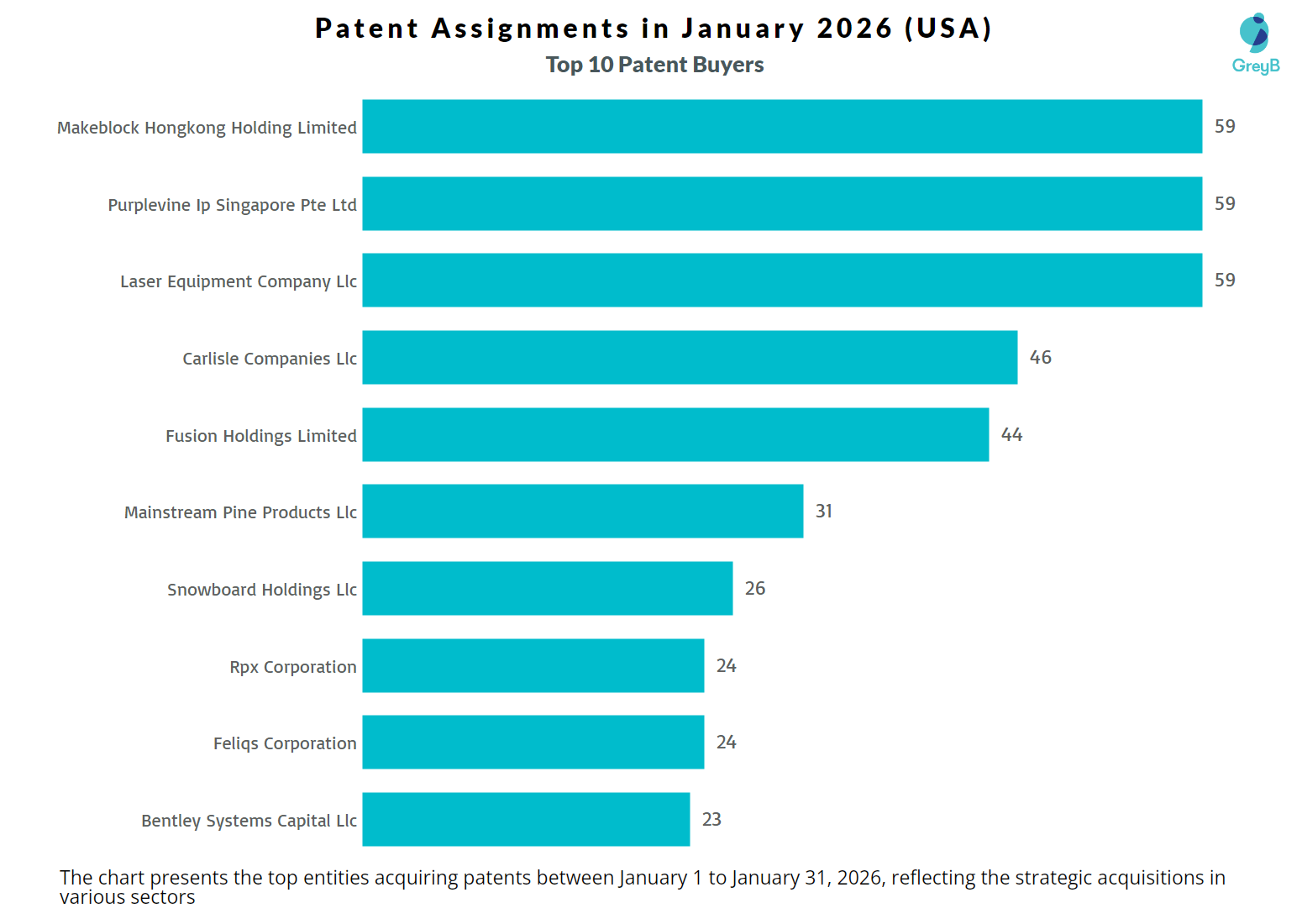
If the sellers chart tells you what companies are letting go of, the buyers chart tells you who’s quietly building something. And January’s acquisition side has some genuinely fascinating stories hiding behind the numbers.
Three entities tied at the top with 59 acquisitions each, Makeblock Hongkong Holding Limited, Purplevine IP Singapore Pte Ltd and Laser Equipment Company LLC. Purplevine IP, appearing on both the buyers and sellers chart simultaneously, reinforces its role as an active intermediary, acquiring on behalf of clients while repositioning other portfolios in the same cycle.
Carlisle Companies followed with 46 acquisitions, and the context here is telling. The company has committed to deploying $4 billion into acquisitions between 2024 and 2026 as part of its Vision 2030 strategy, with a sharp focus on building products and energy-efficient solutions. Patent acquisitions in this environment are less about IP for its own sake and more about protecting the innovations that underpin a company actively reshaping its entire business identity.
Perhaps the most strategically significant buyer further down the list is RPX Corporation, with 24 acquisitions. Unlike every other buyer on this chart, RPX isn’t accumulating patents to use or assert, it’s acquiring them to neutralize them. RPX removes patents from the market before they can become costly problems for its clients, having spent over $5.5 billion to date to defensively acquire rights to more than 330,000 patent assets. Its presence in January’s top ten is a quiet but meaningful signal: somewhere in this month’s transfers are patents that operating companies considered threatening enough to fund their removal entirely.
Taken together, January’s buyers aren’t a monolith. They range from a Chinese edtech company snapping up laser patents, to a defensive shield quietly protecting hundreds of technology companies, to an industrial giant executing a multi-billion dollar transformation plan one asset at a time.
Who Are the Top Non-Practicing Entities (NPEs) Involved in Selling Patents?
Non-practicing entities played a central role in January’s reassignment activity on both sides of the market.
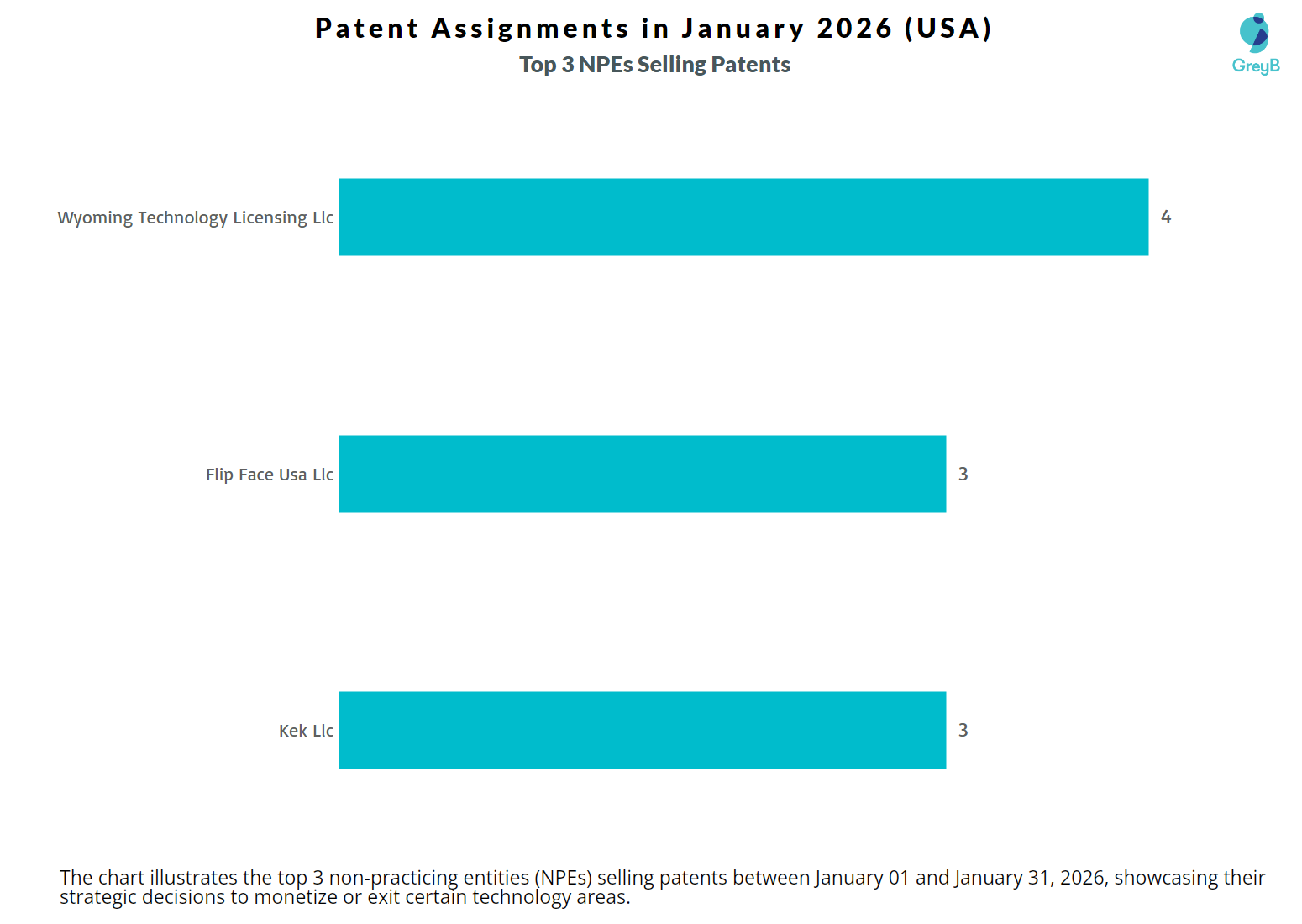
January’s NPE sell-side activity was modest in volume but rich in context and the most interesting story sits right at the top of the chart.
Wyoming Technology Licensing LLC led with 4 transfers, and its significance goes well beyond the number. The entity is linked to Leigh M. Rothschild and has been involved in patent litigation as a plaintiff, a name that has become synonymous with high-volume patent assertion. Rothschild, who secured his first patent by age 20 and is listed as the sole inventor on more than 130 patents, openly built his entire business model around monetizing intellectual property through litigation and licensing rather than selling products.
Flip Face USA LLC and Kek LLC follow with 3 transfers each but consistent with the broader NPE pattern of selectively offloading assets that have either run their monetization course or no longer fit the entity’s current enforcement focus. In the NPE world, a sale is rarely just a sale. It’s often the beginning of a new chapter for those patents under a different roof, with a fresh mandate.
Who Are the Top 5 Non-Practicing Entities (NPEs) Involved in Patent Acquisitions?
Several NPEs also emerged as dominant buyers in January, reinforcing the acceleration of portfolio consolidation across semiconductors and automotive technologies.
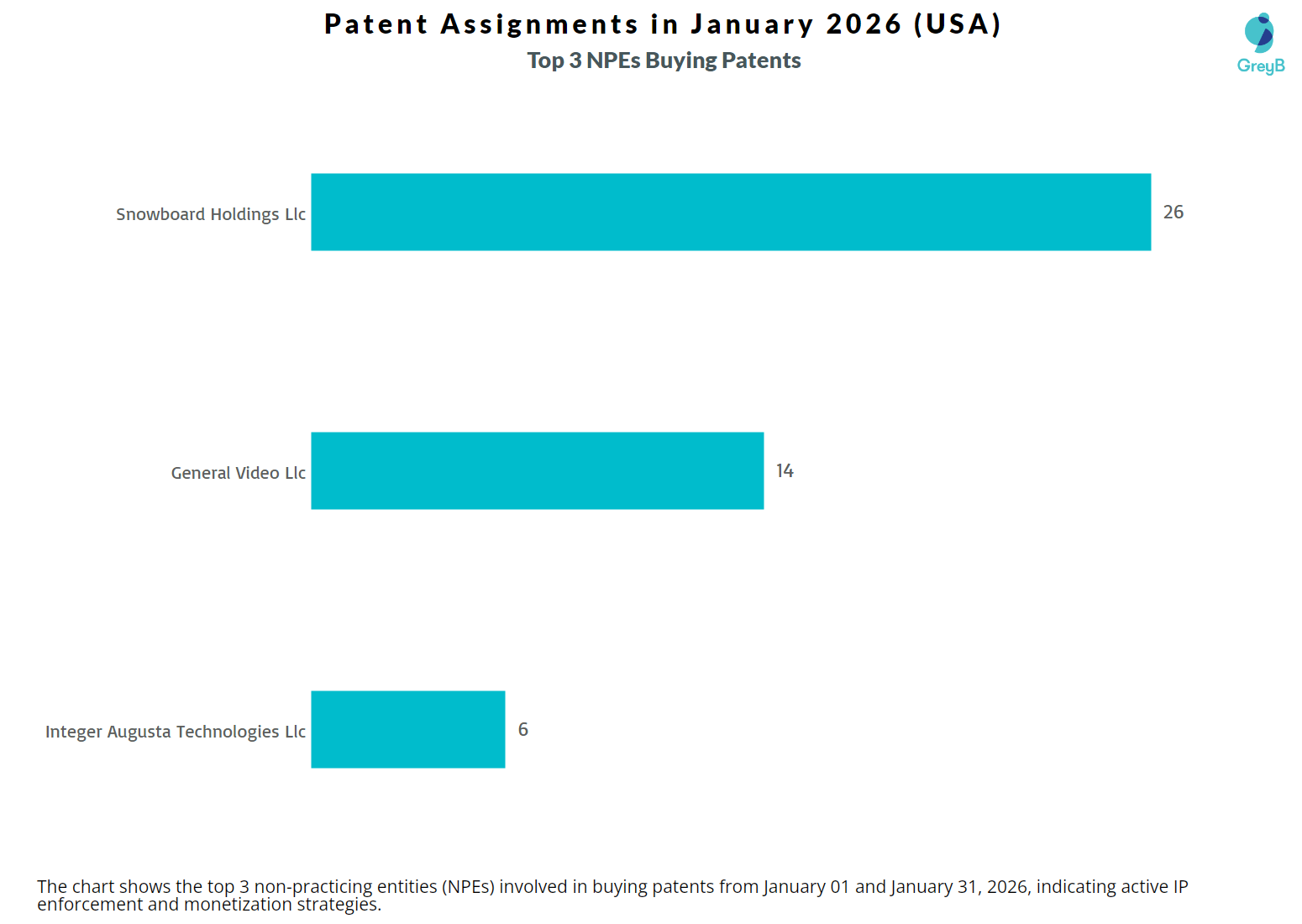
January’s NPE buy-side activity was compact in numbers but pointed in intent and each of the three entities on this chart has a very different reason for accumulating patents.
Snowboard Holdings LLC led the way with 26 acquisitions, making it by far the most active NPE buyer of the month. Its aggressive accumulation in a single month suggests a portfolio being deliberately assembled around a specific technology thesis, likely ahead of a structured licensing campaign. General Video LLC followed with 14 acquisitions and its background leaves little ambiguity about what comes next. General Video, a subsidiary of Korean monetization firm IdeaHub, has already filed patent infringement suits against Acer, ASUS, Dell, HP and Lenovo in the Eastern District of Texas, asserting DisplayPort-related patents acquired from Panasonic and Philips.
Integer Augusta Technologies LLC rounds out the top three with 6 acquisitions, modest in volume, but consistent with the focused, targeted approach that smaller assertion-oriented entities often prefer over broad accumulation.
What unites all three is the core NPE playbook: acquire first, assert later. NPEs filed roughly 88% of high-tech patent cases in 2024, often using portfolios acquired directly from operating companies and January’s buy-side data suggests 2026 is shaping up to follow the same pattern.
One transfer in January’s NPE activity stands out for its specificity. Wyoming Technology Licensing LLC passed four speech analysis and processing patents, US9190052B2, US8521766B1, US8862615B1 and US9824150B2, directly to Reagan Inventions LLC, another NPE.
When patents travel between non-practicing entities rather than landing with an operating company, it rarely signals an exit from the market. NPE patent filings have been rising steadily, with patent assertion entities showing a notable increase in activity through 2024 and portfolios built around foundational voice and speech technologies are precisely the kind of assets that tend to find their way into active licensing campaigns sooner rather than later.
Want visibility into the NPEs shaping today’s patent assignment landscape?
Access the complete list of non-practicing entities involved in recent patent transfers by filling out the form below.
Standards-Essential Patents in January’s Transfers
Only three standards-essential patents changed hands in January 2026 but in the world of SEPs, quality matters far more than quantity, and each of these three transfers carries a story worth telling.
The most strategically loaded transfer involves Intel passing US20220131727A1 to Apple, a 5G positioning patent covering how wireless networks deliver precise location signals to devices.
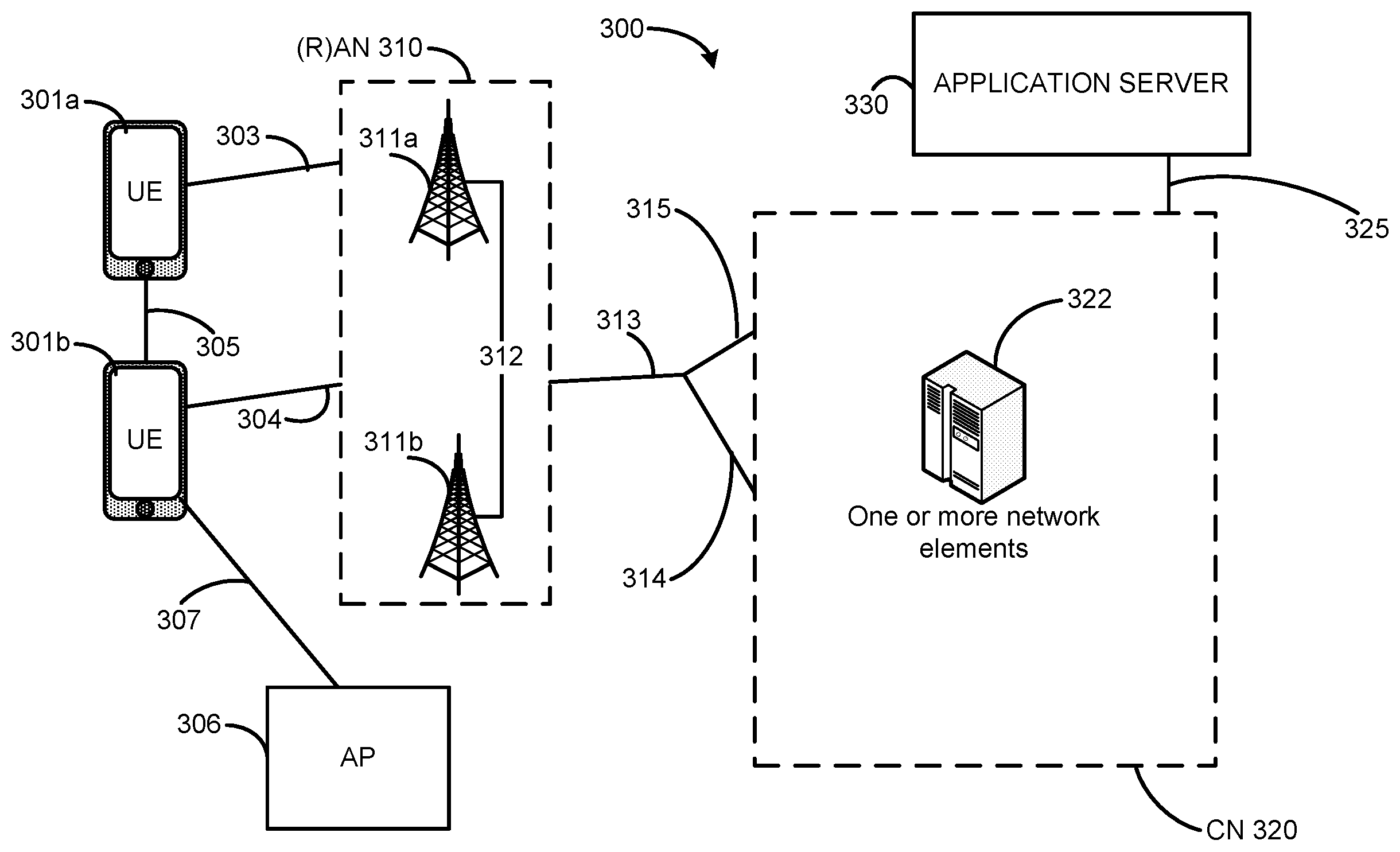
When Apple acquired Intel’s smartphone modem business for $1 billion in 2019, it inherited over 17,000 wireless technology patents spanning cellular standards, modem architecture, and chip engineering. This January transfer suggests that process is still not fully complete, patents continue to trickle from Intel to Apple years after that landmark deal, quietly reinforcing Apple’s position in the 5G standards landscape as it works toward building its own modems in-house.
The second transfer tells a different kind of story. Huawei’s vector quantization patent US8335260B2, a foundational codec technology used in audio compression, has moved to Crystal Clear Codec LLC.
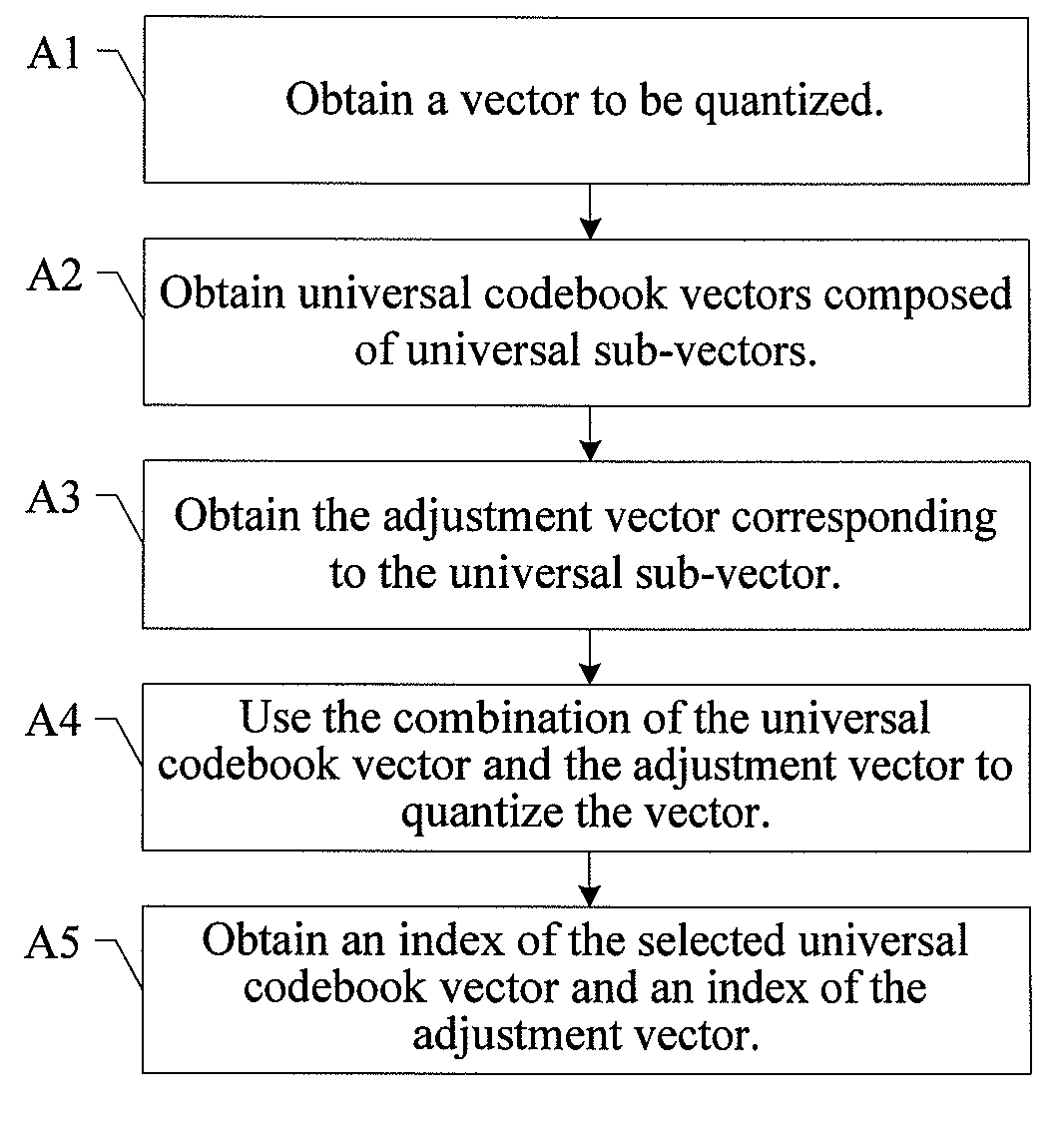
Crystal Clear Codec has already filed infringement suits asserting Huawei-originated patents against LG Electronics and has active enforcement campaigns in Munich targeting Apple, Xiaomi, and OPPO over EVS codec SEPs. A new Huawei patent landing in Crystal Clear Codec’s hands in January 2026 is not a quiet event, it is a signal that the portfolio is still being actively expanded.
The third transfer is the most understated but no less interesting. Web Access LLC has passed US20180276611A1, a patent covering medication ordering and delivery systems to EOS Technology Holdings Inc, placing a logistics automation SEP into what appears to be a fresh holding entity.
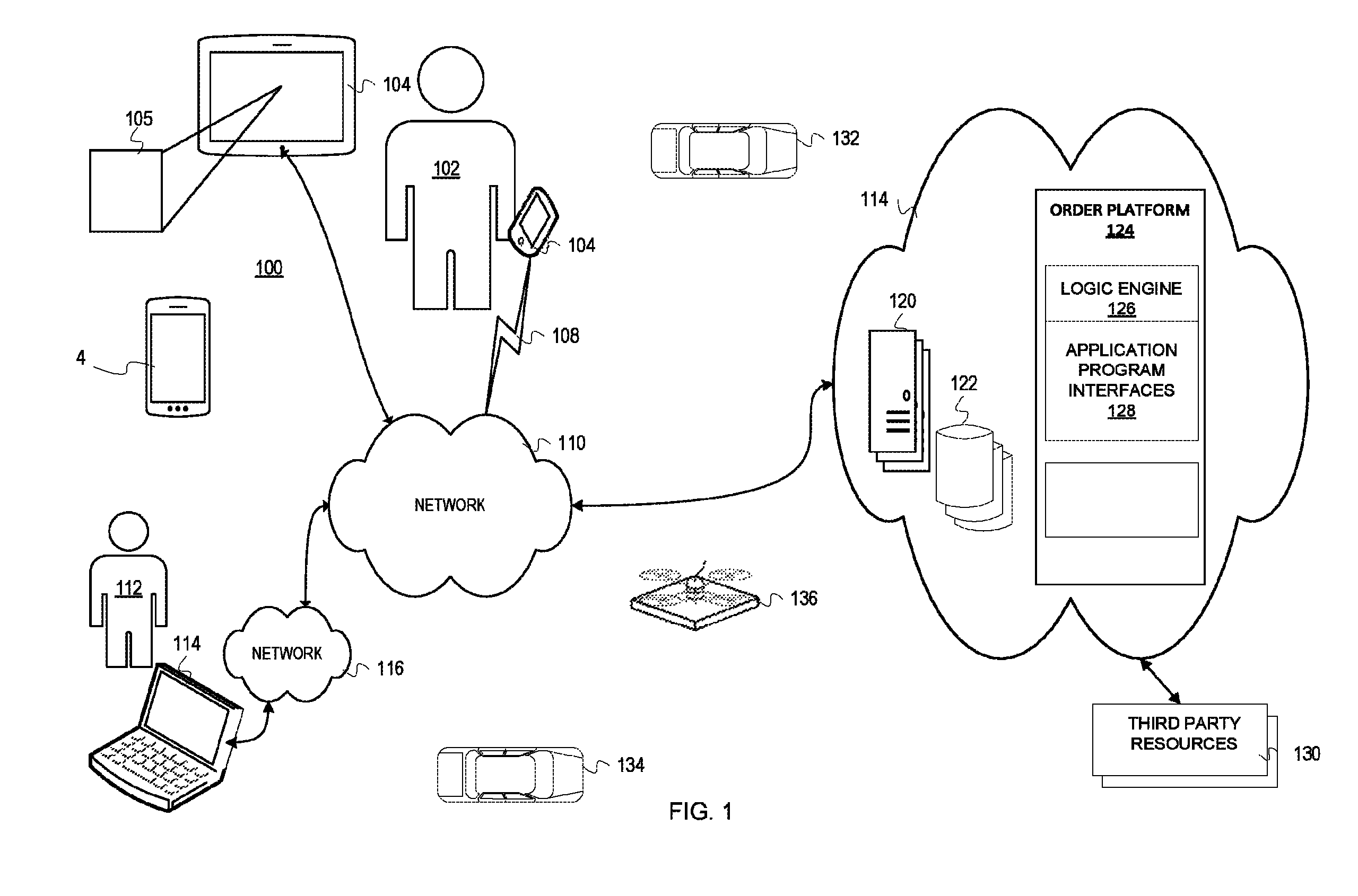
As connected healthcare and automated pharmacy fulfillment become increasingly mainstream, a standards-essential patent in this space carries long-term licensing potential that may not be visible today but could become very relevant as the sector matures.
Three patents. Three entirely different trajectories. That’s what makes SEP transfers worth watching even when the numbers are small.
Turning Patent Complexity into Strategic Advantage
As patent-market activity accelerates, reassignment decisions increasingly reflect deliberate strategic intent rather than routine transfers. Some portfolios are being repositioned to support long-term innovation roadmaps, while others are consolidated to enable licensing, monetisation or future enforcement.
We help clients navigate this complexity by identifying high-impact patents with strong licensing and assertion potential, developing litigation-ready claim charts and licensing talk decks and designing monetisation strategies aligned with technical depth, standards relevance and market timing. With the right insight and execution, today’s patent marketplace can become a source of sustained competitive advantage rather than uncertainty.