In November 2024, a quiet shift occurred in sports nutrition retail. DeathBites launched creatine gummies at $1.23 per dose, undercutting traditional powder formats while eliminating the mixing ritual that has defined creatine supplementation for decades. Within months, fitness enthusiasts on Reddit and TikTok were sharing taste tests, comparing brands and debating whether gummies could truly replace their shaker bottles.
The market response has been explosive. While creatine gummies represent only 3-7% of the total creatine market today, they’re growing at 50% year-over-year, the fastest expansion rate of any creatine format. By 2032, this segment will hit $168.2 million.
Here’s the strategic reality most industry observers are missing: This isn’t about taste or convenience. It’s a formulation arms race disguised as a consumer trend.
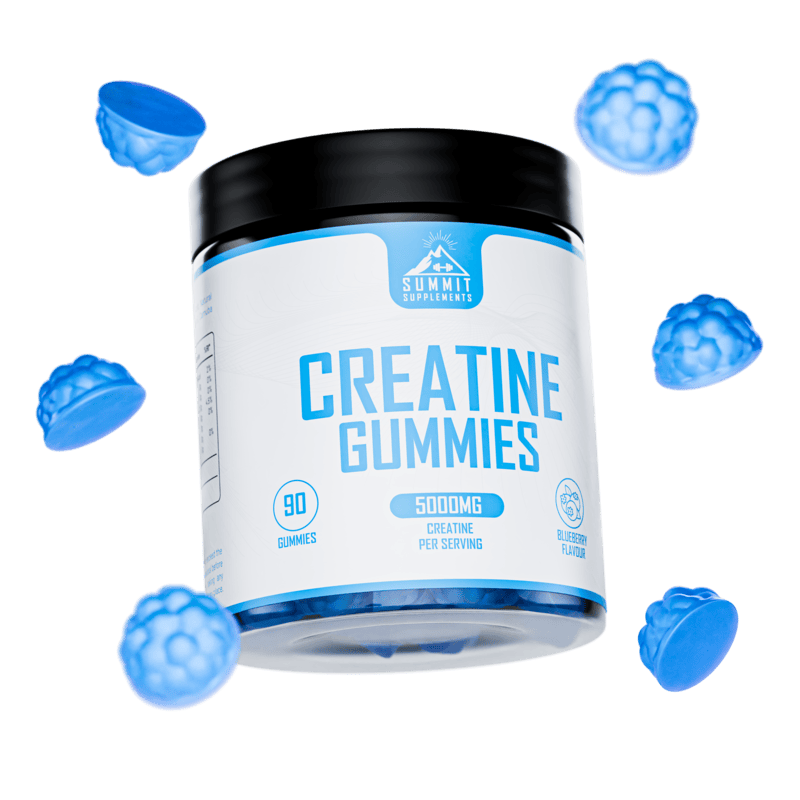
Creating a gummy that actually works, that delivers therapeutic doses without degrading, turning gritty or providing suboptimal absorption, represents one of sports nutrition’s hardest unsolved engineering problems. The core problem? Current creatine gummies deliver only 16% bioavailability compared to powder.
This is where patent strategy becomes the competitive moat. With creatine monohydrate itself long off-patent, companies can no longer compete on the active ingredient. Instead, they’re racing to patent the delivery systems, manufacturing processes and formulation techniques that solve three interconnected challenges:
- Bioavailability: How do you get creatine through gastric acid and into muscle cells at powder-equivalent rates?
- Stability: How do you prevent heat-induced degradation during manufacturing (which creates 10,000+ ppm of useless creatinine)?
- Economics: How do you achieve the above at a cost structure that allows mass-market distribution?
The companies that crack this triad potentially unlock a 300% market expansion by making creatine accessible to the 70% of fitness consumers who won’t deal with powders.
Recent Patents Shaping Creatine Gummy Innovation
Creatine gummies represent a classic formulation layering strategy to build proprietary positions around off-patent ingredients. The patent filings from 2023-2025 reveal three dominant innovation vectors, absorption enhancement, thermal stabilization and organoleptic masking.
Rather than simply listing patents, let’s decode the competitive strategies they reveal:
Patents Addressing Bioavailability Enhancement
Gummy matrices slow creatine dissolution and absorption, delivering 30-50% lower plasma concentrations than powder. Whoever solves this can charge premium prices backed by clinical data.
| Patent Number | Patent Owner | Strategic Approach | Competitive Analysis |
| US2024156732A1 | Spartacus Brands | Liposomal encapsulation (≈100 nm phosphatidyl-choline vesicles) | Composition-of-matter claims = strong blocking position. Requires pharma-grade manufacturing, limiting mass-market scalability. Licensed across multiple formats (gummies, tablets, capsules, bars), suggesting IP monetization strategy. |
| US12280067B2 | Phenolics LLC | Enteric coating + cyclodextrin complexation (protects through gastric pH, releases in intestine) | Method claims = easier to design around via alternative polymers. Borrowed from pharmaceutical drug delivery. Currently targeting powder/tablet; gummy extension possible but would require formulation adaptation. |
The competitive implication: Any brand making bioavailability claims without licensing one of these technologies will face substantiation challenges. Whoever publishes first gains massive positioning advantage.
White space opportunity: Nobody has patented sublingual delivery formats (dissolve-under-tongue gummies bypassing gastric degradation entirely). This represents an obvious design-around pathway.
Patents Addressing Thermal Stability
Creatine spontaneously cyclizes to creatinine (waste product) above 60°C. Traditional gummy processing occurs at 80-90°C, creating 10,000+ ppm creatinine within minutes, far above the 1,000 ppm safety threshold.
| Patent Number | Patent Owner | Strategic Approach | Competitive Analysis |
| CN120982628A | Guangdong Yichao Biological | Pneumatic jet-milling + gradient cooling (reduces particle exposure time, controls temperature descent) | Process patent = creates cost advantage but easier to design around than composition claims. Enables mass production while maintaining <1,000 ppm creatinine. Already commercialized in sports nutrition gummies exported globally. |
The competitive implication: Brands without this technology face a trilemma:
- Accept higher creatinine levels (quality/regulatory risk)
- Use low-temperature processing at 40-60°C (doubles cycle time, kills margins)
- License the technology (creates supplier dependency)
White space opportunity: Room-temperature gelation systems (pectin + calcium) that bypass thermal processing entirely. No patents filed yet.
Patents Addressing Taste/Texture Optimization
Creatine is inherently bitter with metallic notes. High-dose loading (3-5g per serving requires 20-30% of gummy weight) makes this worse while creating grittiness.
| Patent Number | Patent Owner | Strategic Approach | Competitive Analysis |
| CN121196055A | Weihai Baihe Biotech | Micro-encapsulation (creatine + α-lipoic acid + BCAAs in sugar-free matrix) | Incremental improvement = micro-encapsulation is known art. The innovation is the specific blend (creatine + synergistic ingredients) enabling 800-1500mg dosing without bitterness. Relatively easy to design around via alternative encapsulation or different synergistic blends. |
| CN120827140A | Jiabei Health Technology | Ultra-fine particle suspension (D90 10-20 μm in maltitol/sucrose syrup) | Novel approach to texture = reducing particle size below taste receptor detection threshold. Creates “functional soft candies” with 20-30% creatine loading. More defensible than simple encapsulation because particle size control during processing is non-trivial. |
| US11642327B2 | Dylan Menter | pH-controlled pectin matrix (pH 2.5-4 stabilizes creatine, dual-sweetener masks taste) | Already commercialized = (2-4g gummies with 12.5% creatine on retail shelves). Demonstrates consumer acceptance at this dosing level. Claims are relatively narrow: pH range and sweetener combinations. Easily design-aroundable but proves market viability. |
| US11865097B2 | Dylan Menter (continuation) | Low-sugar formulation (oligosaccharide/disaccharide blends with moisture-tuned gelatin) | Addresses wellness segment = health-conscious consumers won’t accept high sugar for creatine delivery. Currently in-market in gummy supplement aisle. Strategic positioning for demographic expansion (18-30 fitness → 35-55 wellness). |
The competitive implication: Taste-masking is the least defensible innovation vector. Multiple pathways exist (micro-encapsulation, particle size reduction, pH control, flavor masking compounds). This is where fast-followers can compete without major IP licensing.
White space opportunity: Natural bitterness-masking compounds (gymnemic acid analogs) that add <10% to COGS. Current solutions add 15-25%, limiting mass-market viability.
Nobody has combined all three innovations under one roof. The company that integrates liposomal bioavailability, low-temperature manufacturing and natural taste masking will dominate the category. This is the “iPhone moment”, not competing on individual specs but on seamless integration of enabling technologies.
Get the list of Creatine Gummies patents. Discover the problems they solve and the solutions they offer. Fill out the form to access it now!
5 Technical Bottlenecks in Creatine Gummies Market
While patents address known problems, several fundamental challenges remain unsolved. These represent both barriers and opportunities:
| Challenge | Challenge Description | Industry Impact if Resolved |
| Stability & Degradation Control | Creatine converts to creatinine when exposed to heat, acidic pH, or extended storage. Current gummy formulations show 10-100× higher creatinine than powder supplements. Safety regulations demand <1,000 ppm. | 300% market expansion (≈ US $500M added value) by enabling mass-retail distribution thanks to 92% creatine retention versus today’s 31-38% |
| Bioavailability Gap | Gummy matrices slow dissolution and absorption, delivering 30-50% lower plasma creatine rise than powder. No validated equivalence studies exist. | 40-60% price premium justifiable for a “clinically equivalent” gummy, lifting category gross margins from ~20% to 35-45% |
| High-Dose Texture Limits | Therapeutic dose is 3-5g. Getting this into a single gummy requires 20-30% creatine loading, which makes gummies gritty, structurally weak, and bitter. | Single-piece dosing could seize 25-35% share of the projected US $168M creatine-gummy market by 2032 |
| Taste-Masking Cost | Creatine is inherently bitter with metallic notes. Masking this requires multi-sweetener blends or micro-encapsulation, adding 15-25% to COGS. | Demographic doubling by palatability breakthroughs (18-30 fitness → 35-55 wellness consumers), effectively doubling addressable market |
| Low-Temp Manufacturing Bottleneck | Keeping processing <60°C to limit creatinine formation doubles or triples cycle time, requiring specialized equipment and raising unit cost 40-60%. | 30-50% cost reduction possible with scalable heat-stabilized formulations, letting gummies compete for 15-20% of the wider US $2.17B creatine-powder market |
Current Market Reality in Creatine Gummies
Current market leaders demonstrate clear segmentation strategies based on creatine content, pricing and target demographics:
| Brand | Creatine Content | Price Point | Target Market |
| DeathBites | 5g per serving | $1.23 per dose | Cost-conscious fitness enthusiasts |
| Transparent Labs | 4g per serving | $49 | Sugar-free segment |
| Gainful | 3.5g per serving | $45 | Women aged 20-40 |
The creatine gummy market stands at an inflection point. The category has proven consumer demand exists, premium brands like Transparent Labs and Gainful have demonstrated willingness to pay $45-49 per bottle and distribution channels are expanding rapidly (35% YoY growth online). Yet fundamental technical barriers, bioavailability gaps, stability challenges and manufacturing costs continue to limit mass-market adoption.
The patents filed between 2023-2025 reveal an industry mobilizing to solve these problems systematically. Liposomal encapsulation addresses absorption. Micro-particle technology tackles taste and texture. Pneumatic processing prevents degradation. Synergistic ingredient combinations promise enhanced efficacy beyond simple creatine delivery.
Interested in a deeper Creatine Gummies patent analysis?
Request a tailored report or claim-to-product mapping to explore competitor strategies.