
How inward-folding design logic could redefine durability in tri-fold smartphones
Why Tri-Fold Phones Are at a Turning Point
The evolution of foldable smartphones has moved quickly from single hinges to tri-fold phones and triple-folding displays. But as form factors become more complex, innovation is no longer judged by flexibility alone. Durability and protection have become the defining challenges.
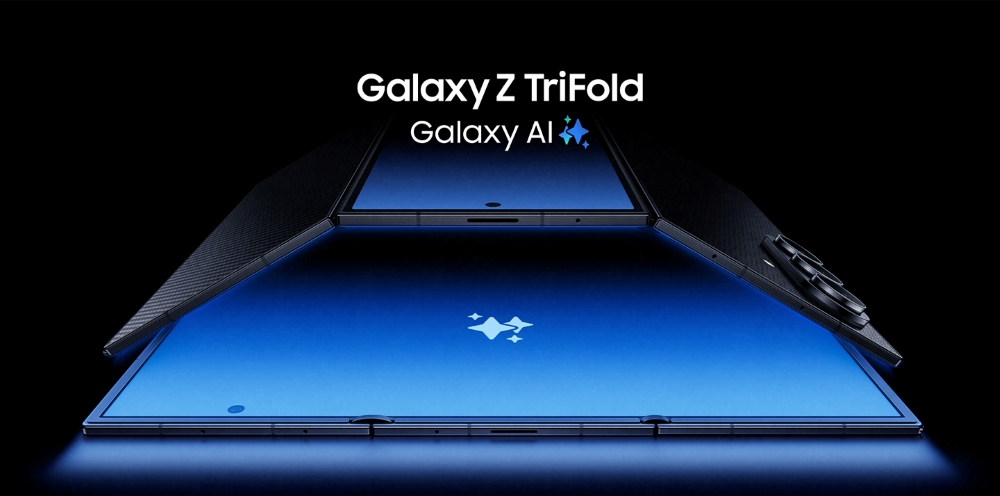
Samsung’s upcoming Samsung G Fold, also referred to as the Galaxy Z TriFold, reflects this shift. A recently disclosed patent, KR20250142733A, outlines a G-Fold display designed to solve one of the biggest unresolved issues in current tri-fold designs: exposed flexible displays.
Why Current Tri-Fold Designs Remain Fragile
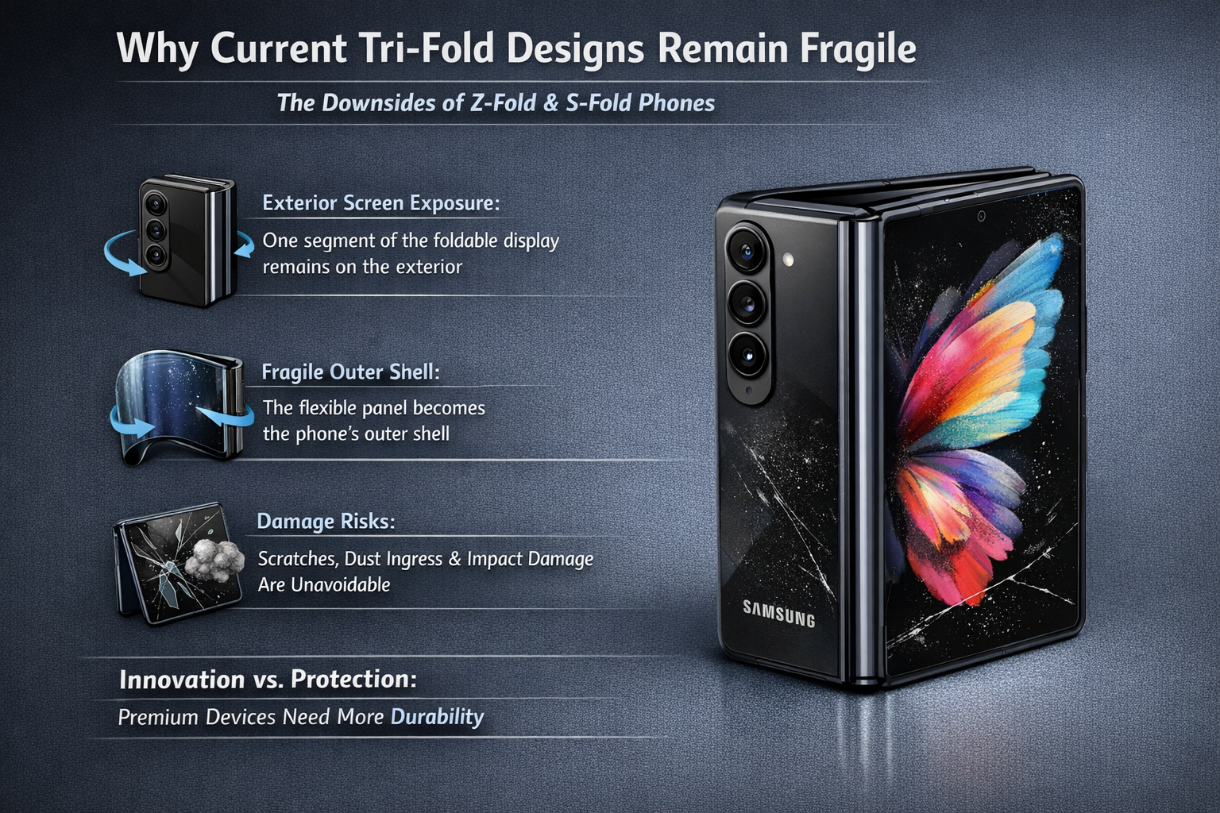
Most tri-fold phones explored so far rely on Z-fold or S-fold configurations. These designs maximize visible screen area but introduce a structural compromise.
When folded:
- One segment of the foldable display remains on the exterior
- The flexible panel effectively becomes the phone’s outer shell
- Scratches, dust ingress, and impact damage become unavoidable risks
For devices positioned at the premium end of the market, this creates a gap between innovation and reliability. The challenge is not flexibility it is protection.
The Core Invention: Samsung’s G-Fold Display
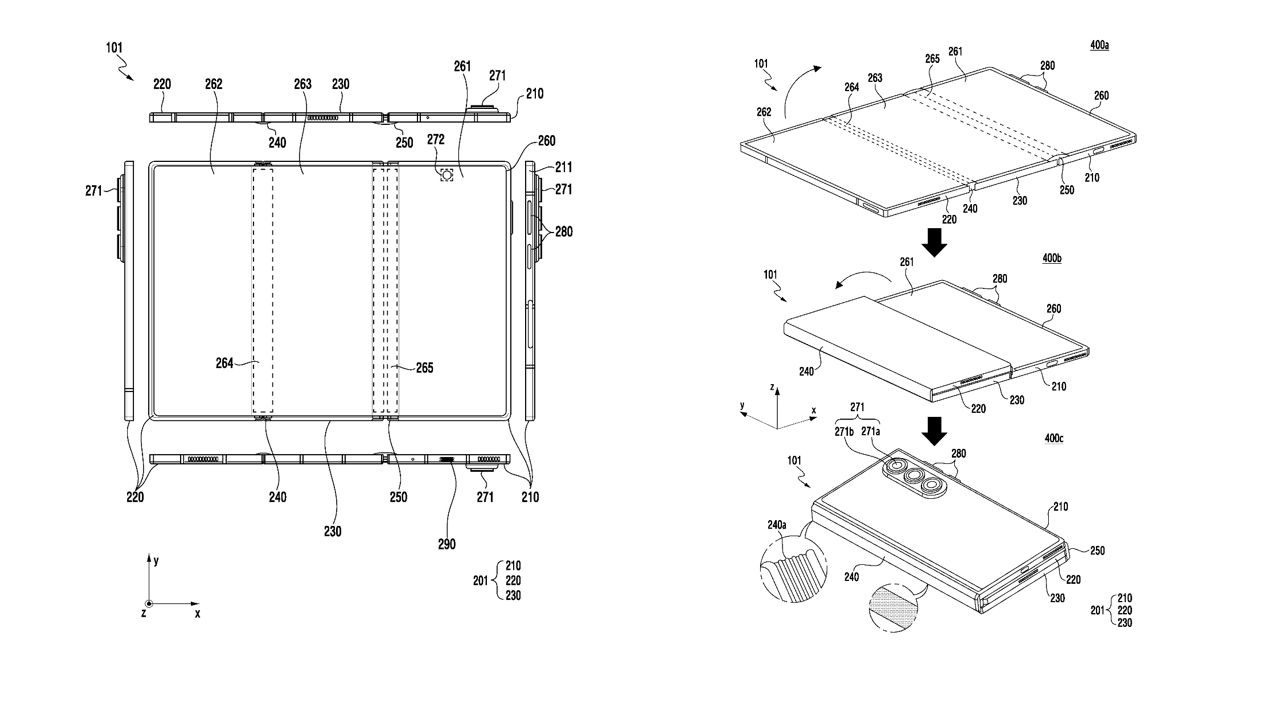
Patent KR20250142733A proposes a fundamentally different folding logic.
Instead of leaving any display surface exposed, the G-Fold phone uses an inward-folding sequence, where:
- The first and third housing segments fold inward
- Both folds move toward a central segment
- The flexible display is fully enclosed when the device is closed
This stacking geometry ensures that no portion of the primary display is exposed externally, transforming the folded device into a self-protecting structure.
Maintaining Usability in a Fully Enclosed Design
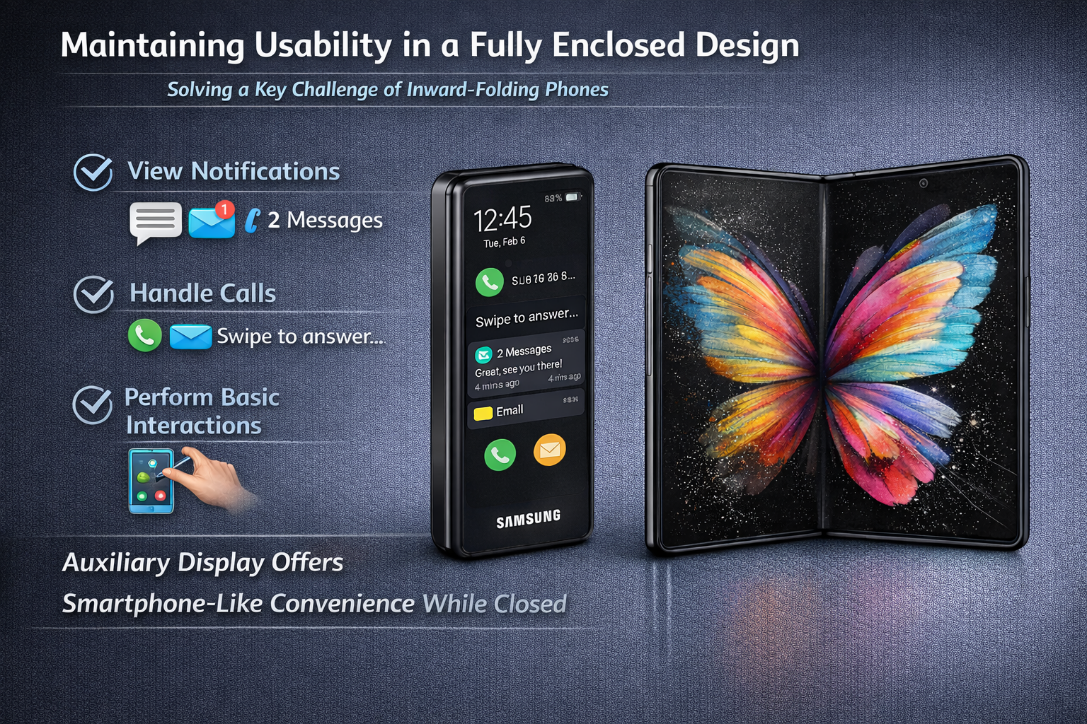
One challenge with inward-folding designs is the loss of immediate access to the main display when the device is closed.
Samsung’s patent addresses this by integrating an auxiliary outer display, enabling:
- Notification viewing
- Call handling
- Basic interactions without unfolding the device
This allows the Galaxy Z TriFold to behave like a conventional smartphone when closed, while still offering a large, immersive display when unfolded.
Design Trade-Offs in Tri-Fold Phones
Several manufacturers have explored tri-fold and multi-fold designs using outward-folding. Huawei has showcased such approaches within its Mate X, while Xiaomi, Oppo, and Vivo have demonstrated concepts focused on maximizing visible screen area.
These designs often favor slimmer profiles and reduced hinge complexity. However, because portions of the flexible display remain exposed when folded, they carry higher risks of surface damage and rely more heavily on protective coatings or external cases.
Samsung’s G-Fold takes a contrasting path. By fully enclosing the primary display when folded, it prioritizes structural protection and long-term usability over visual minimalism. Patent protection around this inward-folding logic further shapes competitive options, requiring alternative designs to either accept durability compromises or adopt different folding strategies.
Engineering Is Becoming the Differentiator
The future of foldable phones will not be defined solely by screen size or hinge count. It will be shaped by architectural decisions that balance flexibility with protection.
Samsung’s G-Fold display patent shows how inward-folding logic can eliminate a critical vulnerability in tri-fold phones without sacrificing usability. As the Galaxy Z TriFold moves closer to commercialization, this approach could set a new reference point for how multi-fold devices are designed, protected, and trusted.
Curious which other companies are innovating in foldable smartphone designs? Request a full patent landscape report by filling out the form below.