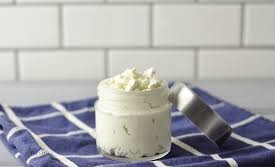
In an industry crowded with multi-step routines, lab-synthesized actives and increasingly complex ingredient decks, consumers are gravitating toward something older, simpler and deeply familiar to human biology. Rendered animal fat, once a household staple for healing dry skin and wounds, is now being rediscovered by people frustrated with barrier damage, chronic dryness and over-formulated skincare. For many, tallow cream represents a return to trust in ingredients that mirror the skin’s own lipid profile and have been used long before skincare became an industry.
This revival, however, is no longer limited to farmhouse jars or DIY formulations. As demand grows, tallow cream is moving into regulated, commercial skincare, where nostalgia alone is not enough. Questions around odor control, shelf stability, oxidation, microbial safety, texture consistency and dermatological performance become unavoidable. This is where innovation quietly takes over.
Behind products that appear intentionally minimal lies a growing body of patented work focused on refining animal fats, stabilizing bioactive lipids, improving sensory feel and enabling scalable, compliant manufacturing. Examining these patents reveals how a traditional ingredient is being technically re-engineered for modern skincare and which companies are shaping its future through protectable innovation rather than marketing alone.
Check out Tallow Cream patents filed in 2025:
Recent Patents behind Tallow Cream
| Patent | Patent Holder | Problem Addressed | Proposed Solution | Commercial Products / Markets |
| CN116672294A – Tallow-oil hand-care milk | Xilingguole Vocational College | Hand-skin aging, dryness, dehydration, sensitivity, chapping from washing & environment | 0.01-22 wt % tallow-oil + 0.09-0.6 wt % willow-orchid extract; oil-in-water emulsion processed at 83-93 °C with controlled homogenisation | Repair/anti-aging hand creams |
| CN113116771B– Repair moisturising horse-oil cream | Hubei Yanzhuang Industrial | Ageing/photo-aged skin needing natural, non-greasy care | Low-level (0.1-5 wt %) animal-fat base + jojoba oil, hyaluronic acid, perilla & licorice extracts; self-preserving system | “Clean-beauty” natural skincare |
| WO2019089459A1 – Transformative texture compositions | L’Oréal | High-glycerin or butter/oil creams feel tacky & oily | Butter-to-oil ratio 2:5–9:10 “transformative agent” that collapses under shear → satin, non-greasy occlusive film | Premium cosmetics as tallow-cream alternative |
| CN106580745B – Animal-fat solubilisation composition | Guangzhou Heji Bio-Tech | Hard to solubilise non-polar animal fat into clear low-alcohol bases | “Polarity-bridge” system: animal fat + higher alcohols + PEG surfactants in tuned ratios | Clear lotions, serums, sheet-mask essences |
| CN109966186B – Soothing moisturising hot-spring-water face cream | Yili Miyuequan Biotech | Need stable, preservative-free repairing cream for sensitive skin | 40–70 % hot-spring-water base + 0.78–1.18 parts horse fat + dual emulsifier + specialised moisturisers | Premium sensitive-skin/spa skincare |
Get the list of Tallow Cream patents. Discover the problems they solve and the solutions they offer. Fill out the form to access it now!
How is the Market Growth and Consumer Trends in Tallow Cream?
The global tallow cream market is experiencing robust growth, with the tallow balm segment specifically valued at USD 265.70 million in 2024 and projected to reach USD 403.01 million by 2032, representing a compound annual growth rate (CAGR) of 5.47%.
Consumer preferences strongly favor natural and organic ingredients, with 74% of consumers considering organic ingredients important in personal care products, while 75% prioritize detailed ingredient information in their purchasing decisions. Social media influence plays a significant role in driving market growth, with 70% of consumers relying on platforms like TikTok for product recommendations, where hashtags like #beeftallow have gained significant traction.
The target demographic primarily consists of natural skincare enthusiasts, homesteaders and consumers with sensitive skin conditions like eczema, who are willing to pay premium prices ($15-$45) for tallow-based formulations.
Scientific validation supports consumer preferences, with research demonstrating that natural emollients like tallow can match synthetic alternatives in skin protection effectiveness over extended periods, showing a 38% increase in stratum-corneum hydration 2 hours post-application compared to 27% for synthetic alternatives. This combination of natural ingredient preference, social media-driven awareness and proven efficacy positions tallow cream products for continued growth in the premium skincare segment.
Key Challenges and Ongoing Research in Tallow Cream
| Challenge | Description | Industry Impact if Resolved |
| Scientific Validation Gap | No randomized controlled trials or peer-reviewed studies exist to support claimed benefits for conditions like acne, eczema, or photoaging. | Would enable mainstream cosmetic industry adoption, regulatory approval, and clinical recommendations |
| Safety & Contamination Issues | Product purity varies widely with risk of microbial contamination in homemade/small-batch products; extraction methods lead to fat oxidation exceeding acceptable limits after 180 days. | Would establish safety standards, enable large-scale manufacturing, and build consumer trust |
| Formulation Stability | Tallow’s ~70% saturated fatty acid composition makes it prone to oxidation and degradation over time, with neither extraction method nor storage temperature effectively inhibiting fat hydrolysis. | Would create commercially viable products with standard shelf stability requirements |
| Technological Processing Barriers | Limited research into cosmetic-specific processing technologies; minimal patent activity around tallow cream formulations. | Would unlock innovative processing methods, improved functionality, and intellectual property opportunities |
| Sensory & Functional Limitations | High oleic acid content may exacerbate inflammation; lacks essential moisturizing components like ceramides and humectants found in modern formulations. | Would enable premium positioning, broader consumer acceptance, and competitive performance against synthetic alternatives |
Tallow cream’s resurgence is often framed as a nostalgic return to “how things used to be.” But the patent landscape tells a very different story. What is unfolding is not a backward step, but a recalibration, where legacy ingredients are being reinterpreted through modern formulation science, regulatory rigor and scalable manufacturing logic. The real differentiation is no longer the presence of tallow itself, but how it is processed, stabilized, combined and positioned to meet contemporary performance and safety expectations.
As more brands move beyond small-batch storytelling into mainstream commercialization, intellectual property will quietly determine who can scale with confidence and who will be forced to reformulate or retreat. Patents in deodorization, lipid refinement, oxidative stability and hybrid formulations are already shaping competitive boundaries, while notable white spaces remain in clinical substantiation, sensitive-skin applications and sustainability-aligned processing. Tallow cream offers a timely reminder: even the most traditional ingredients can become future-facing assets, if innovation is protected where it truly matters.
Interested in a deeper Tallow Cream patent analysis?
Request a tailored report or claim-to-product mapping to explore competitor strategies.