
What Tesla’s automated camera-cleaning system reveals about the emerging competition around sensor reliability in autonomous vehicles
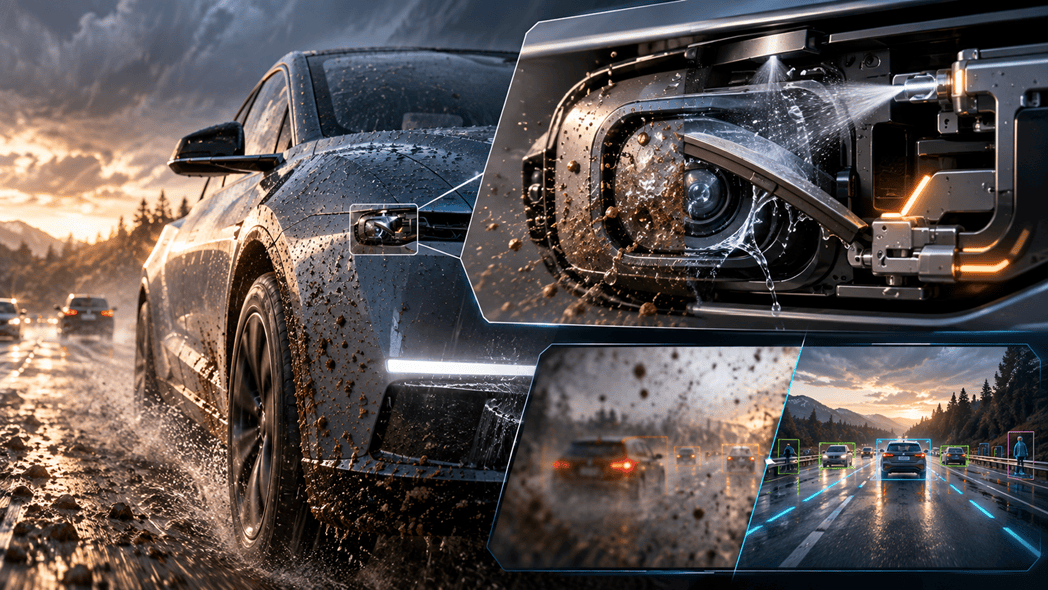
Core signal: Tesla’s lens-cleaning patent suggests that as vehicles depend more heavily on cameras for understanding their surroundings, companies may increasingly compete not only on perception capability but also on their ability to keep those sensors usable during real-world operation.
Autonomous-driving development has traditionally focused on improving cameras, artificial-intelligence models, computing hardware, and perception software.
But there is another engineering problem underneath all of them.
What happens when the sensor providing the information can no longer see clearly?
Dust, water, mud, road contaminants, insects, and other debris can reduce the quality of images supplied to a vehicle’s perception system.
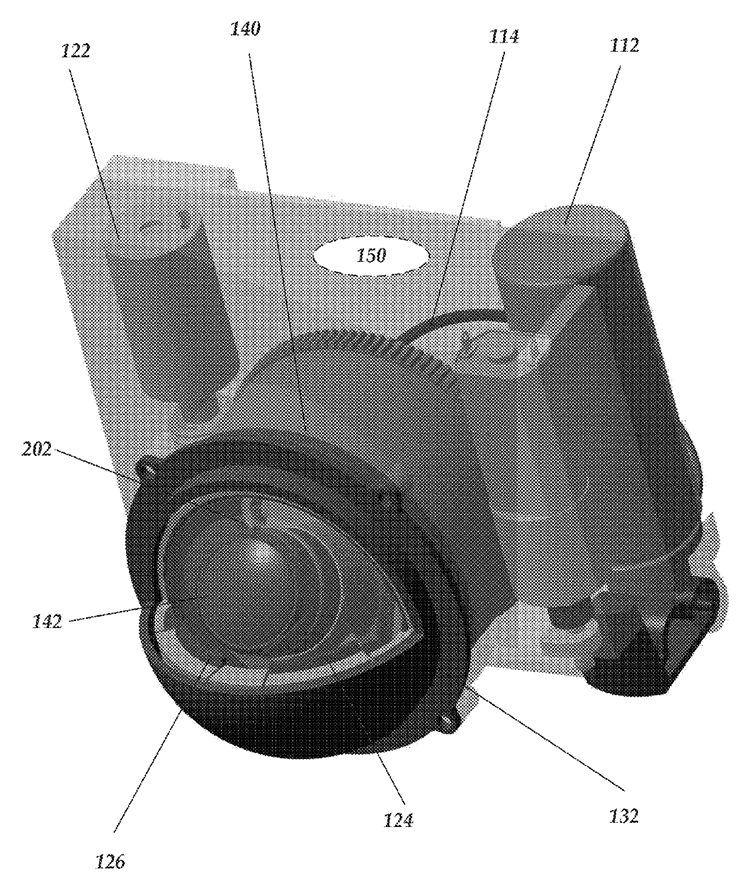
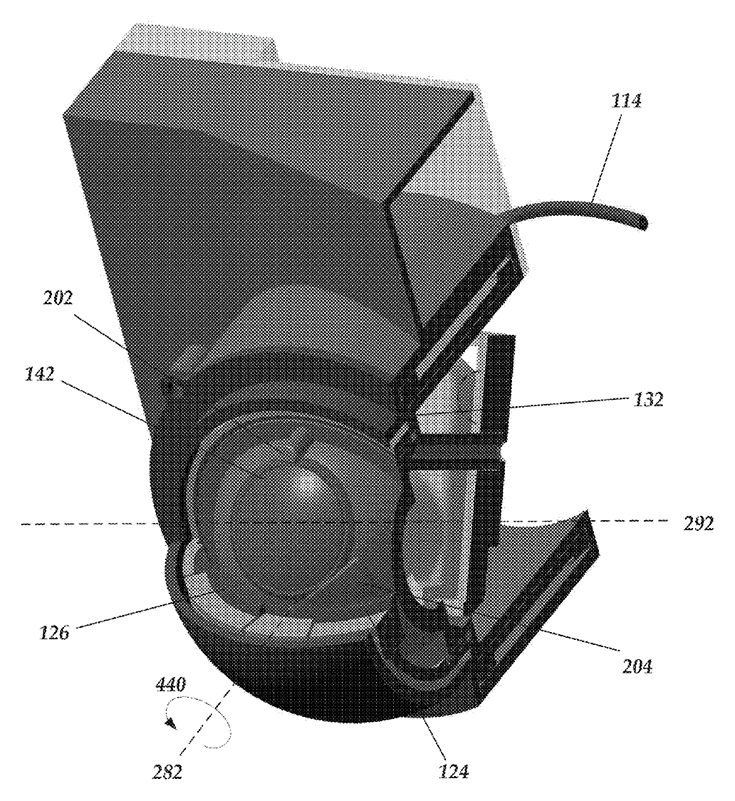
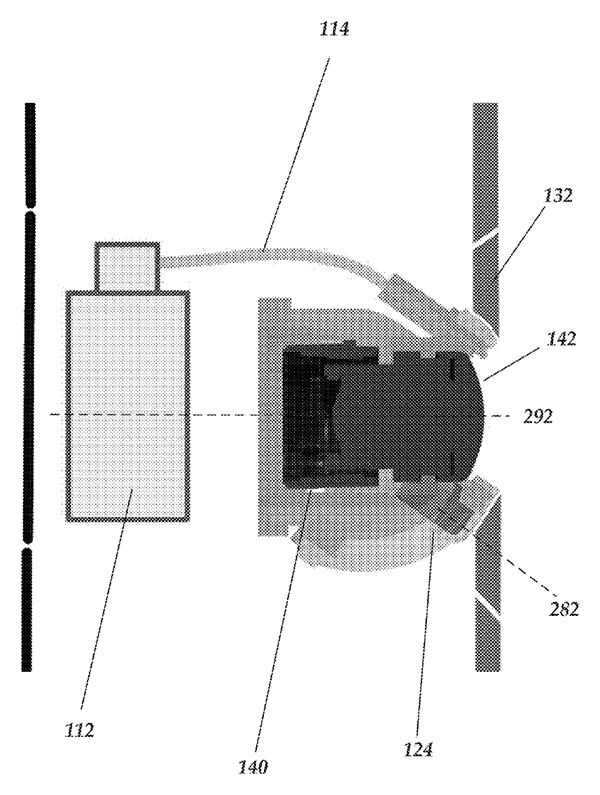
Tesla’s US12636684B1, Lens Cleaning System, approaches this problem through a camera assembly connected to fluid dispensing, wiping, image-quality monitoring, and protective-housing mechanisms. The patent was granted on May 26, 2026.
The broader innovation signal is therefore not simply a miniature camera wiper.
It is an attempt to build a recovery and protection layer around the vehicle’s vision system.
The Strategic Shift: From Better Sensing to Continuous Sensing
The performance of an autonomous-driving system depends on two related capabilities.
The first is perception quality: how accurately the vehicle understands objects, road markings, vehicles, pedestrians, and other elements around it.
The second is sensor availability: whether the cameras supplying that information remain capable of producing usable data.
That distinction matters.
A sophisticated perception model cannot extract useful information if the camera is physically unable to capture a sufficiently clear image.
This creates a different engineering question:
How can an autonomous vehicle maintain useful camera visibility when its sensors are continuously exposed to uncontrolled environmental conditions?
Tesla’s patent connects detection of lens degradation with an automated physical response instead of treating cleaning purely as a manual maintenance activity.
The competitive objective therefore starts shifting from simply “seeing better” toward “keeping the vehicle able to see.”
Why Camera Reliability Matters in Camera-Dependent Systems
Cameras used for automated-driving and ADAS functions operate continuously in changing outdoor environments.
Camera availability → visual information → perception → driving decisions
If the first layer deteriorates, everything downstream has less useful information to work with.
That makes camera cleanliness and protection more than a cosmetic or routine maintenance issue. In increasingly automated vehicles, it can become part of the operational reliability architecture of the perception system itself.
The 4 Problems Tesla’s Lens Cleaning Patent Is Trying to Solve

Rather than treating the invention simply as a “camera cleaner,” the patent can be viewed as addressing four connected problems surrounding camera availability.
| Engineering Problem | Why It Matters | Tesla’s Proposed Response | Broader Innovation Signal |
| 1. Camera visibility degradation | Dirt, moisture and other contaminants can reduce usable image quality. | Image-quality information can be used to determine that debris affects the lens, followed by fluid dispensing and wiping. | Cameras can participate in identifying their own maintenance requirement. |
| 2. Dependence on manual cleaning | An obscured camera may otherwise require physical intervention. | A controller coordinates the cleaning sequence. | Sensor maintenance moves toward automated vehicle operation. |
| 3. Restoring and preserving optical clarity | Removing contamination once does not necessarily prevent new debris adhering. | Some embodiments use cleaning fluid followed by an oil layer and further wiping. | Cleaning expands toward optical-surface management. |
| 4. Physical exposure to foreign objects | Road debris can threaten an exposed optical surface. | Environmental sensing can trigger wiping and closing of a protective housing. | Sensor reliability expands from cleaning toward active protection. |
Problem 1: A Camera Can Become Temporarily “Blind”
A camera mounted on the exterior of a vehicle operates in an uncontrolled environment.
It may encounter water, dirt, dried road contaminants, insects, dust, or other debris.
The immediate problem is not simply that the lens looks dirty.
The problem is that the information reaching the perception system can deteriorate.
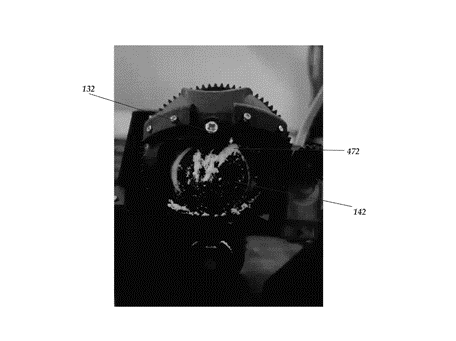
Tesla’s patent describes monitoring image-quality information and determining whether debris is attached to the lens. Once the system determines cleaning is needed, the controller can initiate a response.
Tesla’s solution
Instead of relying solely on scheduled maintenance or human intervention, the camera system can participate in identifying when its optical surface requires attention.
Detect degradation → initiate cleaning → restore camera usability
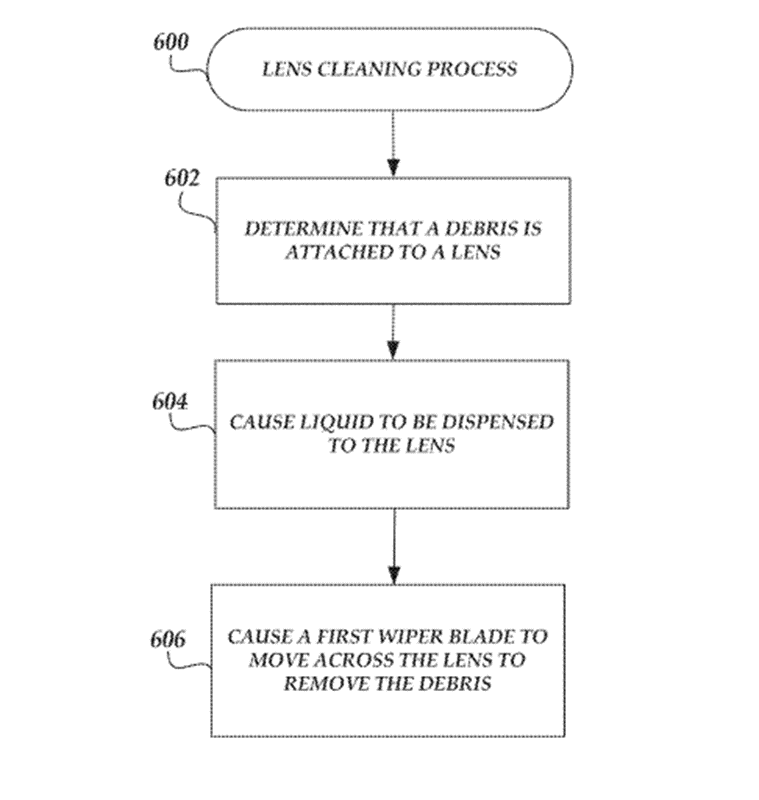
That changes lens cleaning from a passive maintenance activity into a condition-triggered sensor-recovery process.
Problem 2: Autonomous Operation Reduces the Value of Human Maintenance
The issue becomes more important as driving systems move toward greater automation.
In a conventional vehicle, a driver or service technician can physically inspect and clean an obstructed camera.
That operating assumption becomes less attractive for robotaxis, autonomous fleets, delivery vehicles, and other platforms intended to function with limited human involvement.
Tesla’s patent is not restricted to robotaxis, so this should not be interpreted as a robotaxi-specific claim. The broader engineering implication, however, is clear.
Tesla’s solution
The controller can coordinate fluid delivery and movement of the wiper mechanism. This moves the maintenance response closer to the vehicle itself.
detect → recover → continue operating
rather than:
detect → request manual intervention → wait → resume
That could turn sensor cleaning from a maintenance event into an automated reliability function.
Problem 3: Cleaning the Lens May Not Be Enough
One particularly interesting aspect of the patent is that some embodiments extend beyond applying conventional cleaning fluid.
The patent describes a sequence in which contaminants may first be loosened or removed using a solvent-based cleaning liquid, followed by application of oil and another wiping operation.
The thin oil layer is described as potentially reducing the adherence of future debris.
Tesla’s solution
The system therefore addresses two related functions:
remove existing contamination + manage how subsequent contamination interacts with the lens surface

This is strategically more interesting than simply adding a miniature windshield washer to a camera.
It suggests that future sensor-maintenance systems may combine cleaning + surface treatment + protection + monitoring into a single subsystem.
Problem 4: Some Threats Should Be Prevented, Not Cleaned
Contamination is not the only external threat to an exposed camera.
The patent also considers situations in which environmental conditions indicate that the lens may be prone to foreign-object contact.
For example, the specification discusses rocks or similar objects when a vehicle travels over rough roads or at higher speeds. The controller may cause the wiper to remove existing debris and may close a housing over the lens to protect it.
Tesla’s solution
Rather than responding only after contamination occurs, the system can potentially move into a protective state in response to environmental risk.
Detect environmental risk → protect lens → reopen when conditions permit
That expands the patent from camera cleaning toward something broader: sensor availability management.
Patent Intelligence: What Tesla Is Actually Protecting
This is why describing US12636684B1 simply as a “camera-wiper patent” undersells what is disclosed.
The architecture combines several interacting components.
| Patent Element | Product Function | Strategic Meaning |
| Image-quality-based debris detection | Determines whether lens condition may require cleaning. | Sensor health becomes detectable. |
| Fluid dispensing | Applies cleaning or treatment liquid. | Cleaning is integrated into the camera subsystem. |
| Wiper components | Remove contamination or excess treatment liquid. | Enables active optical-surface recovery. |
| Controller | Coordinates cleaning actions. | Cleaning becomes a controlled system workflow. |
| Environmental sensing | Identifies conditions associated with foreign-object exposure. | Adds proactive risk awareness. |
| Movable housing | Protects the camera lens under certain conditions. | Extends reliability from cleaning to physical protection. |
The important IP signal is therefore not simply one mechanical blade.
It is the interaction between sensing, decision-making and physical intervention.
Claim Scope Analysis: Protecting a Sensor Recovery Workflow
At a simplified level, the patent claims combinations involving:
- Detecting lens condition: determining from image-quality information that debris is affecting the lens.
- Triggering cleaning: dispensing liquid and activating wiping components.
- Using multi-stage cleaning: employing different fluids and/or wiping operations in some claim combinations.
- Protecting the lens: closing a housing when environmental sensing indicates a foreign-object risk.
- Coordinating the operations: using a controller to connect sensor information with physical intervention.
That specificity matters.
The patent should not be interpreted as giving Tesla ownership over the generic concept of keeping vehicle cameras clean. Competitors can still investigate alternative technical architectures.
For IP teams, the more useful question is:
Which pathways achieve camera availability without reproducing the specific protected combinations?
Possible Design-Around Opportunities
The following directions are illustrative technical alternatives, not a freedom-to-operate conclusion.
| Alternative Approach | Possible Technical Direction | Problem Addressed |
| Hydrophobic or oleophobic coatings | Reduce adhesion of water, oil and contamination. | Prevention |
| Air-based cleaning | Direct air across the optical surface. | Debris removal |
| Ultrasonic or vibration cleaning | Dislodge particles without conventional wiping. | Contactless cleaning |
| Heated optical surfaces | Reduce condensation, ice or frost. | Weather obstruction |
| Image-restoration software | Compensate for partially degraded imagery. | Software recovery |
| Camera redundancy | Shift input toward another usable camera. | Availability |
| Retractable/protective structures | Shield optical surfaces when required. | Damage prevention |
| Self-monitoring camera modules | Detect declining image quality. | Condition monitoring |
These alternatives demonstrate why the problem space is larger than Tesla’s particular implementation.
The strategic problem is sensor availability. The patent protects particular technical combinations for addressing it.
Sensor Reliability Patent Landscape: Who Is Building the Next Layer of Autonomous Systems?
Tesla’s patent also points toward a broader landscape worth monitoring.
The relevant competitive space should not be limited to the keyword “camera cleaning.” A more useful landscape would connect multiple technology areas.
| Technology Area | Potential Participants | Patent Theme | Strategic Signal |
| Camera cleaning | Automakers, Tier-1 suppliers, camera suppliers | Fluid, wiping, air, vibration | Maintaining sensor availability |
| Sensor protection | Camera and module suppliers | Enclosures, coatings, shielding | Reducing physical/environmental exposure |
| Sensor-health monitoring | ADAS and autonomous-driving companies | Image-quality diagnostics | Identifying degraded sensors |
| Calibration | Automakers and perception suppliers | Automatic alignment and recalibration | Maintaining accuracy |
| Sensor redundancy | Autonomous-vehicle developers | Multiple sensing pathways | Reducing single-point dependence |
| Software compensation | AI/perception developers | Degraded-image processing | Maintaining perception from imperfect inputs |
Strategic interpretation: The patent suggests that competition around autonomous-driving perception could extend beyond making algorithms more capable toward building the infrastructure required to keep those algorithms supplied with reliable data.
The Bigger Competitive Question: Who Owns Sensor Availability?
Camera resolution will improve. Perception models will improve. Vehicle computers will become more powerful.
But autonomous vehicles will still operate on roads containing rain, dirt, insects, dust, road contaminants, gravel, condensation and unpredictable environmental conditions.
That creates another competitive question:
Who controls the technologies that keep autonomous sensors operational between maintenance events?
This opens potential patent activity across cleaning systems, coatings, sensor-health monitoring, protective structures, calibration, redundancy and software recovery.
For companies developing autonomous-driving platforms, those technologies may become increasingly interconnected.
A patent landscape focused only on perception algorithms could therefore miss another emerging layer of competition around perception reliability.
What IP, R&D and Business Teams Should Monitor
For IP teams: Track sensor cleaning together with protection, condition monitoring, calibration, redundancy and degraded-image recovery. Monitoring only patents containing “camera cleaning” could miss competing technologies solving the same functional problem.
For R&D teams: Evaluate sensor performance under degradation, not only under ideal conditions. An important engineering benchmark may increasingly be how quickly a system detects, recovers from, prevents or routes around a compromised sensor.
For business and strategy teams: Watch where automakers, camera suppliers, Tier-1 suppliers and autonomous-driving companies begin creating overlapping patent positions. Sensor-reliability technologies could create future licensing, supplier, collaboration, acquisition and design-around considerations.
Tesla’s lens-cleaning patent highlights a broader autonomous-driving challenge: keeping cameras usable in real-world conditions.
The patent combines contamination detection, automated cleaning, surface treatment, environmental sensing, and lens protection. Together, these features point toward a wider shift from simply improving perception to maintaining sensor availability.
For IP and R&D teams, the relevant competitive space therefore extends beyond camera cleaning into coatings, protection, calibration, redundancy, monitoring, and software recovery.
The next autonomous-vehicle advantage may depend not only on how well a vehicle can see, but on how reliably it can keep seeing.
Want to Track the Sensor-Reliability Patent Landscape?
We can help identify:
- Key patents and companies working on sensor reliability
- Emerging solutions across cleaning, protection, calibration, and recovery
- Competitor patent activity and design-around opportunities
- Licensing, collaboration, supplier, and acquisition opportunities
Want to know who is developing the technologies that keep autonomous vehicles seeing?

