
Nike has put heat and vibration into a recovery slide. But the most interesting part of its patent may be the cushioning beneath the foot.
The Nike Air Zoom Hyperslide, developed with Hyperice, has a removable treatment pod on its strap and an Air Zoom sole underfoot. A Nike patent application describes a related idea: combining a fluid-filled cushioning system with a device that treats the foot while it rests on that support. The sole, strap and treatment unit become parts of one design.
That creates a practical challenge. The slide must stay comfortable, hold the pod in the right position and deliver consistent heat or vibration. The patents help explain how Nike is approaching that problem, what other companies are doing and which questions still matter for future products.
How Does the Nike Air Zoom Hyperslide Work?
The Hyperslide looks like a sandal, but the adjustable upper strap holds a removable Hyperice pod. It delivers heat and vibration over the top of the foot. The full-length Air Zoom sole provides cushioning below. Nike announced the product on 27 July 2026, with availability beginning 29 September 2026.
Users can choose three heat settings: 109°F (42.8°C), 113°F (45°C) and 117°F (47.2°C). There are also three vibration frequencies: 50, 75 and 100 Hz. Sessions normally run in 15-minute cycles, and the pods connect to the Hyperice App.
Battery life shows why the design needs careful balancing. Hyperice reports up to eight hours with vibration alone, but approximately one hour at maximum heat and vibration. Stronger treatment uses more power. The removable pod also has to remain secure while someone is wearing the slide.
These features describe what the product does. Whether it improves athletic recovery faster than another device is a separate question that requires comparative testing.
What Patents Are Behind Nike’s Recovery Footwear?
Several patents are relevant to the Hyperslide, but each addresses a different part of the technology. The table below highlights the problem each filing tackles and why it matters. It is a selected set of records, not a count of every patent in recovery footwear.
| Patent | Problem addressed | Patented approach | Why it matters |
| US20260076437A1 | How to cushion a foot while applying treatment | Foam sole, fluid bladder and heat/cooling/vibration system | Connects the sole and treatment in one claimed system |
| US20260076446A1 | How to shape air cushioning around the midfoot | Two fluid chambers arranged within a foam support | Shows separate work on the sole itself |
| US20220347010A1 | How to reuse a treatment device | Detachable control unit attached to a treatment pad | Relevant background for removable hardware |
| US12569025B2 | How to deliver treatment around the foot and ankle | Footwear with thermal treatment and air compression | Explains the different Hyperboot approach |
| US12728066B2 | How to combine treatments over a larger area | Compression sleeve with vibration elements | Shows Therabody’s different technical focus |
| US11607007B2 | How to construct supportive footwear without electronics | Two-piece sole with material and construction features | Shows the passive footwear alternative |
1. Nike Is Combining Cushioning and Treatment
Nike’s main application, US20260076437A1, is titled Foot Support Systems. It claims priority from 16 September 2024 and was published on 19 March 2026. The filing describes a foam sole with a recess and a fluid-filled bladder whose bottom surface sits at least partly inside that recess. A treatment system then applies heat, cooling or vibration while the foot is supported.
In plain terms, the patent treats the cushion and the recovery device as one arrangement. That matters because two slides could use similar vibrating pods but have different soles. The shape and placement of the bladder may be important when comparing their patent features.
The commercial Hyperslide is confirmed to have Air Zoom cushioning and a heat-and-vibration pod. Public product descriptions do not show the exact inside shape of the sole. The application was published as pending in the records reviewed, so its eventual legal scope may change during examination.
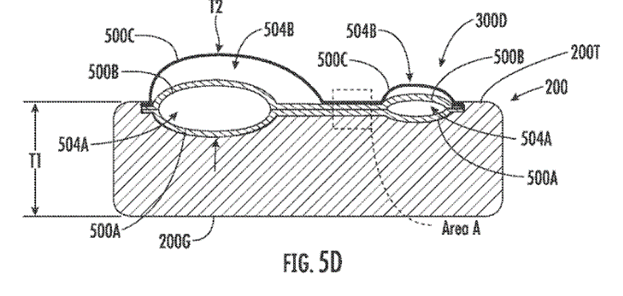
A second Nike application, US20260076446A1, looks more closely at the bladder itself. It describes two separate fluid chambers arranged near the midfoot. It does not need a treatment pod in its main claim. Nike filed the two applications with different provisional priorities, but the documents refer to each other’s earlier disclosures.
The reason to consider both patents is straightforward: Nike is researching the cushioning platform as well as the way a recovery device can be added to it. That can lead to different research paths, even within related footwear designs.
2. Keeping the Treatment Pod in Place Is a Design Challenge
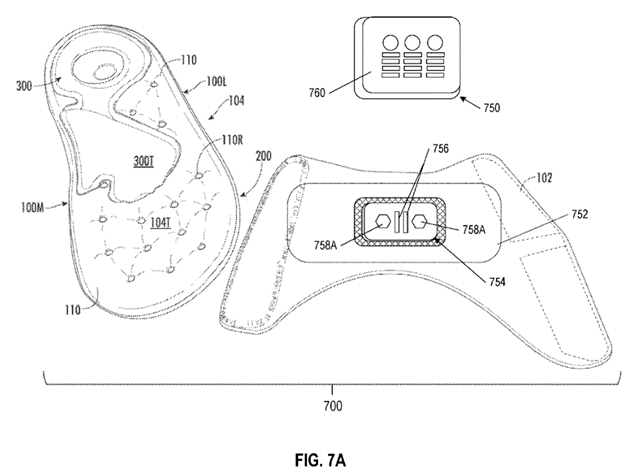
The Hyperslide’s pod sits on the instep, held by an adjustable strap. Nike’s application illustrates the sole, strap, mounting base and treatment unit as separate pieces. Those details matter because the user is moving, adjusting the strap and putting pressure on the sole throughout the day.
If the pod moves, the contact area can change. If the strap presses too firmly, comfort can suffer. Sock thickness can also affect how heat travels from the pod to the foot. Launch coverage reported a recommendation to wear socks, making this a useful variable for product testing.
For R&D teams, the test is not simply whether the pod heats up or vibrates. It is whether the same treatment reaches different users consistently. Foot size, strap tension, socks and walking movement can all affect the experience.
3. Removable Hardware Creates Another Area for Innovation
Hyperice has worked on detachable treatment products before the Hyperslide. Its US20220347010A1 application describes a removable control unit connected to a skin-adhering treatment pad. The product format differs from footwear, but the basic issue is similar: how to attach powered hardware, keep it in position and remove it when needed.
The Hyperslide pods use a magnetic connection. This makes it possible to separate the electronics from the slide for charging or cleaning. Hyperice also sells replacement pod sets. These choices make durability and easy maintenance useful research questions, not just after-sales details.
Another Hyperice-linked design patent, USD1005501S1, is associated with products in its Venom line. Nike has said that Venom inspired the Hyperslide’s combination of heat and vibration. The design patent concerns the appearance of a module; it does not by itself tell us what is inside the Hyperslide pod.

Discover New Recovery Footwear Patent Opportunities with Slate R&D
Explore Nike & Hyperice Recovery Footwear Patents
How Early Did Nike Begin Working on This Idea?
The patent dates reveal that Nike’s research preceded the Hyperslide launch. Nike and Hyperice announced their collaboration in June 2024. Nike’s two relevant cushioning applications claim priority from September 2024 and were filed in September 2025. They became public in March 2026, about six months before Hyperslide retail availability began.
Another product arrived first. Nike and Hyperice announced Hyperboot retail availability in April 2025, with sales starting on 17 May 2025. Hyperboot uses heat and air compression around the foot and ankle. Nike’s related patent US12569025B2 was granted on 10 March 2026.
Seen together, these dates show two recovery-footwear designs developing from the same partnership. Hyperboot focuses on compression. Hyperslide combines a cushioned sole with localized heat and vibration. The patent record helps explain the different design directions without assuming that one product will replace the other.
How Does Nike Compare With Other Recovery Footwear Companies?
Companies selling recovery products are not always solving the same problem. The differences become clearer when we look at their patents rather than simply comparing features on product pages.
Nike and Hyperice: Treatment Built Into Footwear
Hyperslide brings localized heat and vibration into an open slide. Hyperboot uses air compression and heat around more of the foot and ankle. The choice affects product size, treatment coverage, portability and where the hardware needs to sit. Their representative filings likewise focus on different footwear structures.
Therabody: Treating a Larger Area
Therabody’s JetBoots PRO Plus combines pneumatic leg compression with vibration and infrared LED elements. Its patent US12728066B2 discusses a compression sleeve with vibration elements. The main design questions concern how the sleeve, air chambers, motors and controls work over a larger area.
OOFOS: Recovery Footwear Without Powered Devices
OOFOS follows a simpler, passive route. Its shoes and sandals rely on foam and footbed construction rather than heated electronic pods. US11607007B2 describes a two-piece insole and outsole design. Material properties and comfort are more relevant here than batteries and electronics.
This comparison shows why the same word, ‘recovery,’ can cover very different inventions. For an IP team, the most useful comparison is the technology behind each product: cushioning, compression, powered treatment or materials. There is no reviewed head-to-head study establishing that one of these products delivers better recovery results.
What Do These Patents Reveal About the Next Opportunities?
Better Contact With the Foot
A pod needs to sit in the right place to deliver a consistent experience. Improved straps, flexible contact surfaces and better fitting systems could make treatment more predictable across different users. This would help the product work reliably without requiring more aggressive settings.
More Efficient Heat and Vibration
Battery life becomes more important when people expect a small wearable device to deliver both heat and vibration. Better energy management, heat spreading and electronics packaging could improve the balance between treatment intensity and size. Those are practical development areas suggested by the product’s operating limits.
Easier Replacement and Care
A removable module should attach securely even after repeated use. It also needs to withstand sweat, movement and cleaning routines. Future engineering work could focus on stronger connectors, easier replacement and longer service life. These possibilities are research directions, not announced future Nike products.
More Ways to Combine Treatments
Nike’s main filing discusses cooling in addition to heat and vibration. The commercial Hyperslide offers heat and vibration; a cooling mode has not been announced. The disclosure nevertheless suggests that footwear could be explored as a platform for other treatment combinations.
What Should IP and R&D Teams Watch?
For patent teams, the important next step is to compare the exact patent requirements with the actual construction of footwear. Two products can look alike but differ in the shape of an internal bladder, the location of a mount or the way treatment is delivered. Recent applications also need regular checks for claim amendments and grants.
For engineers, meaningful tests should include different foot sizes, sock materials, movement and repeated pod removal. Measuring temperature at the foot is more useful than recording only the heater output. Checking the attachment after many cycles can reveal wear that a short demonstration misses.
For business teams, the opportunity is to spot which design improvements people will actually value. A comfortable fit, steady treatment, manageable battery life and replaceable components may be more useful than adding one more setting. These are areas where patent research can guide product choices before a development team commits to a design.
Conclusion: Nike’s Recovery Footwear Patents Point to Integration
The Nike Air Zoom Hyperslide brings familiar technologies into a new footwear format. Its patent story starts with the cushioned sole, continues through the strap and mounting interface, and ends with the treatment pod positioned over the foot.
The strongest research opportunity may be to make these parts work reliably together. Better cushioning, more consistent contact and simpler maintenance could make a bigger difference to everyday use than another heat or vibration setting. For competitors, that is where the patents give useful clues about technical direction.
Want to Explore More Recovery Footwear Patents?
This article reviews selected public patents and company information available throughOctober 2026. A wider patent landscape could identify newer filings, competitor activity, active claims and possible design alternatives. Fill out the form to access updated recovery-footwear patent intelligence.
Frequently Asked Questions
Has Nike patented the Air Zoom Hyperslide?
Nike published US20260076437A1, an application describing footwear that combines specific cushioning structures with heat, cooling or vibration treatment. The application is relevant to the Hyperslide, but the complete retail construction has not been publicly established.
How does the Nike Air Zoom Hyperslide work?
It uses a cushioned Air Zoom sole and removable pods mounted on an adjustable strap. The pods deliver heat and vibration across the top of the foot.
Does the Hyperslide have cooling?
No cooling feature has been announced for the retail Hyperslide. Cooling is one of the technical options described in Nike’s patent application.
How is Hyperslide different from Hyperboot?
Hyperslide uses localized heat and vibration in a slide. Hyperboot uses heat and air compression around the foot and ankle. Their main treatment methods and footwear designs differ.

