
Red Bull’s RB17 gets described in superlatives: 1,200-plus horsepower, under 900 kg, a top speed past 350 km/h. None of that tells you what’s actually protected on the patent record. Look the car up in the IP registers and there’s exactly one confirmed right tied to it, and it isn’t a patent on the engine or the aerodynamics. It’s a registered design.
The car was designed by Adrian Newey and built by Red Bull Advanced Technologies, a two-seat track hypercar that owes more to Formula 1 engineering than to anything road-legal. Most coverage of the project leans on those performance numbers. For anyone trying to work out what Red Bull has actually filed, they’re mostly beside the point.
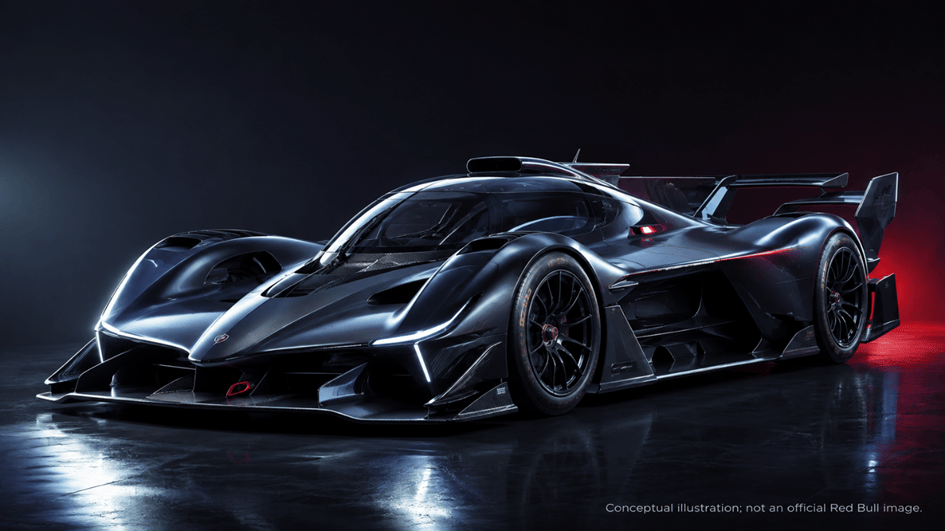
A horsepower figure or a claimed top speed tells you what the car reportedly does. It doesn’t tell you which invention is behind it, who owns that invention, or whether a patent was ever filed at all. The more useful question here isn’t what the RB17’s technology is worth protecting. It’s simply what Red Bull has filed.
The confirmed right
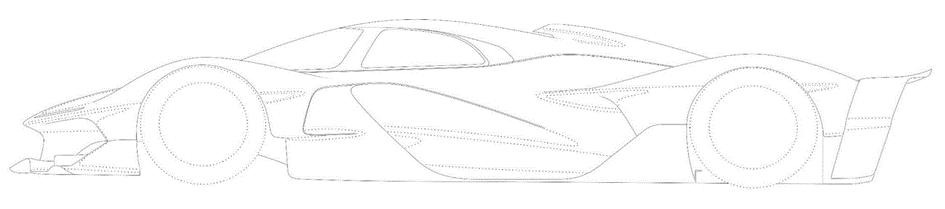
There’s one entry that holds up to scrutiny: a registered design. The UK register lists registered design GB6457475S, filed by Red Bull Advanced Technologies Limited and covering “cars.” A related EUIPO filing, EU0151105910001S, claims priority back to that UK application.
That’s the confirmed IP right tied to the RB17 in the records reviewed here. Not the engine, not the hybrid system, not the aerodynamics. The way the car looks, as captured in the filed drawings.
A registered design protects the way something looks. On its own, it says nothing about how the thing underneath actually works.
What the drawings show
Design filings live and die on their drawings, so it’s worth looking at what’s actually in them rather than assuming. Across the filed views, a few things stand out: a low, sculpted nose, a narrow cockpit under a flowing canopy, deep channels running along the flanks, a tapering tail, and a close visual relationship between the bodywork, wheels and aero elements.

These are the details a competitor would need to avoid copying to stay clear of the registration. They don’t tell you how the car performs. A visible channel down the side might raise interesting aerodynamic questions, but the filing was never built to answer them. It documents shape, not function.
Specs aren’t evidence
It’s easy to slide from an engineering headline into an IP claim without noticing. Red Bull has disclosed a naturally aspirated 4.5-litre V10 producing over 1,000 hp, a 200 hp electrical drive layer, a carbon-fibre monocoque under 900 kg, and a planned production run of 50 cars. All of that is useful context. None of it proves anything was patented.
Those figures are better treated as pointers toward where a real search should look, engine architecture, hybrid integration, lightweight structures, cooling, drivetrain, than as confirmation that Red Bull owns rights covering any of it. A record-breaking result and a defensible patent claim are different things. Treating one as evidence of the other is probably the most common mistake in coverage like this.
The RB17 is not the only Red Bull project where the public IP record tells a more specific story than the performance headlines. Red Bull’s Drone 1, built to follow a Formula 1 car at speeds above 350 km/h, is tied to a European patent application covering the architecture that makes sustained high-speed filming possible. Our Red Bull Drone 1 looks at what that filing actually protects.
Two separate questions
It helps to keep the two questions apart from the start. A registered design and a technical patent are built to answer different things.
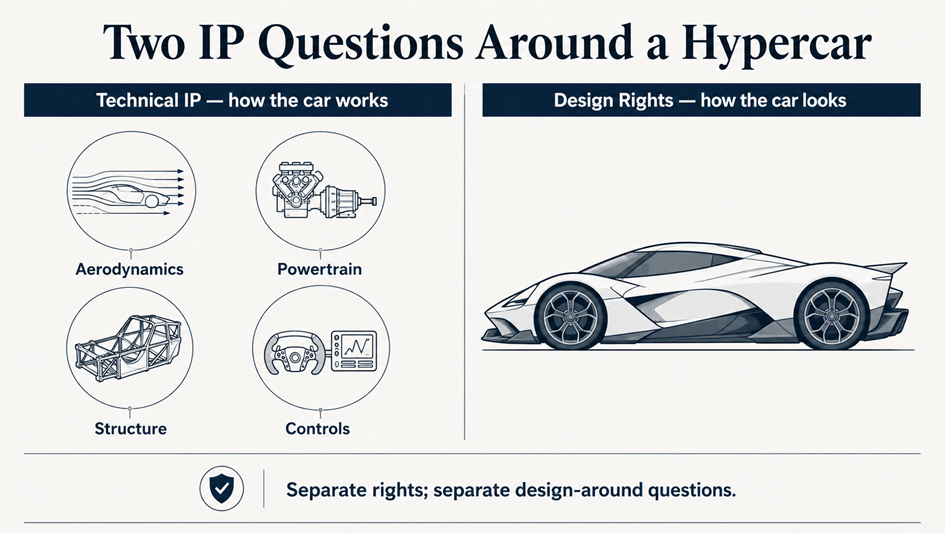
A design right can only confirm what the car looks like and who owns that appearance. Whether the aerodynamics, the powertrain, the structure or the control systems are patented, owned by a supplier, kept as a trade secret, or simply unprotected is a separate question the design filing can’t answer either way.
Where a real search would start
None of this makes the RB17 a dead end for patent research. It just changes the question. Instead of asking what’s patented, a proper investigation asks whether published patent records can be mapped, claim by claim, to the systems Red Bull has publicly associated with the car. A few areas stand out as reasonable starting points.
- Aerodynamics. The car is positioned as an extreme-downforce track machine, which makes underbody airflow and adaptive aero control worth checking first.
- Powertrain and hybrid systems. A 4.5-litre V10 paired with a 200 hp electrical layer raises real questions about engine integration, hybrid power management and thermal design in a tightly packaged chassis.
- Lightweight structures. A sub-900 kg carbon-fibre monocoque points toward composite and manufacturing patents as a worthwhile thread.
- Suspension and controls. High-downforce dynamics and driver-assist systems are plausible areas for vehicle-control and sensor filings.
Each of these is a hypothesis, not a conclusion. Getting from one to the other takes an actual patent search, family mapping and claim review, the same work any technology needs before someone can say with confidence that it’s protected.
What can and can’t be said right now
A few things hold up on the current record. Red Bull Advanced Technologies describes the RB17 as a two-seat track hypercar with 50 units planned. UK registered design GB6457475S names Red Bull Advanced Technologies Limited as proprietor. The EUIPO record EU0151105910001S claims priority to that UK design. And the registered views are public evidence of the car’s protected appearance.
What doesn’t hold up yet, at least not from this record: that the design covers the RB17’s technical operation, that Red Bull owns patents on the V10, the hybrid system, the aerodynamics or the suspension, that any specific patent family maps to the RB17 without further checking, or that the visible bodywork proves a patented aerodynamic principle.
Where this leaves things
The RB17 has one confirmed IP right on the public record: a registered design covering how the car looks, filed by Red Bull Advanced Technologies Limited in the UK and mirrored at the EUIPO. The engine, the hybrid layer, the aerodynamics and the structure all stay reasonable research questions until a separate patent search and claim review says otherwise.
That’s a narrower story than “the patents behind the RB17,” but it’s the one the evidence actually supports, and it’s a better place to start for anyone who needs to move from headline specs to something they can actually defend.
The full landscape
A registered design is one layer of this. The broader picture, relevant patent families, other design registrations, technical themes, assignees, inventors, suppliers, and how motorsport technology moves into road cars across Red Bull and competing hypercar programmes, is where the real diligence happens next.
Get in touch with the GreyB insightsGate team to look at the full RB17 and hypercar IP landscape.

